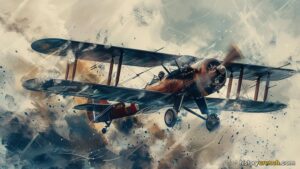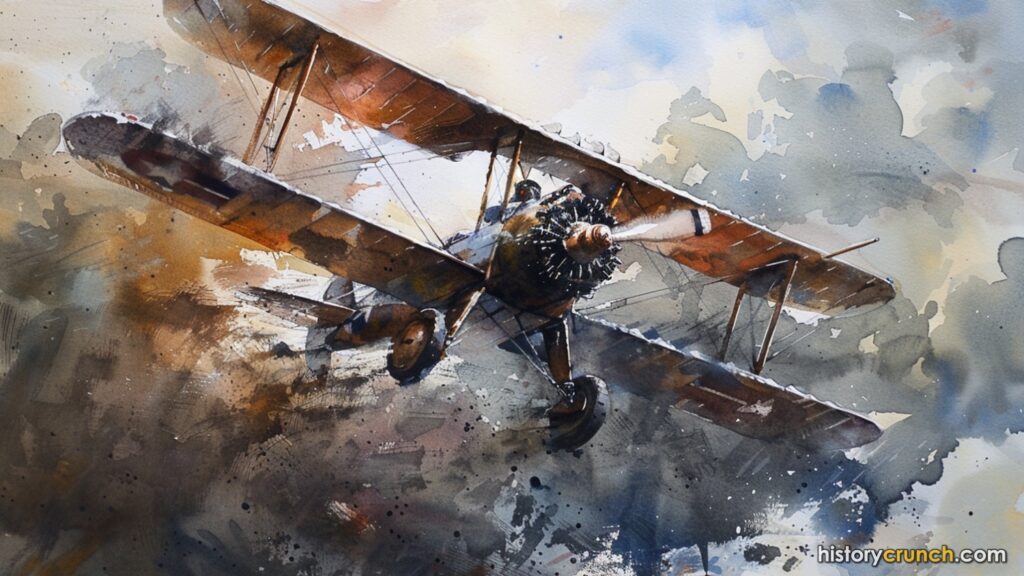
Airplanes played a significant role in World War I. In fact, airplanes were first invented only about a decade before the start of World War I and aircraft technology further developed as the war progressed. World War I was a deadly conflict as shown by the millions of military and civil casualties it caused. The large number of casualties was the result, in part, of the development and use of weaponry that took place during the war. In all, airplanes were one of the most significant weapons of World War I alongside other important weapons, such as: airships, machine guns, poison gas, rifles, submarines and tanks.
 FactsthatCrunch
Development of Airplanes for World War I
At the outbreak of World War I in 1914, the airplane was still primitive in design. This was primarily due to it being a recent invention. The first flight was carried out by the Wright Brothers only a little over a decade earlier in 1903. As such, when World War I began many of the commanders of the armed forces only used the airplane as a way to track enemy movement and the position of enemy trenches on the battlefield. Pilots were tasked with taking photographs of the battlefield and reporting back on their findings to help forces on the ground decide where to strike. For example, spotting and reporting back on enemy artillery placement was vitally important. However, as World War I advanced so did the technology and uses of the airplane in battle. As a result, World War I was the first major conflict that included airplanes and fighting in the air.
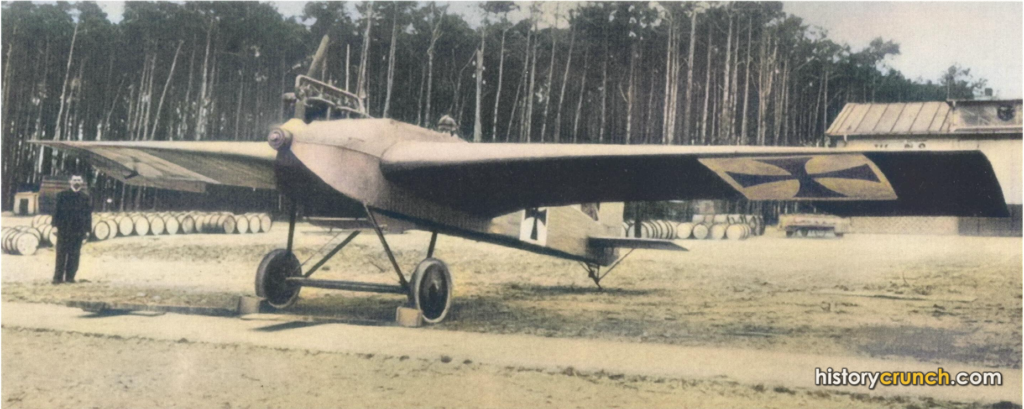
Most of the airplanes used in World War I were made out of wood and fabric. The body of the airplane was generally constructed from wood, while the wings were made of wire framing and fabric. These were the easiest materials to use in the construction of the airplanes, but also made them relatively susceptible to damage from enemy fire. As a result, as the war continued, the countries involved made advancements in the use of metal. For instance, the first airplane to be made from an all metal frame was the Junkers J1 in 1915. It was developed by Hugo Junkers, a German aircraft engineer, and ushered in the basic airplane design that became the standard by the end of the war.
 FactsthatCrunch
How Big Was the Junkers J1, the First All-Metal Airplane in World War I?
The Junkers J1, built by German engineer Hugo Junkers in 1915, had a wingspan of about 42.7 feet (13 m), close to the length of a city bus. Most World War I airplanes were built from wood and fabric, so the J1's all-steel frame made it far heavier than its peers. Its first test flight took place on December 12th, 1915, at Doberitz near Berlin.
Bomber Airplanes in World War I
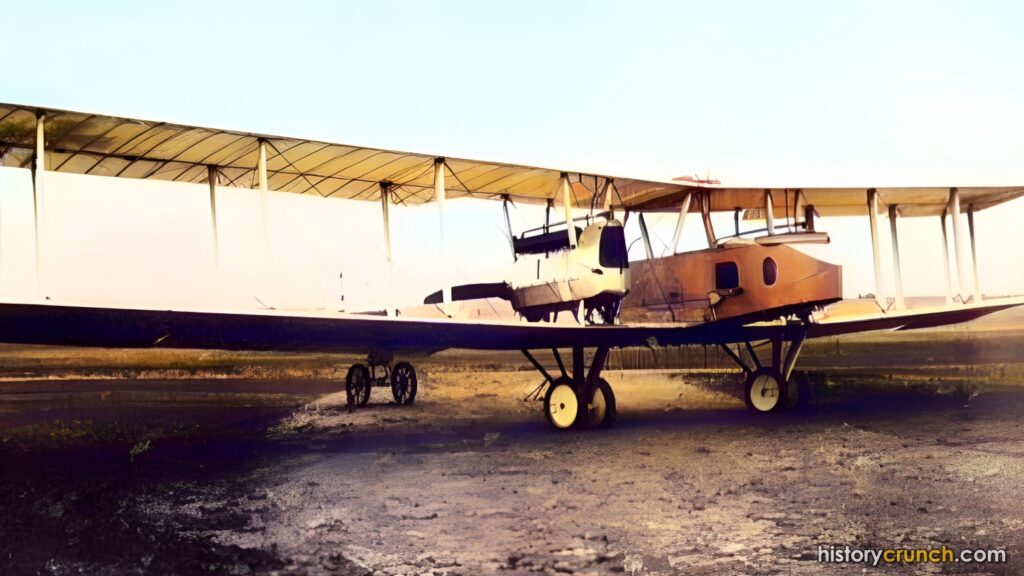
While aerial photography was still useful throughout the war, by the war’s end both sides had established bombers and fighter divisions. For example, at the beginning of World War I, carrying out a ‘bombing run’ basically involved the pilot and a passenger pushing a small bomb out the side of the aircraft as it flew over the desired target. This was not accurate and rarely had any effect on the battle occurring on the ground. However, within a few short years planes were being used that were designed specifically for bombing runs as they had longer frames and could carry heavier payloadsThe total weight of bombs or cargo an aircraft is able to carry on a mission. to desired targets on the ground.
An example of a bomber plane from World War I was the Gotha G.V., which was a long range German bomber. It was first used in August of 1917 and could carry a payload of 14 60-pound bombs.
Fighter Airplanes in World War I
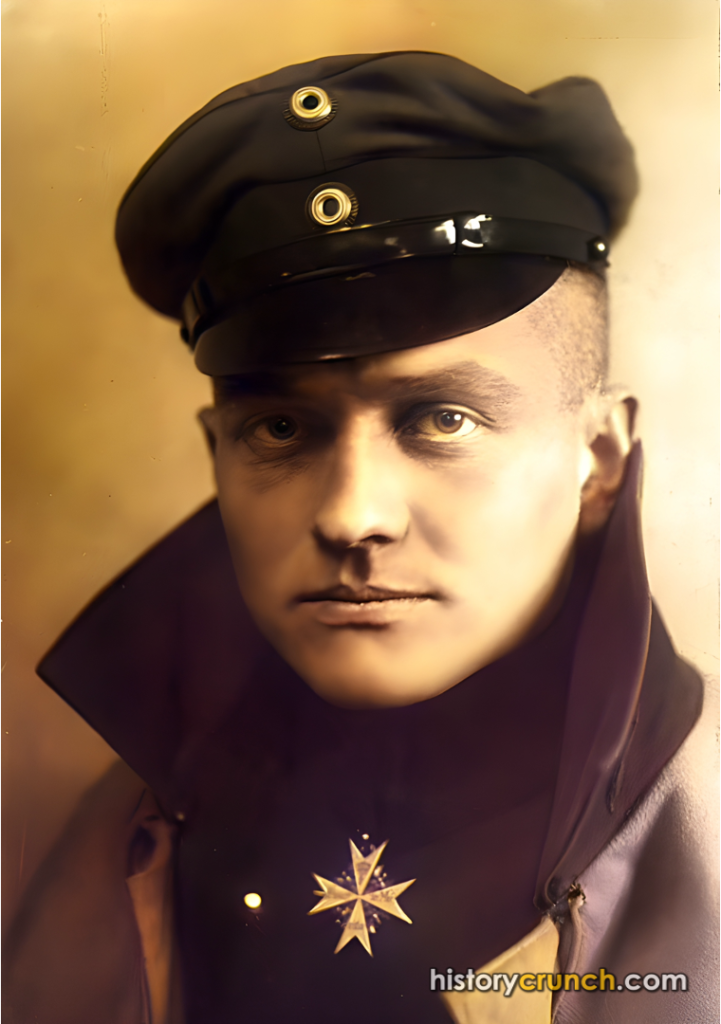
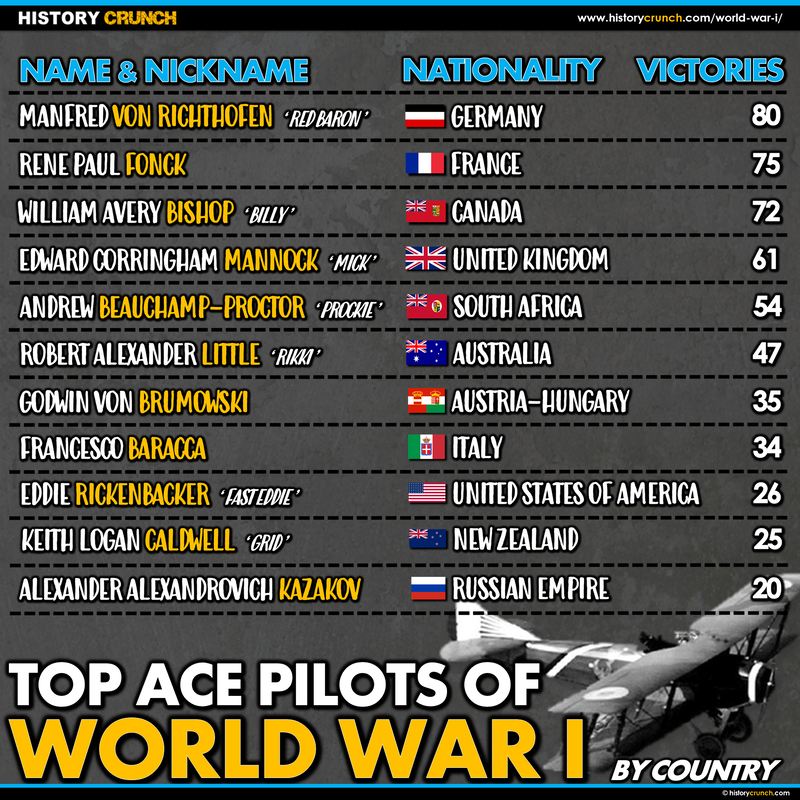
As well as the bomber, fighter planes developed during the course of World War I and the victorious pilots who flew them became known as ‘acesVictorious fighter pilots who became famous for shooting down many enemy aircraft in combat.’. Several of the aces from World War I became famous for their roles in the war, such as the ‘Red Baron’ from Germany. Fighter planes were smaller than the bombers and could turn and swerve much more easily in the air.
Fighter planes changed dramatically throughout World War I in construction and design. In the early stages of the war, pilots would only carry handheld pistols, which they could use to fire at other enemy aircraft. This meant that actual combat in the air was uncommon and rarely resulted in a pilot successfully taking down an enemy pilot. However, soon machine guns were fitted to the airplanes and rival enemy pilots began to participate in midair ‘dog-fightsMidair combat battles between rival enemy fighter pilots.’ against one another.
The issue that many planes struggled with in regards to the mounting of a machinegun was the placement of the gun. Early designs had the barrel of the gun placed behind the front propeller. This was not ideal as it meant that the bullets of the gun could hit the front propeller of the plane. To overcome this the machinegun was sometimes positioned above the propeller, and sometimes the blades of the propeller would be covered with metal in order to deflect any bullets and prevent the blades from being destroyed.
In the end, most fighter plane designs included machineguns that would time their firing to match the propeller to solve the issue. In fact, the Fokker Eindecker was the first aircraft from World War I that included a ‘synchronization gearA device that times a machine gun’s firing to match the spinning of the propeller so bullets miss the blades.’, which allowed the machinegun to time its firing with the spinning of the propeller. The Fokker Eindecker was a German plane and gave Germany an advantage in air superiorityWhen one side’s air force dominates and controls the skies over a battlefield. in the early period of World War I. It was first introduced into the battlefields of World War I in July of 1915.
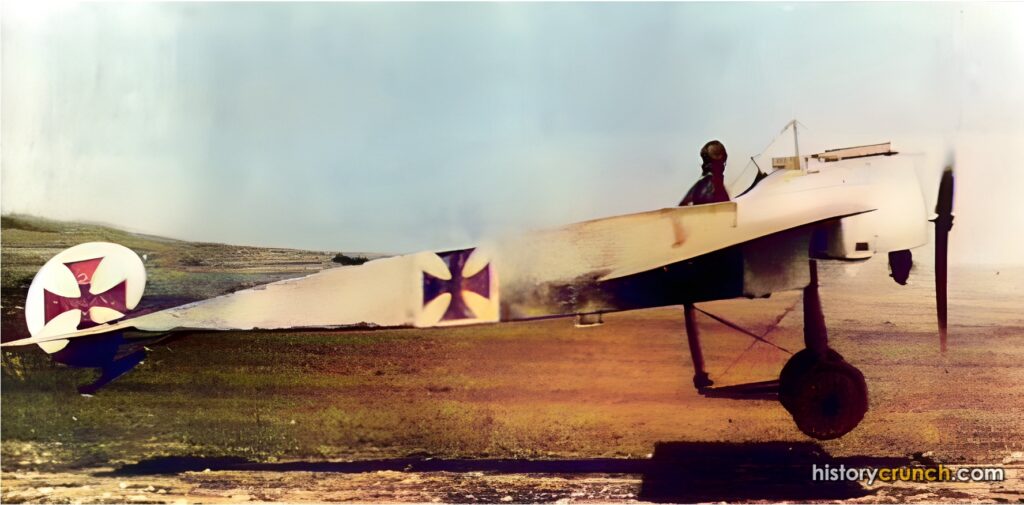
Which plane was the first to use a synchronization gear to fire a machine gun through the propeller in World War I?
Airplanes in the Battles of World War I
As stated above, airplanes played a role in the battles of World War I from a very early stage. In the early months of the war, this was generally for the use of reconnaissanceSpying on enemy troop movements and positions to gather information for forces on the ground. – spying on enemy troop and artillery placements. However, as the war progressed, and aircraft technology improved, the use of airplanes became more widespread. For instance, one of the first main examples of airplane use in World War I was the ‘Fokker Scourge’.
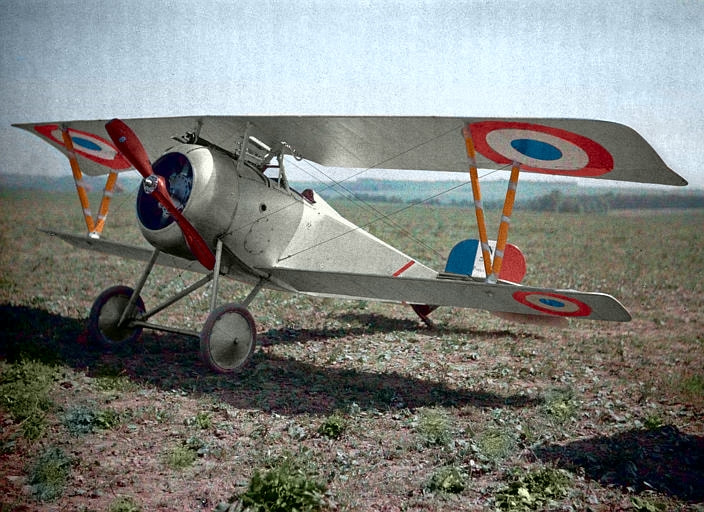
The Fokker Scourge was a time period from mid-1915 until early 1916 when the Imperial German Flying Corps dominated the battlefields of Europe and the air forces of Britain and France. This was due mainly to the introduction of the Fokker Eindecker in July of 1915, and the use of the synchronization gear for the machineguns. The Fokker Scourge continued until Britain and France were able to fight back with their own advanced planes.
Air superiority also proved important throughout the events of the Battle of the Somme and the Battle of Verdun. These were arguably, the largest battles of World War I and led to numerous casualties for all countries involved. Regardless, the Allied Powers (Britain and France) won control of the air during both battles, which occurred in 1916, although Germany held the advantage in the opening weeks at Verdun.
Aircrafts remained important on the Western Front until the end of the war, with the German Spring Offensives and the events of the Hundred Days Offensive.
 FactsthatCrunch
In July of 1915, Germany introduced the Fokker Eindecker, the first fighter plane fitted with a synchronization gear that timed its machine gun to fire between the spinning propeller blades.
World War I timeline · 1914 – 1918
Key Vocabulary
Reconnaissance
Payload
Synchronization gear
Dog-fights
Air superiority
Aces
Frequently Asked Questions
What were airplanes first used for in World War I?
Airplanes were first used for reconnaissance, which meant spying on enemy movements and positions. Pilots took photographs of the battlefield and reported back to forces on the ground. Spotting enemy artillery placement was one of their most important early tasks. Only later in the war did fighting in the air become common.
What were World War I airplanes made of?
Most World War I airplanes were built from wood and fabric. The body was usually made of wood, while the wings used wire framing covered in fabric. These materials were easy to work with but were easily damaged by enemy fire. The first all metal airplane, the German Junkers J1, appeared in 1915.
Who was the Red Baron?
The Red Baron was Manfred von Richthofen, a German fighter pilot and the top ace of World War I. An ace was a pilot who shot down many enemy aircraft in combat. Fighter pilots like him fought in midair battles known as dog-fights. These aces became famous for their skill and their number of victories.
How did pilots fire machine guns without hitting the propeller?
Pilots used a device called a synchronization gear that timed the gun’s firing with the spinning propeller. Early designs placed the gun poorly, so bullets risked striking the blades. Some planes mounted the gun above the propeller or covered the blades with metal instead. The German Fokker Eindecker, introduced in July of 1915, was the first plane with this gear.
What was the Fokker Scourge?
The Fokker Scourge was a period from mid 1915 until early 1916 when German airplanes dominated the skies. German success came from the Fokker Eindecker and its synchronized machine gun. British and French air forces struggled during this time. The scourge ended once the Allies developed their own advanced planes to fight back.
What kind of bombs could World War I planes carry?
Early bombing runs simply involved a crew member pushing a small bomb out of the aircraft by hand. This method was not accurate and rarely affected the battle below. Later planes were built with longer frames to carry heavier loads. The German Gotha G.V., first used in August of 1917, could carry fourteen 60-pound (27 kg) bombs.
Cite This Article
To cite this article as a source, use one of the formats below.
MLA: Beck, Elias. “Airplanes in World War I: A Detailed Summary.” HistoryCrunch, 29 September 2026, https://historycrunch.com/airplanes-in-world-war-i/.
APA: Beck, E. (2026). Airplanes in World War I: A Detailed Summary. HistoryCrunch. https://historycrunch.com/airplanes-in-world-war-i/
Chicago: Beck, Elias. “Airplanes in World War I: A Detailed Summary.” HistoryCrunch. September 29, 2026. https://historycrunch.com/airplanes-in-world-war-i/
Sources
- Fordham Modern History Sourcebook
- John Keegan, The First World War.
- Imperial War Museum