Guillotine and the French Revolution: A Detailed Summary

Guillotine and the French Revolution
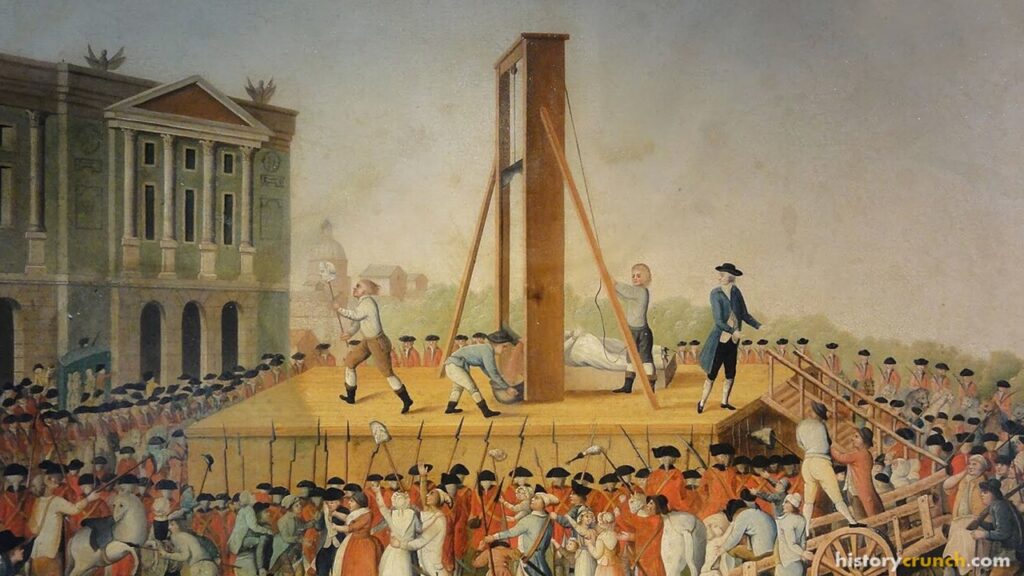
The execution of Marie Antoinette during the French Revolution.

Table of Contents

The guillotine was introduced to France at the beginning of the French Revolution.  French physician Joseph-Ignace Guillotin introduced the idea of the guillotine to the National Assembly in October of 1789 as a simple, yet effective means of execution.

The guillotine and the French Revolution are symbolically tied together through history. In fact, the guillotine became the most infamousWell known for something bad or shocking, making it stand out in a negative way. symbol of the French Revolution since it was used as the primary method of execution during the Reign of Terror. Designed for quick and supposedly humaneCausing as little pain or suffering as possible. death, it was seen as a tool of justice and equality. Thousands, including King Louis XVI and Queen Marie Antoinette, were executed by guillotine during the events of the French Revolution.

French Revolution

The guillotine was invented to make execution equal and less painful for all people, regardless of social class.

Myth or fact? Tap your call.
The truthFrench physician Joseph-Ignace Guillotin proposed the device to the National Assembly in October of 1789 specifically to end tortuous forms of capital punishment and apply the same quick method to every person in society, from nobles to commoners.
Source: Bibliotheque nationale de France© factsthatcrunch.comFacts that Crunch

What Was the Guillotine?

Europe had a long history of using execution devices before the French Revolution, but the guillotine came into widespread use during the years of the revolution.  In general, the guillotine was a device that beheaded an individual with the use of a large blade.  The blade would be pulled to the top of a large frame, under which the individual’s head, neck and shoulders would be placed.  The person would be held into place by stocksA wooden frame that locked a person’s head and limbs in place during execution. and the blade would be released to fall on their neck, decapitatingCutting off a person’s head, usually with a blade or other sharp tool. the person.  A basket was usually placed below the device to catch the head as it was removed from the body.
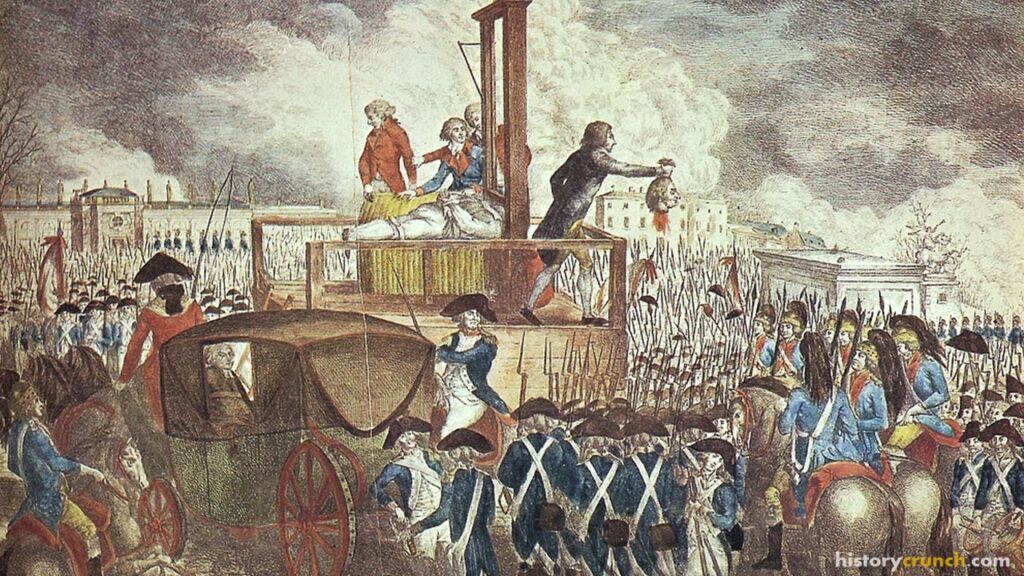
Execution of King Louis XVI by guillotine in Paris, January 1793
Execution of King Louis XVI during the French Revolution.
French RevolutionStep by StepInteractive
Facts that CrunchFactsthatCrunch

How did the guillotine carry out an execution during the French Revolution?
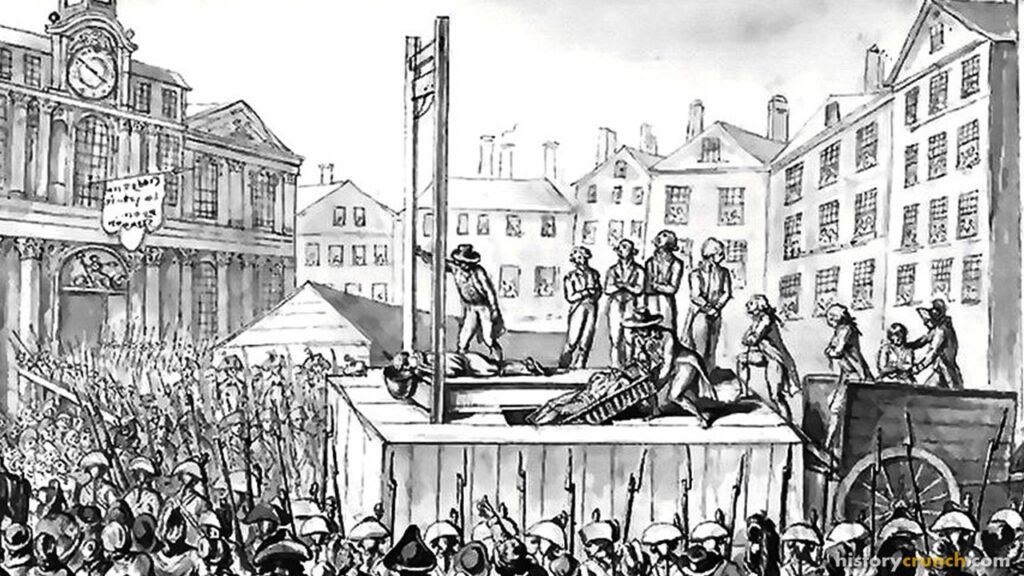
Illustration depicting a public guillotine execution in Paris, one of the thousands of executions that defined the Great Terror of the French Revolution in 1794.
Binding the Condemned
The person to be executed was brought to the guillotine and secured firmly with wooden stocks that locked the head, neck, and shoulders in place so the blade would land precisely.
Positioning the Neck
The stocks held the condemned face-down with the neck aligned directly beneath the lunette, the curved wooden block that framed the neck and kept it still.
Raising the [[Blade]]
The heavy angled iron blade, called the mouton, was pulled up by a rope and pulley system to the top of the tall upright frame, ready to be released.
Releasing the Drop
The rope was cut or released, and the blade fell rapidly along greased grooves in the frame, striking the back of the neck and severing the head in a fraction of a second.
Catching the Head
A wicker basket lined with sawdust was placed directly below to catch the severed head and collect the blood, keeping the platform clear for the next execution.
Public Display
In Paris, executions took place on a public platform so crowds could witness the event, which the revolutionary government presented as equal justice applied to all citizens regardless of class.
Source: National Archives of France© factsthatcrunch.comMore French Revolution Facts →

Guillotine and the French Revolution – Summary

The guillotine was introduced to France at the beginning of the French Revolution.  French physician Joseph-Ignace Guillotin introduced the idea of the guillotine to the National Assembly in October of 1789 as a simple, yet effective means of execution.  The National Assembly established a committee to investigate a new execution method that would apply to all people regardless of their class in society.  Traditionally, the French monarchy had used all sorts of forms of capital punishmentThe legal killing of a person by the government as a penalty for a crime., with beheading being reserved for the nobilityThe highest social class in a monarchy, such as lords and ladies, who had special privileges.. The goal was to end the torturous forms of capital punishment and instead, introduce a new method that executed the person with as little pain as possible while treating all in society as equals.  This is why the guillotine earned the name of the “National Razor”.

Eventually, the National Assembly adopted the guillotine as the only method of execution in France and a platform was constructed in Paris in order to carry out all public executions.  Throughout the French Revolution, the guillotine would see widespread use, but was most notable during the Reign of Terror.  The Reign of TerrorA period of extreme violence during the French Revolution when tens of thousands were executed. occurred from September of 1793 until July of 1794, and was a time period of extreme violence and paranoia during the French Revolution that resulted in the executions of tens of thousands of people.  This time period caused the guillotine to be associated with the excesses of the revolution and some called for an end to all of the executions.

Regardless, the guillotine would continue to be used throughout the revolution and was still used in France until 1977 when the last person was executed by the device.
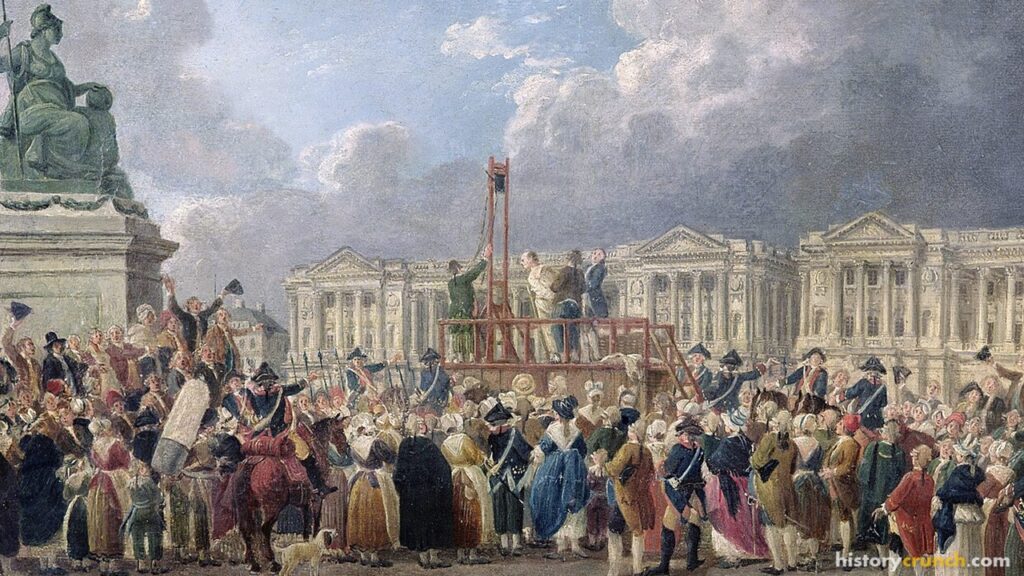
Execution on the future Place de la Concorde painting by Pierre-Antoine Demachy showing a public guillotining in 1793
‘Execution on the future Place de la Concorde’ by Pierre-Antoine Demachy. (1793) The Reign of Terror in the French Revolution saw the execution of thousands.
French RevolutionNotebook Bio
Facts that CrunchFactsthatCrunch
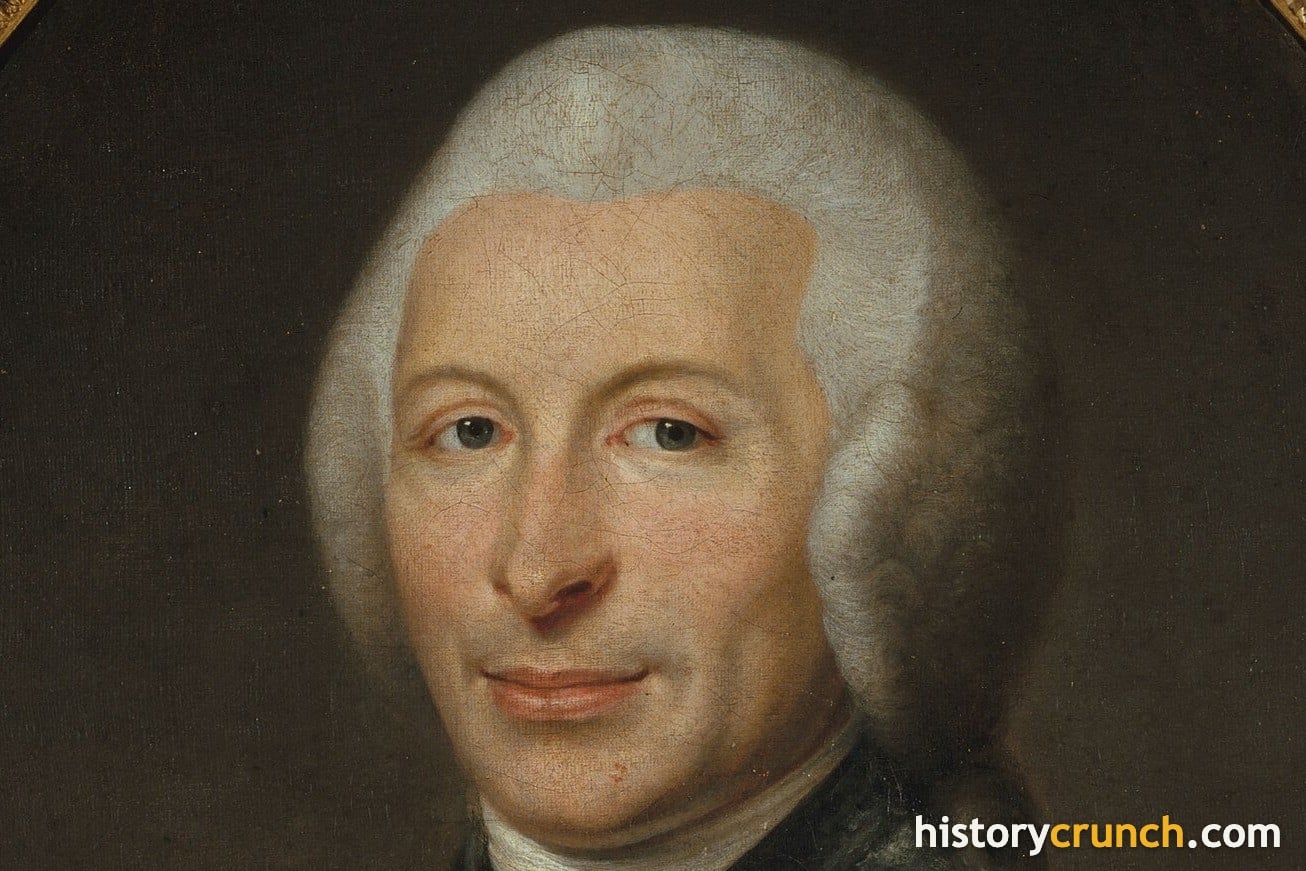
'Portrait of Joseph-Ignace Guillotin' by an unknown artist (18th Century).
Joseph-Ignace Guillotin
in French Revolution
French physician and National Assembly deputy
Physician: trained doctor who entered politics in 1789
Proposal: argued for equal, painless execution for all social classes
Legacy: name given to device he proposed but never designed
Source: Bibliotheque nationale de France© factsthatcrunch.comMore French Revolution Facts →

French Revolution timeline · 1789 – 1799

Ten years in which France destroyed its monarchy, tried to build a republic, and ended under Napoleon. The timeline runs from the Estates General to the coup that closed the revolution.
View Timeline →

Key Vocabulary

Humane
Causing as little pain or suffering as possible.
Decapitating
Cutting off a person’s head, usually with a blade or other sharp tool.
Stocks
A wooden frame that locked a person’s head and limbs in place during execution.
Capital punishment
The legal killing of a person by the government as a penalty for a crime.
Nobility
The highest social class in a monarchy, such as lords and ladies, who had special privileges.
Infamous
Well known for something bad or shocking, making it stand out in a negative way.
Reign of Terror
A period of extreme violence during the French Revolution when tens of thousands were executed.

Frequently Asked Questions

Who invented the guillotine?

French physician Joseph-Ignace Guillotin proposed the device to the National Assembly in October of 1789. He did not build it himself, but he suggested a fast and equal method of execution. The machine later took his name, which he reportedly disliked.

Why was the guillotine created?

The guillotine was created to make executions quick, painless, and equal for all people. Before the revolution, the French monarchy used harsh forms of capital punishment, and beheading was reserved for nobles. The new device applied the same method to everyone, no matter their class. This idea of equality earned it the nickname the “National Razor.”

How did the guillotine work?

The guillotine beheaded a person by dropping a large blade down a tall wooden frame. The victim’s head and neck were locked in place with stocks below the blade. When released, the blade fell and cut off the head in an instant. A basket was placed underneath to catch the head.

Who was executed by guillotine during the French Revolution?

King Louis XVI and Queen Marie Antoinette were among the most famous people executed by guillotine. Thousands of others also died on the device during the revolution. Most of these deaths came during the Reign of Terror, from September of 1793 to July of 1794. That period saw tens of thousands of executions across France.

When was the guillotine last used in France?

France used the guillotine until 1977, when the last person was executed by the device. This means it stayed in use for nearly two centuries after the French Revolution. The country later ended the death penalty in 1981. Today the guillotine is remembered mainly as a symbol of the revolution.

Cite This Article

To cite this article as a source, use one of the formats below.

MLA: Beck, Elias. “Guillotine and the French Revolution: A Detailed Summary.” HistoryCrunch, 22 September 2026, https://historycrunch.com/guillotine-and-the-french-revolution/.

APA: Beck, E. (2026). Guillotine and the French Revolution: A Detailed Summary. HistoryCrunch. https://historycrunch.com/guillotine-and-the-french-revolution/

Chicago: Beck, Elias. “Guillotine and the French Revolution: A Detailed Summary.” HistoryCrunch. September 22, 2026. https://historycrunch.com/guillotine-and-the-french-revolution/

Sources

  • William Doyle, The Oxford History of the French Revolution.
  • Peter McPhee, Liberty or Death: The French Revolution.
  • Liberty, Equality, Fraternity (revolution.chnm.org), George Mason
  • Jeremy D. Popkin, A New World Begins: The History of the French Revolution.

Facebook
X
Reddit
Pinterest
LinkedIn

We strive to produce educational content that is accurate, engaging and appropriate for all learners. If you notice any issues with our content, please contact us and let us know!

AUTHOR INFORMATION
Picture of Elias Beck

Elias Beck

I'm a passionate history and geography teacher with over 15 years of experience working with students in the middle and high school years. I have an Education Degree with a focus in World History. I have been writing articles for History Crunch since 2015 and love the challenge of creating historical content for young learners!
Impacts of the French Revolution
French Revolution

Impacts of the French Revolution: A Detailed Summary

The French Revolution had wide-ranging impacts on France and the rest of the world. The revolution ended the absolute monarchy of Louis XVI, brought about republican government, and spread the ideals of liberty and equality across Europe. This article details the main impacts of the French Revolution.

Le Serment du Jeu de paume, Jacques-Louis David painting of the 1789 Tennis Court Oath
French Revolution

Tennis Court Oath: A Detailed Summary

The Tennis Court Oath was one of the most significant events of the French Revolution. This article details the history and significance of the Tennis Court Oath.

Palace of Versailles
French Revolution

Palace of Versailles: A Detailed Summary

The Palace of Versailles was originally constructed in 1623 CE, but underwent numerous renovations in the decades that followed. This article details the history and significance of the Palace of Versailles, especially in relation to the events of the French Revolution.

To Versailles, To Versailles, 5 October 1789 restoration painting by an unknown artist
French Revolution

Women’s March on Versailles: A Detailed Summary

The Women’s March on Versailles was one of the earliest turning points of the French Revolution. In October of 1789, thousands of women marched from Paris to demand bread and force the king to answer to the people. The march ended with the royal family being taken back to Paris under the control of the revolution.

Charlotte Corday
French Revolution

Charlotte Corday: A Detailed Biography

Charlotte Corday was a prominent figure in the events of the French Revolution and was a key supporter of the Girondins. She became famous for assassinating Jean-Paul Marat in 1793. This article details the life and significance of Charlotte Corday, especially in relation to the French Revolution.