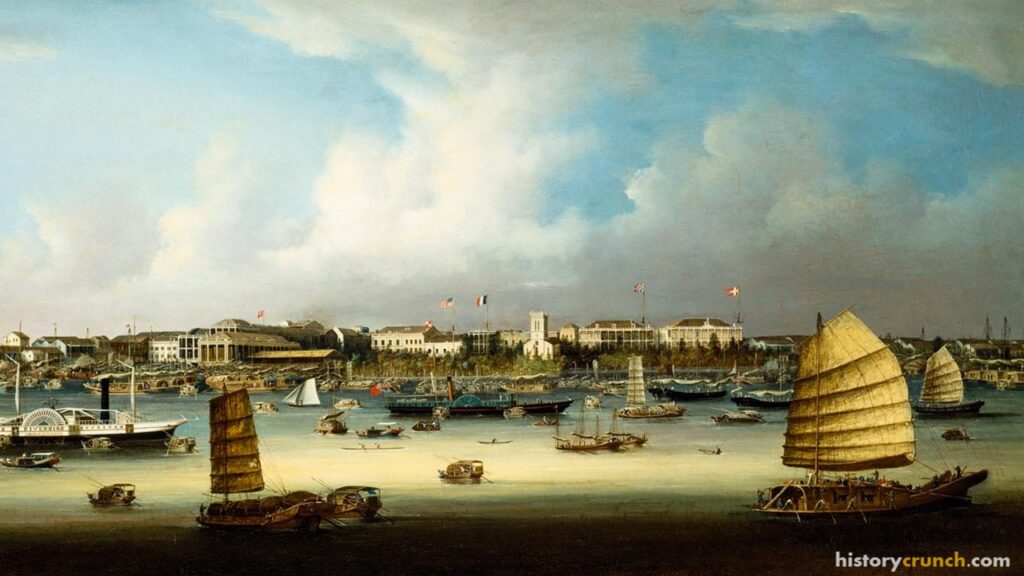
Imperialism in China occurred throughout the Age of Imperialism, alongside other major events such as: British Imperialism in India and European Imperialism in Africa. Imperialism in China is considered to have occurred primarily in the 19th century, but outside interest in China began centuries earlier. The major European nations of the time (Britain, France, Portugal, and Germany) played a significant role in imperialism in China. As well, other important nations that carried out expansion into China included Russia and Japan. By the early 20th century, these nations claimed large sections of China as ‘spheres of influenceAreas of a country where a foreign power has gained special economic or political control without formally colonizing it.’. In all, imperialism in China is a significant event in world history and led to the development of modern China.
China Before Imperialism (Qing Dynasty)
As stated above, the main period of imperialism in China occurred in the 19th century and continued into the early 20th century. At the time, the Qing Dynasty ruled China. In fact, the Qing Dynasty existed from the early 1600s until 1912, when the Republic of China replaced it. The Qing Dynasty was formed following the takeover of the country by Manchu forces, which was the northern region of China and is today referred to as Manchuria. The Manchu forces defeated the Ming Dynasty, which had controlled China since the 14th century.
The centuries during which the Qing Dynasty ruled over China were incredibly significant. In fact, Chinese society prospered during this time, and the Qing rulers were able to take control over large sections of land throughout the Far East. As such, when the first Europeans began to arrive in China in the 17th century, they were amazed by the sprawling and prosperous Chinese civilization.
 FactsthatCrunch
Early European Interest in China
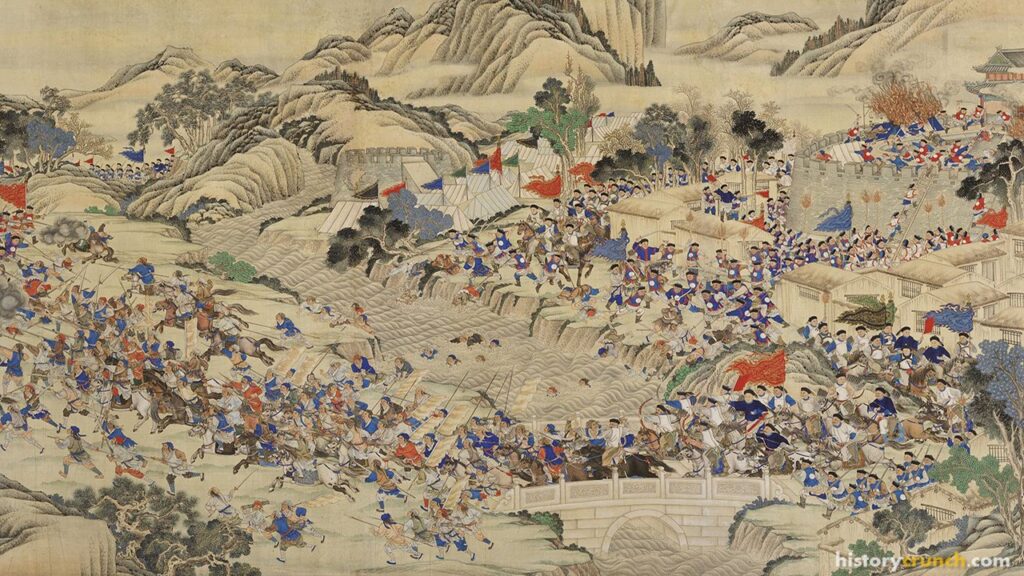
One of the earliest examples of European interest in China comes from the writings of Marco Polo. He was born in the Italian city-state of Venice in 1254. Polo is most famous for his travels along the Silk Road from 1271 to 1295. During this time, he supposedly reached China. His travels were discussed in the book titled ‘The Travels of Marco Polo’, which was published around the year 1300. The book was important in terms of inspiring others to travel to the Far East in the decades and centuries that followed.
The first European to reach China by sea was Jorge Álvares, who was a Portuguese explorer during the Age of Exploration. Álvares arrived in southern China in May of 1513. His arrival led to a wave of European merchants that travelled to China in hopes of gaining access to the many different types of goods that that country had to offer. The same was occurring in other regions of Far East Asia in the 18th century, including India and Indochina. For example, Britain famously colonized India with the economic trade of the British East India Company. As well, France had established routes to Indochina, which was partly made up of the modern nation of Vietnam.
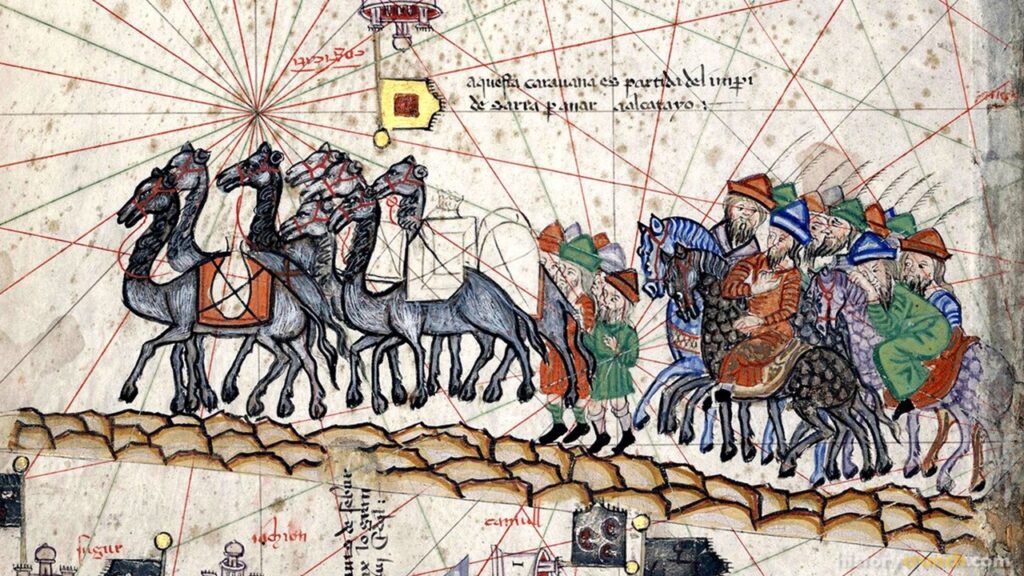
For their part, the Qing rulers wanted to limit European trading in their territory. As such, the Qing established the Canton SystemA Qing rule forcing all foreign nations to trade only at the single port of Canton, to limit outside contact with China., which forced all foreign nations to trade only at the port of Canton. The city of Canton, which today is called Guangzhou, is a city in the south of China. The Qing restricted all foreign nations and companies to trade as this port in the hopes of limiting outside influence on Chinese society. The Canton System annoyed the European merchants, because it limited their access to other parts of the country. Regardless, the demand for Chinese goods was high in Europe, which caused the European merchants to obey the Qing restrictions. The most popular Chinese goods in Europe included tea, silk and porcelain.
The demand for Chinese goods and increased trade led the European nations, especially Britain and France, to push China to end the Canton System of trade. This situation led to increasing tensions between the Qing rulers and foreign nations. At the same time, China was struggling with internal issues such as overpopulation and government corruption. As such, historians have argued that the Qing Dynasty began to lose some of its control over the nation. Regardless, the role that opium played in China came to have a significant impact on China’s trade with foreign nations and led to the First Opium War.
 FactsthatCrunch
The Canton System forced all European traders into a single southern port, giving Qing China tight control over outside contact but creating tensions that reshaped the country's future.
It limited every foreign merchant to the port of Canton, today called Guangzhou, blocking access to the rest of China and keeping European commercial reach narrow and controlled.
European demand for Chinese tea, silk, and porcelain was strong enough that merchants accepted the restrictions rather than walk away, which showed how much leverage the Qing held over trade in the short term.
Over time, frustration with the Canton System pushed Britain and France to pressure the Qing to open more ports, and that pressure was a direct cause of the First Opium War, fought from September 4th, 1839 to August 29th, 1842.
Britain's victory in the First Opium War ended the Canton System and produced the Treaty of Nanking, which China called an unequal treaty, marking a turning point from Qing control to growing western dominance in Chinese trade.
Imperialism in China – Opium Wars
The Opium Wars were two major conflicts in China during the 19th century that related to western imperialism in the Asian country. Click on the links below to read more detailed information about each of the two Opium Wars.
The First Opium War was fought between the Qing Dynasty of China and Britain and took place from September 4th, 1839 until August 29th, 1842. As stated above, the Qing Dynasty attempted to control outside influence in the country through the ‘Canton System’. The Qing restricted all foreign nations and companies to trade at Canton in the hopes of limiting outside influence on Chinese society. The Canton System annoyed the European merchants, because it limited their access to other parts of the country. As such, the First Opium War resulted from European frustrations against the Canton System. It also grew out of China’s efforts to stop the British opium trade, after Chinese officials destroyed more than a thousand tons of British opium at Canton in 1839.
The First Opium War was a major victory for the British Empire in the Far East. For instance, the victory resulted in the Treaty of Nanking and gave Britain significant trading power in China. The Chinese referred to it as an ‘unequal treatyA term China used for agreements signed with western powers that China considered unfair and forced upon it.’, which is a term they gave to a series of treaties that they signed with western powers that they considered unfair or unjust.
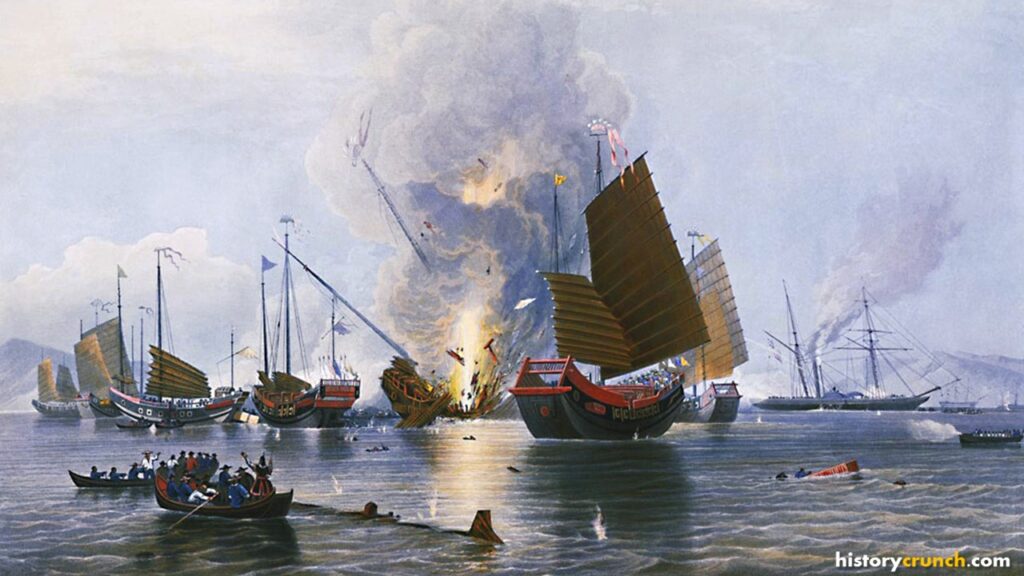
The Second Opium War was another important conflict between the Qing Dynasty of China and the British and French Empires. It that took place from October 8th, 1856 until October 24th, 1860. While the Treaty of Nanking from the First Opium War was incredibly beneficial to British interests in China, Britain wanted to gain more access to the region throughout the 1840s and 1850s. In fact, Britain demanded that opium be legalized in China, and argued for even more control over general trade within all of China.
The Second Opium War ended in October of 1860 following the Convention of Peking, which saw the Qing leadership agree to terms with the British, French and Russia. In all, the Second Opium War (combined with the First Opium War) was a humiliating loss for the Qing Dynasty and led to increased western influence in China. In fact, the major western powers of the time (Britain, France, Russia, Japan and Germany) established major spheres of influence in China that lasted throughout the end of the 19th century. As a result, the Qing loss in the Second Opium War led to increased trade by the western powers in China and resulted in growth for the overall trade of opium in China.
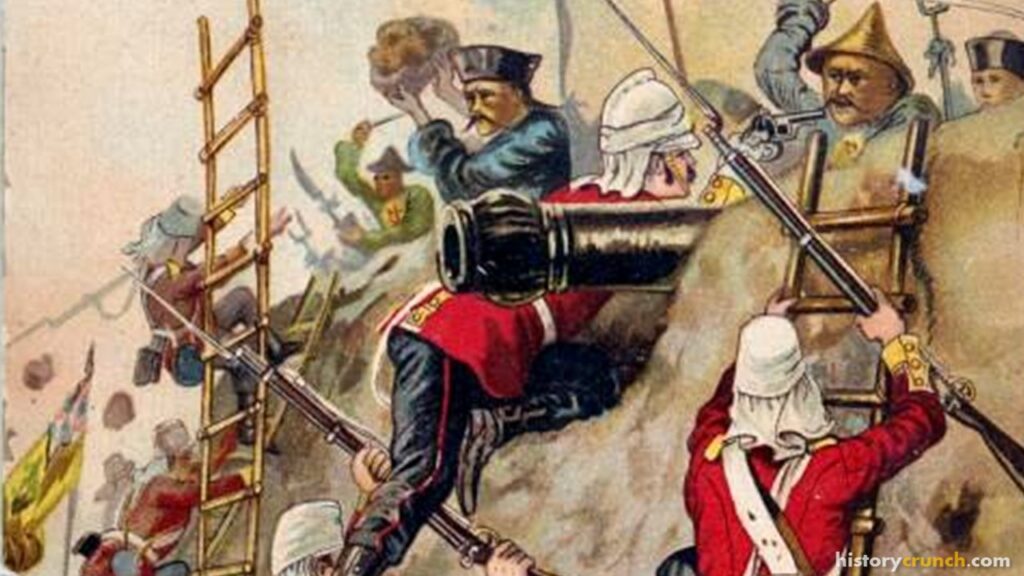 FactsthatCrunch
The First and Second Opium Wars both pitted western powers against China's Qing Dynasty, but they differed in who fought, how long they lasted, and what treaties ended them.
Outside Influence in China
The 19th century was a time of great change for China. At the time, the western powers were at their height in terms of the Age of Imperialism and had established large empires across the world. As such, they were also imposing their influence on China in the form of ‘spheres of influence’. In fact, the major western powers of the time (Britain, France, Russia, Japan and Germany) established major spheres of influence in China that lasted throughout the end of the 19th century. The western victories in the two Opium Wars were important factors in the expansion of these spheres of influence and the downfall of authority of the Qing government. For instance, the Nanking Treaty of the First Opium War, and the four Treaties of Tientsin of the Second Opium War were important factors in western expansion in China. For this reason, China referred to the treaties with the western parties as the ‘unequal treaties’.
As stated above, following its loss of the two Opium Wars, China entered a period where foreign imperial powers developed spheres of influence within its borders. Each of the following nations developed and established spheres of influence in China after the mid-1800s: France, Britain, Germany, Russia and Japan. For example, by 1860, Russia had taken a large portion of northeastern China through treaties and controlled it as its own ‘sphere of influence’.
Japan also took advantage of China in its weakened state. For example, it worked to increase its influence in Korea, a country that China had formerly dominated. The two countries eventually erupted into war over control of Korea in the form of the First Sino-Japanese War, which took place from 1894 to 1895. Similar to the previous Opium Wars, the First Sino-Japanese War proved to be another crushing defeat for the Qing Dynasty and China. As a result, China was forced to recognize Korea’s independence and give the island of Taiwan and the Liaodong Peninsula to Japan. Pressure from Russia, France and Germany soon forced Japan to return the Liaodong Peninsula. As well, Japan began to establish its own sphere of influence on the eastern coast of China.
For its part, the United States did not establish its own sphere of influence within China but the United States government argued that it should receive the same commercial and trading rights as the other western powers. More specifically, the United States sought to establish an ‘Open Door Policy’ in China meaning it wanted equal access to trade in China for all nations. The policy was meant to prevent foreign powers from carving up China into colonies, thus denying the United States access to lucrative trade markets.
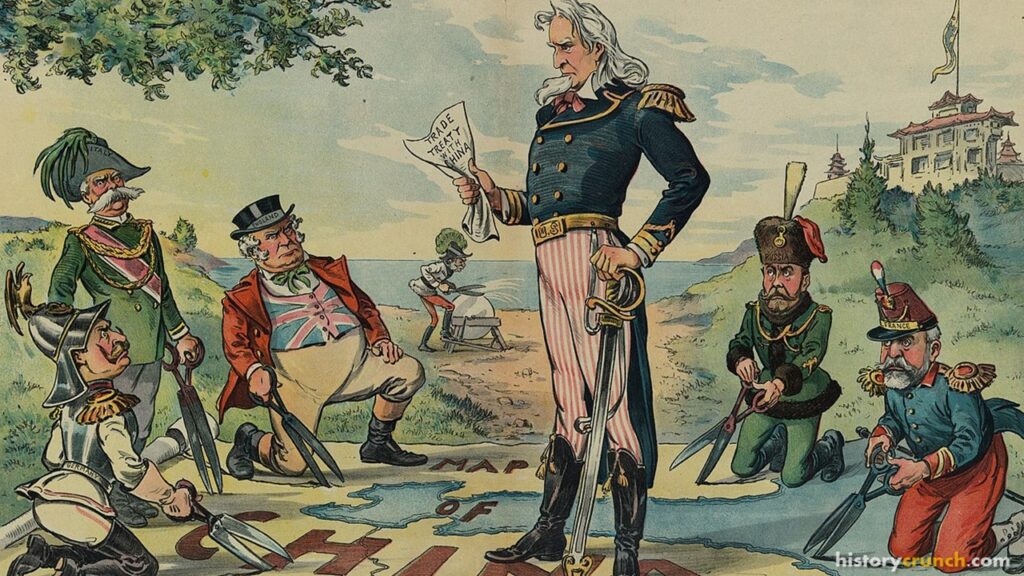 FactsthatCrunch
The United States had not claimed a sphere of influence in China, so it pushed for equal commercial access for all nations. Secretary of State John Hay sent notes to the major powers in 1899 arguing that no country should be able to lock others out of trade within its sphere. Washington saw the policy as fair to China and necessary to keep American merchants competitive.
Britain, France, Germany, and Russia had each secured their own spheres of influence in China through treaties and military pressure. They viewed those zones as hard-won commercial advantages that gave them priority over rivals. Accepting the Open Door principle meant sharing markets they considered already theirs, and most of the powers agreed to it only in vague and non-binding terms.
Imperialism in China – Boxer Rebellion
The next major event in the history of imperialism in China was the Boxer Rebellion, which occurred from November 2nd, 1899 to September 7th, 1901. It saw Chinese nationalists, which were known as ‘Boxers’ rise up and fight against western influence in China. In fact, the Boxers fought to end western imperialism in China, as well as bring a stop to the spread of Christian missionaries. As a result, the Boxer Rebellion is a significant event in the timeframe of western imperialism in China and occurred during the end stages of the Qing Dynasty.
The Boxer Rebellion ended formally on September 7th, 1901 with the signing of the Boxer ProtocolThe 1901 agreement ending the Boxer Rebellion, requiring China to pay 450 million taels of silver and accept foreign troops in Peking.. The Boxer Protocol was an agreement between the Qing Empire of China and the Eight Nation Alliance. It contained many clauses, but the most significant included provisions for punishment against China and the Boxers, as well as protections for the foreign nations going forward. As part of the agreement, the Qing government was to pay 450 million taelsA Chinese unit of measurement used to weigh silver, used here to calculate the payment China owed after the Boxer Rebellion. (Chinese system of measurement) of silver to the countries of the Eight Nation Alliance over a period of 39 years. At the time, this was equivalent to around $330 million USD. As well, the Boxer Protocol gave the foreign powers the ability to place their forces in Peking on a continuous basis. Also, it called for the punishment (including execution) of anyone in the Chinese government or Boxer movement that supported the Boxer Rebellion.
In the end, the Boxer Rebellion was a significant event in the history of China. It highlighted the pressures that the country was under at the time, due to the tensions created by foreign influence and western imperialism. As such, historians consider the Boxer Rebellion important to the history of the Age of Imperialism.
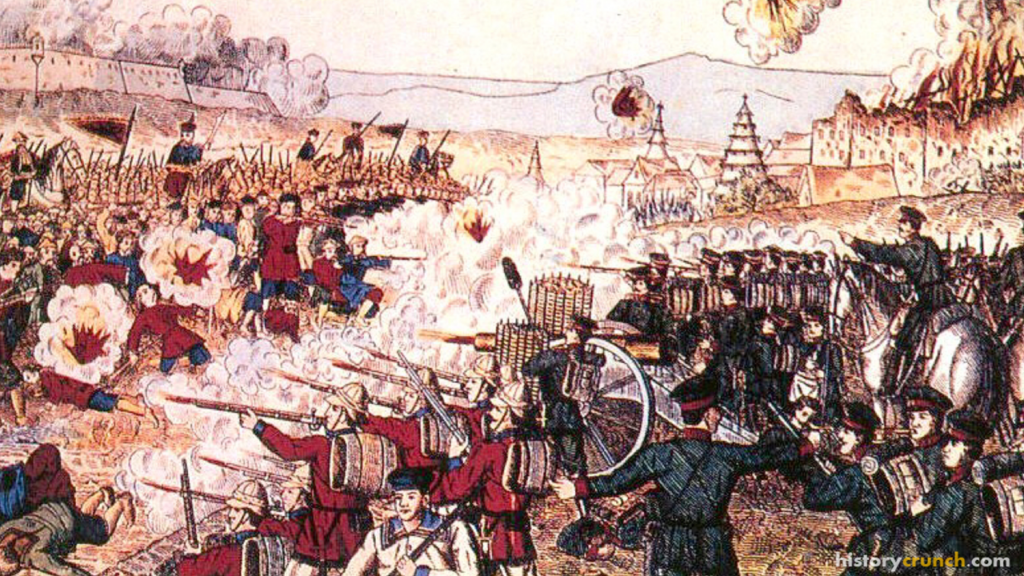 FactsthatCrunch
The Boxer Rebellion killed approximately 100,000 people, the massive human cost that directly led foreign powers to demand the punishing Boxer Protocol of 1901.
The great majority of those killed were civilians, including more than 30,000 Chinese Christians and approximately 200 foreign missionaries. Historians also count around 2,500 foreign soldiers killed, along with many thousands of Boxers and Chinese soldiers. The scale of the violence gave the Eight Nation Alliance the justification it used to impose the 450 million taels of silver indemnity on China through the Boxer Protocol, signed on September 7th, 1901.
Significance of Imperialism in China
In the end, the period of western imperialism in China during the Age of Imperialism was a very significant event. It saw China become dominated by the major powers of the time, such as: Britain, France, Germany, Japan and Russia. As well, the United States exerted its influence in the region with the ‘Open Door PolicyA United States proposal demanding equal trading access to China for all nations, to prevent it from being divided into closed colonies.’. Regardless, China struggled to maintain its own sovereigntyA nation’s full, independent power to govern itself without outside control. throughout the 19th century and increasingly came under the control of foreign influences.
This opened up China to more trade opportunities for the western powers and created a large market for the goods from across the world. As such, alongside other significant events of the Age of Imperialism (British Imperialism in India and European Imperialism in Africa), Imperialism in China was an important event in world history.
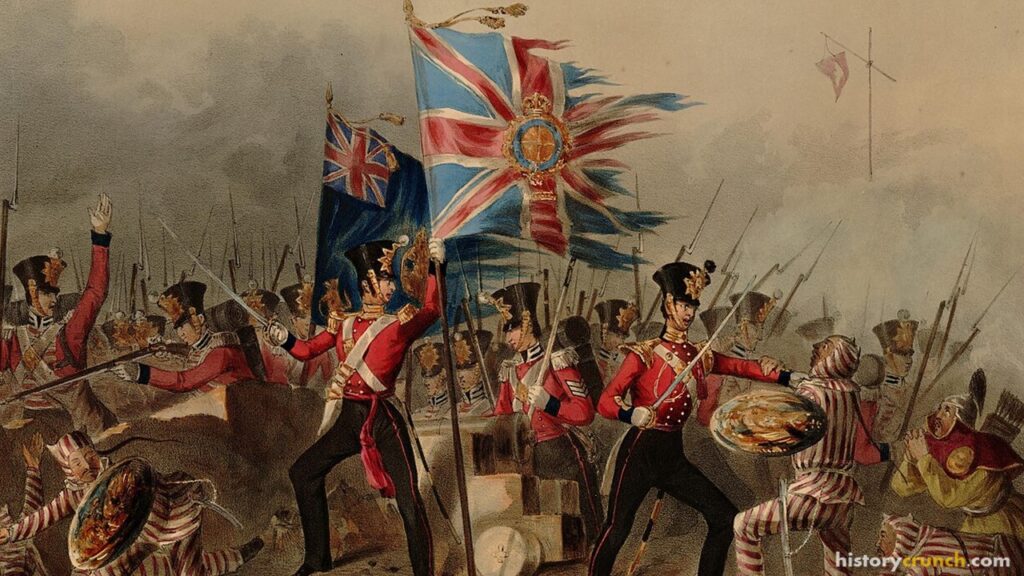 FactsthatCrunch
In 1912, the Qing Dynasty ended after more than 260 years of rule, and China became a republic.
Defeats in the Opium Wars, the First Sino-Japanese War, and the Boxer Rebellion left the Qing government weak and in debt to foreign powers. Many Chinese came to blame the dynasty for failing to stand up to imperialism.
Explore Age of Imperialism · 1870 – 1914
Keep exploring Age of Imperialism with these History Crunch resources.
Key Vocabulary
Spheres of influence
Canton System
Unequal treaty
Sovereignty
Boxer Protocol
Open Door Policy
Taels
Frequently Asked Questions
What was imperialism in China?
Imperialism in China was the period when foreign powers forced their influence and control onto the country. It happened mainly in the 19th century and into the early 20th century. Britain, France, Germany, Russia, and Japan each claimed sections of China as spheres of influence. These nations gained trading power at the expense of the Qing Dynasty.
What were the Opium Wars?
The Opium Wars were two conflicts in the 19th century between China and western powers over trade. The First Opium War ran from 1839 to 1842 and was fought between China and Britain. The Second Opium War ran from 1856 to 1860 and added France and Russia against China. Both wars ended in defeat for the Qing Dynasty and gave western nations more control.
What was the Canton System?
The Canton System was a Qing rule that forced all foreign nations to trade only at the port of Canton. Today that city is called Guangzhou, in the south of China. The Qing used the system to limit outside influence on Chinese society. European merchants disliked it because it blocked their access to the rest of the country.
What was the Boxer Rebellion?
The Boxer Rebellion was an uprising by Chinese nationalists against foreign influence from 1899 to 1901. The fighters, known as Boxers, wanted to end western imperialism and stop Christian missionaries. The revolt was put down by the Eight Nation Alliance. It ended with the Boxer Protocol, which forced China to pay a huge amount of silver.
What was the Open Door Policy?
The Open Door Policy was a United States plan for equal trade access to China for all nations. Unlike the European powers, the United States did not claim its own sphere of influence. Instead, it wanted to stop other nations from carving China into closed colonies. This way, American traders could still reach China’s markets.
Which dynasty ruled China during the Age of Imperialism?
The Qing Dynasty ruled China during the main period of imperialism. It existed from the early 1600s until 1912, when the Republic of China replaced it. The Qing came to power after Manchu forces defeated the Ming Dynasty. Internal problems and defeats in war slowly weakened Qing control over the country.
Cite This Article
To cite this article as a source, use one of the formats below.
MLA: Beck, Elias. “Imperialism in China: A Detailed Overview.” HistoryCrunch, 28 October 2026, https://historycrunch.com/imperialism-in-china-overview/.
APA: Beck, E. (2026). Imperialism in China: A Detailed Overview. HistoryCrunch. https://historycrunch.com/imperialism-in-china-overview/
Chicago: Beck, Elias. “Imperialism in China: A Detailed Overview.” HistoryCrunch. October 28, 2026. https://historycrunch.com/imperialism-in-china-overview/
Sources
- Fordham Modern History Sourcebook
- John Darwin, After Tamerlane / Unfinished Empire.
- Eric Hobsbawm, The Age of Empire 1875-1914.
- State Department: Office of the Historian