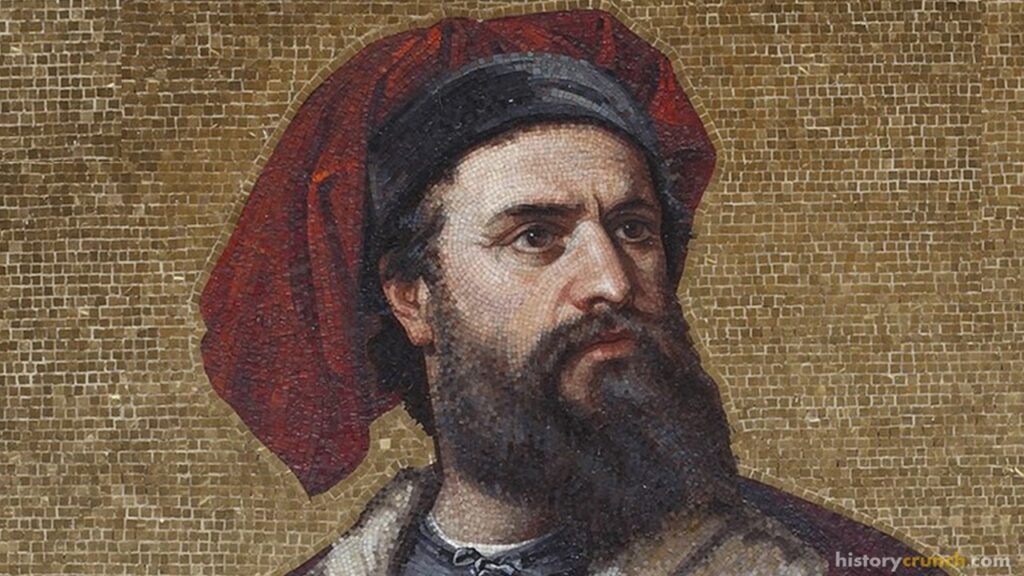
Marco Polo was a Venetian merchant and explorer during the 13th century. He famously travelled and wrote about his journey into Asia, which was shocking to many in Europe at the time. In fact, his detailed accounts of Asia, especially China under the Mongol Empire, expanded European understanding of the world and inspired future explorers such as Christopher Columbus. As such, historians consider Marco Polo to be a significant figure in several historical events and periods, including: Middle Ages, Renaissance and Age of Exploration.
MARCO POLO – EARLY LIFE
Marco Polo was born in 1254 in the city-state of Venice, in modern-day Italy. However, the exact place and date of his birth are unknown and has become a topic of debate amongst some scholars. Also very little is known about Marco’s childhood, but it is likely that he spent much of his early years in Venice. Marco Polo’s mother died when he was very young and as a result he was cared for by his aunt and uncle. While Marco’s early life is not well documented, he likely received an education in languages, commerce, and navigation. These are all skills essential for trade and travel, which he made use of later in life.
Marco Polo’s father, Niccolo and uncle, Maffeo, worked together as merchants and traded with many countries, in particular those in the Middle East and Asia. The two men travelled widely and became very wealthy and achieved great prestige. Neither of them were around in Marco Polo’s childhood, however when they returned to Venice in 1269, they taught him about the mercantile trade. Niccolo and Maffeo told Marco all about ships, voyages and exploration opportunities.
MARCO POLO – TRAVELS TO THE FAR EAST
In 1271, when Marco was about 17 years old, he joined his father and uncle on a journey that would take them far beyond the known world of Europe. They explored many Asian countries and were amazed by the wealth and size of the countries. In fact, the journey to Asia took nearly four years, passing through regions that now include Turkey, Iran, Afghanistan, the Pamir Mountains, and the Gobi Desert. Eventually, they reached Shangdu (Xanadu) and later Khanbaliq (modern-day Beijing), where they were received by Kublai Khan, the leader of the Mongol Empire and grandson of Genghis Khan.
The trip lasted for over 24 years and covered over 15,000 miles (24,000 kms). On the journey the men accumulated a great deal of knowledge and experience. Marco learnt at least four different languages on the expedition which came in very useful when the men were trading in international markets. As well, Marco Polo served in Kublai Khan’s court for roughly 17 years, undertaking diplomatic missions and administrative duties that took him throughout the empire. For instance, it is believed that he visited regions such as Yunnan, Tibet, and possibly Burma. In fact, in his writings he described grand cities, advanced infrastructure, paper money, postal systems, and technologies that were far ahead of contemporary Europe. His observations offered a rare, firsthand look at Mongol China, its customs, economy, and governance. Polo also wrote about other parts of Asia, including India, Japan (which he called Cipangu), and Southeast Asia. Although it’s debated whether he visited all these places or relayed secondhand reports.
MARCO POLO – RETURN TO VENICE
In 1295, the Polo family returned to Venice after 24 years abroad, carrying with them goods, riches, and stories unlike anything Europe had heard before. When the three men returned from their Asian adventures in 1295 they were very wealthy indeed, but they found that Venice was at war with Genoa and they were unable to return to their previous lives. As a result, Marco Polo was arrested and imprisoned during a naval conflict with the rival city-state of Genoa.
In prison, Marco Polo passed the time by telling his cellmate, Rustichello da Pisa, all about his Asian travels. Da Pisa was a romance writer and wrote down the stories from Marco Polo’s travels. The book, known as ‘The Travels of Marco Polo’ was one of the first accounts of Asia, and told readers of the great size and wealth of China and other Asian countries. Furthermore, it mentioned the vast Mongol administration and army, with advanced technologies such as coal, gunpowder, and the compass. Finally, he also described exotic animals, customs, religions, and cultures of the regions he visited.
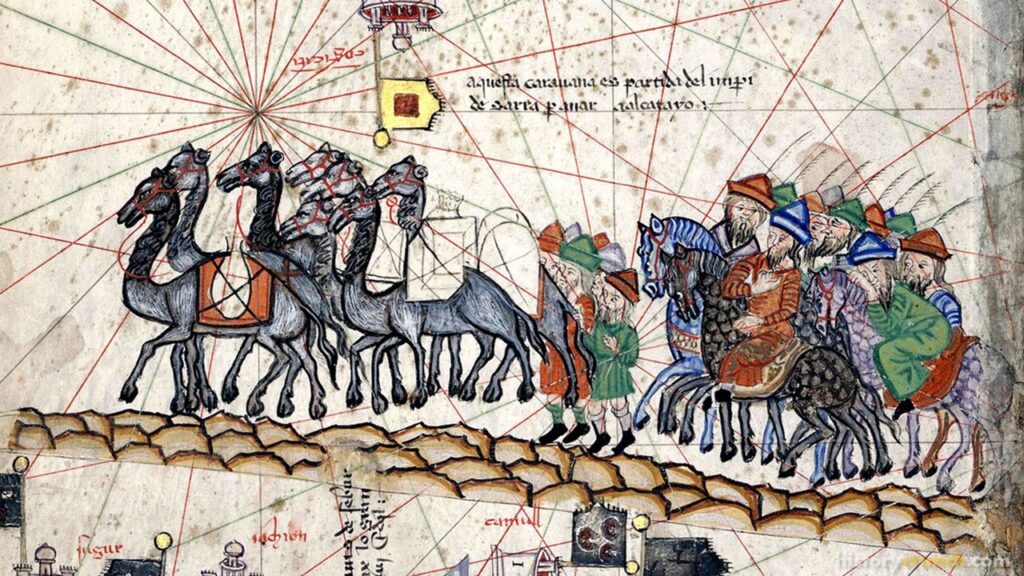
‘The Travels of Marco Polo’ spread throughout Europe in manuscript form, and sparked intense curiosity about Asia. Although there is debate about how much of the book was fiction and how much actually happened. Regardless, the book that detailed Marco Polo’s travels inspired many other travellers, including Christopher Columbus during the Age of Exploration. Marco Polo also influenced cartography in Europe, helping to fill in gaps in existing maps.
MARCO POLO – LATER LIFE AND DEATH
When Marco Polo was released from prison in 1299, he returned home to Venice where he found that his uncle and father had purchased a company, which financed many expeditions and as a result Marco Polo and his family became very successful and very wealthy. Marco Polo married Dibata Badoer in 1300, and they had three daughters. Marco Polo died in 1324, and was buried in Venice. He divided his assets up between the church, individuals and the range of guilds to which he belonged. He also wrote off a number of debts that people owed him.
MARCO POLO – SIGNIFICANCE
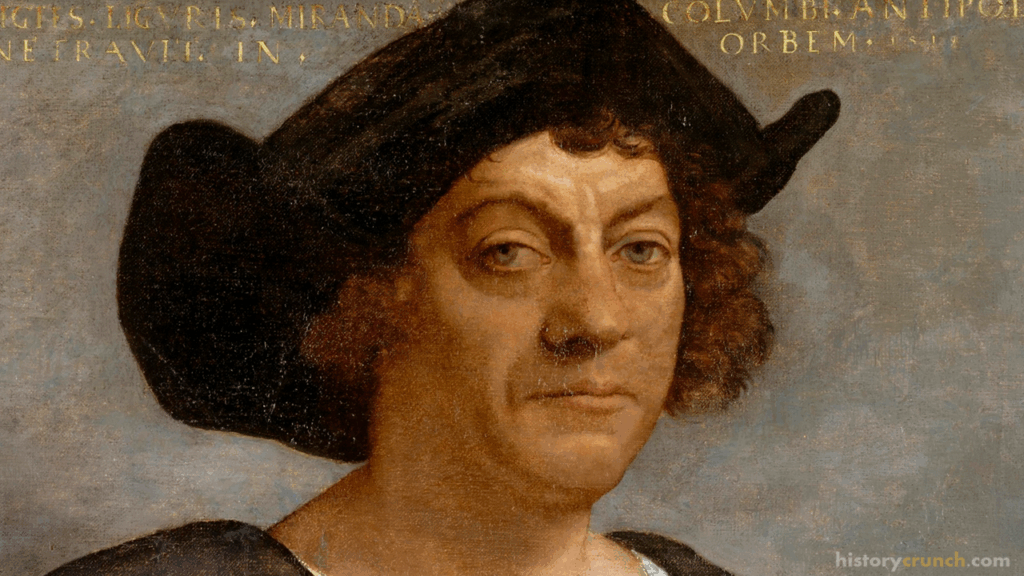
Marco Polo was one of the most significant figures in the history of European exploration. In fact, ‘The Travels of Marco Polo’ was a key source of inspiration for explorers of the 15th and 16th centuries. For example, Christopher Columbus carried a copy of Marco Polo’s book during his voyages and believed he might reach Asia using similar routes.
The book also influenced mapmakers and navigators in their understanding of Asia’s size and wealth. In fact, Polo’s descriptions helped expand European geographic knowledge. Although not always accurate by modern standards, the scope and detail of his writings offered Europe’s first comprehensive vision of Asia.
Finally, his account encouraged increased interest in trade with regions of Asia, paving the way for future exploration along the Silk Road and eventually the search for sea routes to bypass it. As such, historians view Marco Polo as a significant figure in the history of the Age of Exploration, the Renaissance and the Middle Ages.