Battle of Chateau-Thierry in World War I: A Detailed Summary

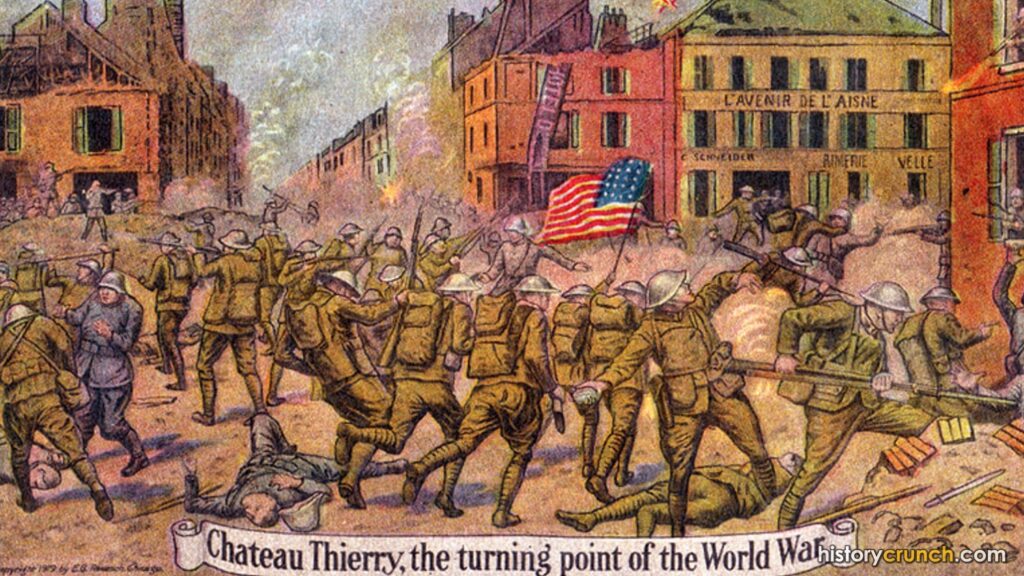
A postcard that shows the World War I Battle of Château-Thierry.

Table of Contents

The Battle of Chateau-Thierry in World War I was an important conflict along the Western Front. For example, it was the first major battle that American forces participated in during the First World War.

The Battle of Château-Thierry was a significant battle of World War I along the Western Front, which was the line of trenches that stretch through Belgium and northern France on the western edge of Germany.  The Western Front involved some of the largest battles of World War I and involved the Allied Nations facing off against the German Army.  One of the main reasons that the Battle of Château-Thierry was so significant was because it was the first major conflict that involved American forces in World War I.​

WHAT HAPPENED DURING THE BATTLE OF CHATEAU-THIERRY IN WORLD WAR I?

The Battle of Château-Thierry took place on May 31st, 1918 and was part of the larger Second Battle of the Marne, which was related to the German Spring Offensives of 1918.  As such, a major component of the Battle of Château-Thierry, was Allied forces (French and American soldiers) defending their positions against German attacks.  In fact, German General Erich Ludendorff, planned the German attack as an attempt to overwhelm the French defenders in Northern France, and open a path for the German soldiers.  For example, the Germans began their assault on the French line and overran the French 6th Army.  As a result, The American Expeditionary Force (AEF) under the command of John J. Pershing circled around to assist the French and stop the German advance.  More specifically, the Germans were able to push through the French defenses and made it to the Marne River, which was only about 50 miles from the French capital of Paris.  As such, the American 3rd Division was mobilized to an important bridge on the Marne River near the town of Château-Thierry on May 31st in 1918 in aid of the French.​

The Germans attacked the bridge, as the American and French defenders replied with heavy machinegun fire.  The fighting continued with artillery and sniper fire, which led to numerous casualties on both sides.  The Allies were successful in preventing a German advance and were even able to carry out their own counter-attack.  For example, on July 18th, 1918, French and American forces attacked German positions near Château-Thierry, which caused the Germans to retreat from the area.
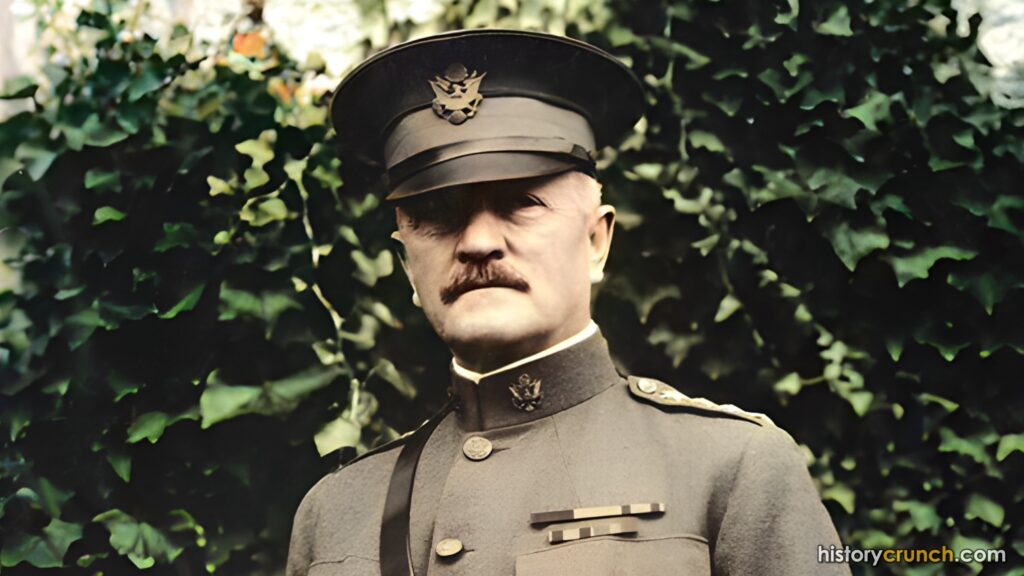
America WW1 Pershing
John J. Pershing was the commander of the American Expeditionary Forces (AEF) during World War I. (Colorized by historycrunch.com)

WHY WAS THE BATTLE OF CHATEAU-THIERRY SIGNIFICANT?

In all, the Battle of Château-Thierry was an important Allied victory and one of the first engagements for the newly formed American Expeditionary Force in World War I.  During the battle, the Americans and French suffered a combined 1,900 casualties, while the Germans endured over 5,300.​

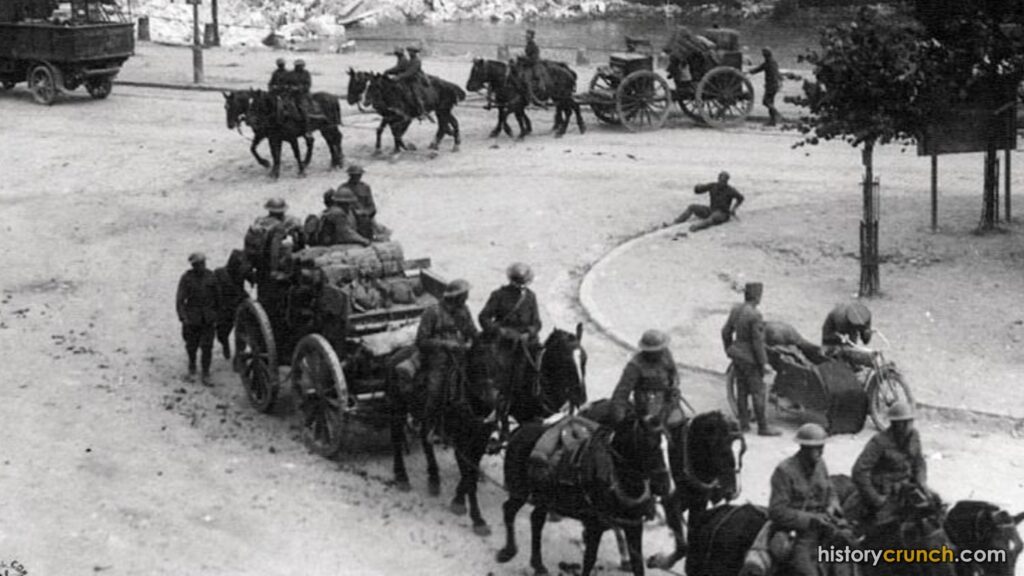
United States artillery crews and horses during the Battle of Château-Thierry in World War I.
Facebook
X
Reddit
Pinterest
LinkedIn

We strive to produce educational content that is accurate, engaging and appropriate for all learners. If you notice any issues with our content, please contact us and let us know!

AUTHOR INFORMATION
Picture of Elias Beck

Elias Beck

I'm a passionate history and geography teacher with over 15 years of experience working with students in the middle and high school years. I have an Education Degree with a focus in World History. I have been writing articles for History Crunch since 2015 and love the challenge of creating historical content for young learners!
Meuse-Argonne Offensive in World War I
World War I

Meuse–Argonne Offensive in World War I: A Detailed Summary

The Meuse-Argonne Offensive in World War I was a major event on the Western Front. In particular, it was especially important to the United States, since it is the second deadliest campaign in United States history, behind only the Normandy Invasion of World War II.

David Lloyd George
World War I

David Lloyd George: A Detailed Biography

David Lloyd George was the Prime Minister of Great Britain during World War I who guided his country to victory and played a central role in negotiating the Treaty of Versailles as one of the Big Three at the Paris Peace Conference. This article details the life and significance of David Lloyd George.

Role of Women in World War I
World War I

Role of Women in World War I: A Detailed Summary

The role of women in World War I was based on several significant contributions and changes that occurred at the time. For example, women contributed to the war effort by entering the workforce, nursing, military roles and contributing on the home front. As well, the women’s suffrage movement also occurred, which changed the role of women in society at the time.

Shell Shock in World War I
World War I

Shell Shock in World War I: A Detailed Summary

Shell Shock in World War I was an important aspect of the experience for the soldiers of the First World War. In fact, it was especially important to understanding the life for soldiers in the trenches of World War I.

Marxism
Political Systems

Marxism: A Detailed Summary

In the early 20th century, Marxism inspired revolutions, most notably the Russian Revolution of 1917, which established the world’s first communist state under Vladimir Lenin. This article details the history, main principles and significance of Marxism.

Flu Pandemic of 1918
World War I

Flu Pandemic of 1918 (Spanish Flu): A Detailed Summary

The Flu Pandemic of 1918 (also known as the ‘Spanish Flu’) was a devastating event that occurred at the end of World War I. Historians estimate that as many as 50 million people died as a result of the pandemic.