The Eighth Crusade was launched in 1270 by King Louis IX of France, targeting the Muslim-held city of Tunis in North Africa. The campaign was poorly planned and plagued by disease, resulting in the death of Louis IX shortly after landing.
What Were the Crusades?
The Crusades are one of the most significant events in the history of Europe and the Middle East. They were a series of religious wars carried out by Christian crusaders from Europe during the timeframe of the Middle Ages. Beginning in 1095 CE, the Crusades saw European knights and noblemen travel to the Middle East in an attempt to capture the Holy Land away from Muslim people that had controlled the region for the previous centuries. The term crusade means ‘cross’. Therefore, the Europeans that became crusadersChristian soldiers from Europe who traveled to fight in religious wars to capture the Holy Land during the Middle Ages. viewed themselves as ‘taking up the cross’. In fact, many of the crusaders wore crosses on their clothing and armor as they made their pilgrimageA journey made to a holy or sacred place for religious reasons. to the Holy Land. This article details the events of the Eighth Crusade. Click here to read more information about the other major Crusades.
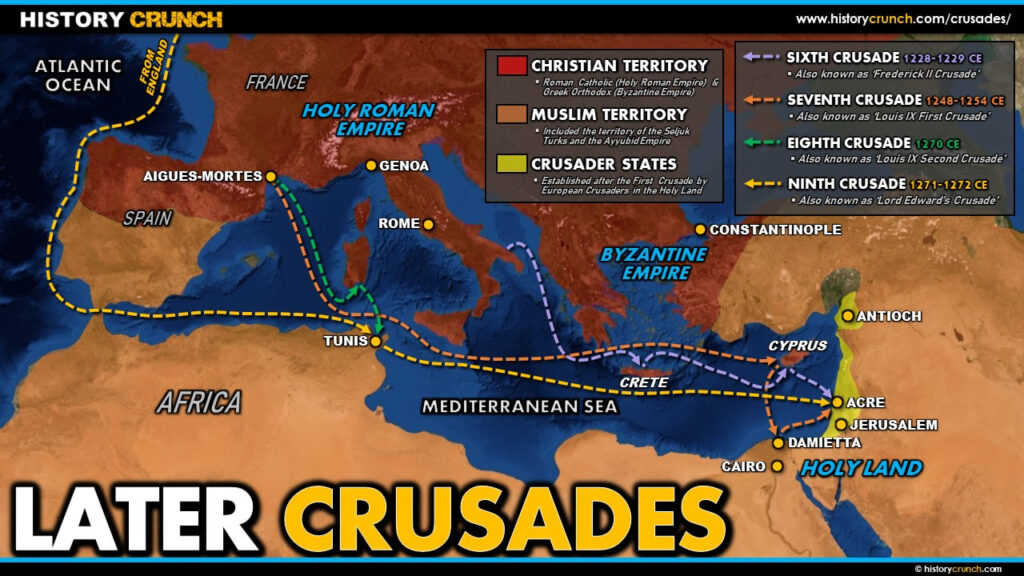
Eighth Crusade – When and Why Did It Occur?
The Eighth Crusade took place in 1270 CE and was a major event in the history of the Crusades, which was a significant event in the Middle Ages. In general, the Eighth Crusade was a continuation of the Seventh Crusade, and some historians combine the two. This is due to the fact that both the Seventh and Eighth Crusades were undertaken by King Louis IX of France, in his attempt to recapture parts of the Holy Land from Muslim control.
The Seventh Crusade saw Louis IX of France lead an army of crusaders from Europe to Egypt and attack Muslim strongholdsHeavily defended military positions or fortified places controlled by an enemy.. While the crusaders of the Seventh Crusade experienced some initial success and captured the Egyptian city of Damietta, the Seventh Crusade was ultimately a failure. This is because Louis IX was captured by the Muslim army and held captive while his remaining crusader army was destroyed. The Seventh Crusade eventually ended when Louis IX was returned back to the Christians as part of a ransomA payment made to free a person who has been captured and held prisoner. payment. Furthermore, the French were forced to give up Damietta back to the Muslims. The Seventh Crusade was a failure, as Louis IX and the French crusaders failed to capture any meaningful territory in the Holy Land, including the all-important city of Jerusalem. The next major event in the history of the Crusades was the Eighth Crusade in 1270, again led by King Louis IX of France.
In fact, Louis IX never gave up his ambition to crusade in the Holy Land, and continued to support Christian armies in the region throughout the time period between the Seventh and Eighth Crusades. However, the regained strength of Muslims in Egypt and the area of the Holy Land eventually caused him to want to return to carry out another crusade. Louis IX announced his intention to ‘take the cross’, which means to crusade to the Holy Land, on March 24th, 1267.
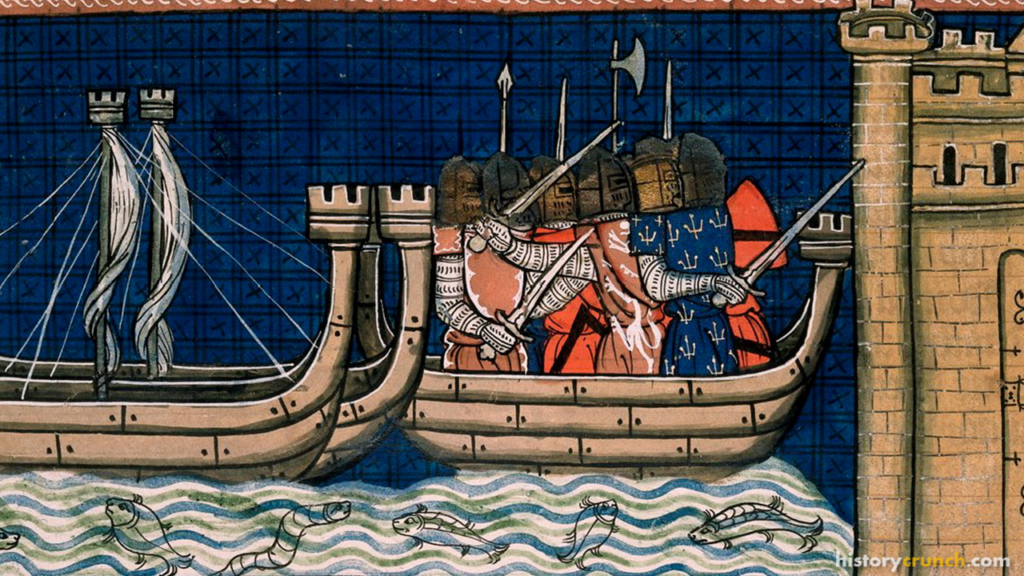

Eighth Crusade – Major Events
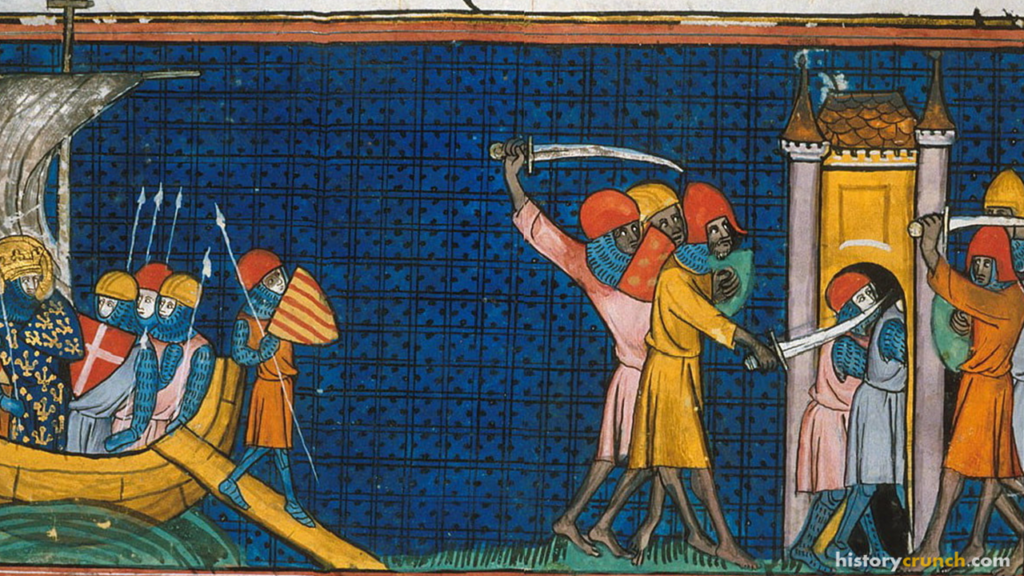
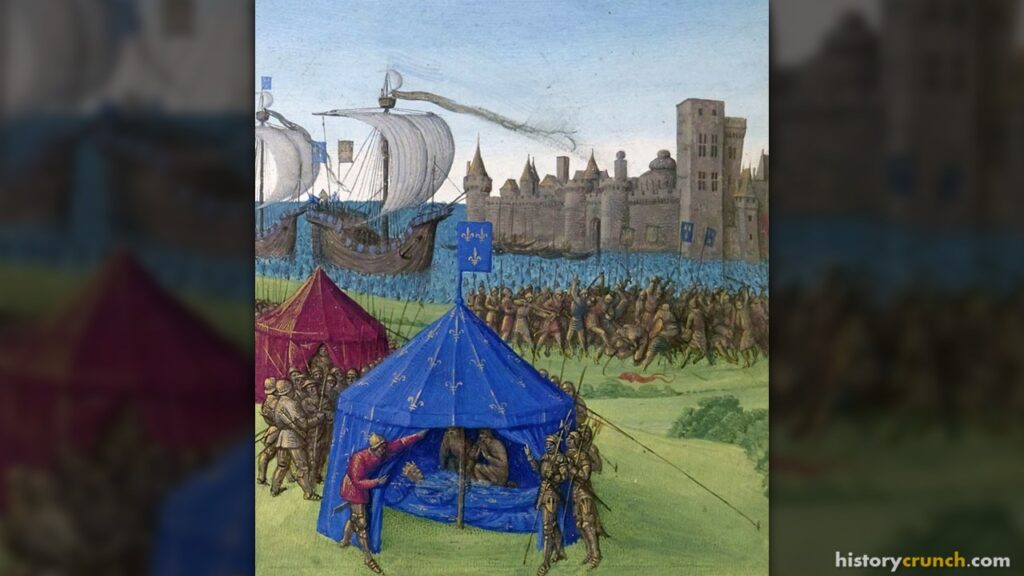
The goal of Louis IX in the Eighth Crusade was to attack the city of Tunis, which is located in Northern Africa and is the capital city of the modern country of Tunisia. The plan was for the French crusaders to sail from Southern France to the coastal city of Tunis. In fact, the French set sail for their journey on July 1st, 1270 and made landfallThe moment when a ship or fleet first reaches or sights land after sailing across open water. on the Tunisia coastline a few weeks later, on July 18th. The crusaders soon set up camp and made preparations to attack the city of Tunis, while they waited for other crusaders to arrive from France and England. However, during this period of waiting, the French crusaders experienced a wave of disease that destroyed their hopes of attacking Tunis. For instance, throughout the summer of 1270, many of the European crusaders became ill with dysenteryA serious illness causing severe digestive symptoms that can be fatal, especially in crowded or unsanitary camp conditions., with a large portion of them dying. For example, Louis IX of France actually died from the disease on August 25th, 1270.
 FactsthatCrunch
After landing on the Tunisian coast in mid-summer 1270, the French crusading army set up camp and waited for reinforcements. Dysentery tore through the camp, killing large numbers of soldiers and, on August 25th, 1270, taking the life of King Louis IX himself before a single major battle was fought.
The French fleet had reached Tunis and the army was preparing to attack the city
Louis IX's death ended the campaign; most surviving crusaders sailed home with no territory gained
Eighth Crusade – Significance
The death of Louis IX effectively ended the Eighth Crusade, and caused most of the remaining crusaders to return home to Europe. As such, the Eighth Crusade was a massive failure and did not result in any gains for the European crusaders. With that said, the Ninth Crusade occurred immediately after the events of the Eighth Crusade.
FactsthatCrunchThe Eighth Crusade collapsed not in battle but in a disease-struck camp outside Tunis. The death of Louis IX from dysentery ended the campaign before the crusaders could mount a serious attack on the city.
Explore Crusades · 1095 – 1291 CE
Keep exploring Crusades with these History Crunch resources.
Key Vocabulary
Crusaders
Pilgrimage
Strongholds
Ransom
Dysentery
Landfall
Frequently Asked Questions
When did the Eighth Crusade take place?
The Eighth Crusade took place in 1270 CE. The French crusaders set sail from southern France on July 1st, 1270, and reached the Tunisian coast on July 18th. The campaign collapsed within weeks because of disease.
Who led the Eighth Crusade?
King Louis IX of France led the Eighth Crusade. He had also led the earlier Seventh Crusade, which ended in failure and his own capture. Louis IX never gave up his wish to fight in the Holy Land, and he announced his plan to crusade again on March 24th, 1267.
Why did the Eighth Crusade target Tunis?
Louis IX aimed his attack at the Muslim-held city of Tunis in North Africa. Tunis is now the capital of the modern country of Tunisia. The plan was to sail across the Mediterranean and strike the coastal city before pushing toward the Holy Land.
How did Louis IX die during the Eighth Crusade?
Louis IX died of dysentery on August 25th, 1270, soon after landing near Tunis. His army waited for more crusaders from France and England, and disease spread through their camp. Many soldiers caught dysentery that summer, and a large number of them died.
What was the outcome of the Eighth Crusade?
The Eighth Crusade was a complete failure that gained no territory for the Europeans. The death of Louis IX ended the campaign, and most remaining crusaders sailed home. The Ninth Crusade began right afterward, continuing the long series of religious wars.
Cite This Article
To cite this article as a source, use one of the formats below.
MLA: Beck, Elias. “Eighth Crusade: A Detailed Summary.” HistoryCrunch, 18 October 2026, https://historycrunch.com/eighth-crusade/.
APA: Beck, E. (2026). Eighth Crusade: A Detailed Summary. HistoryCrunch. https://historycrunch.com/eighth-crusade/
Chicago: Beck, Elias. “Eighth Crusade: A Detailed Summary.” HistoryCrunch. October 18, 2026. https://historycrunch.com/eighth-crusade/
Sources
- Fordham Medieval Sourcebook
- Christopher Tyerman, God's War: A New History of the Crusades.