The massacre of the Aztec in the Great Temple was an important event in the history of the Age of Exploration and the Aztec Empire. As part of the conquest the Spanish conquistadorsSpanish soldiers and explorers who conquered lands and peoples in the Americas during the 1500s., who were led by Hernan Cortés, took the Aztec leader Moctezuma II captiveA person held as a prisoner and not allowed to leave freely.. Soon after, occurred the massacre of unarmed Aztec citizens by the Spanish. The violent massacre, carried out in the sacred Templo Mayor, sparked outrage and led to a massive Aztec uprising against the Spanish conquistadors. With that said, it also eventually led to the Final Battle of Tenochtitlan and the fall of the Aztec Empire.
 FactsthatCrunch
Hernan Cortes took Moctezuma II captive in late 1519 after fearing the Aztec ruler might order his death. This left Pedro de Alvarado in command in Tenochtitlan when Cortes departed to deal with a rival Spanish force sent to arrest him.
Alvarado's decision to attack during the religious festival of Toxcatl turned the Aztec people firmly against the Spanish. The resulting conflict pushed both sides toward open war and set the stage for the final battle for Tenochtitlan.
Before the Massacre of the Aztec in the Great Temple
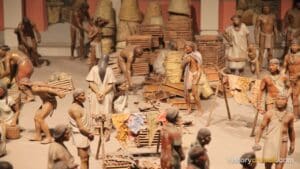
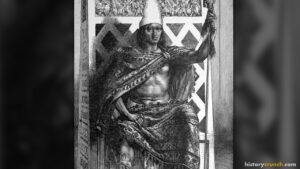
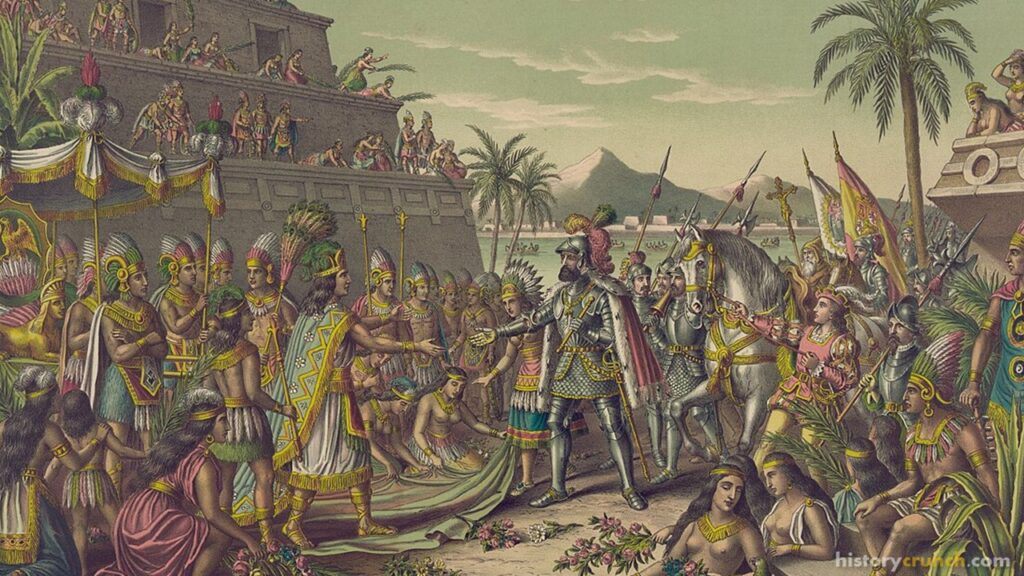
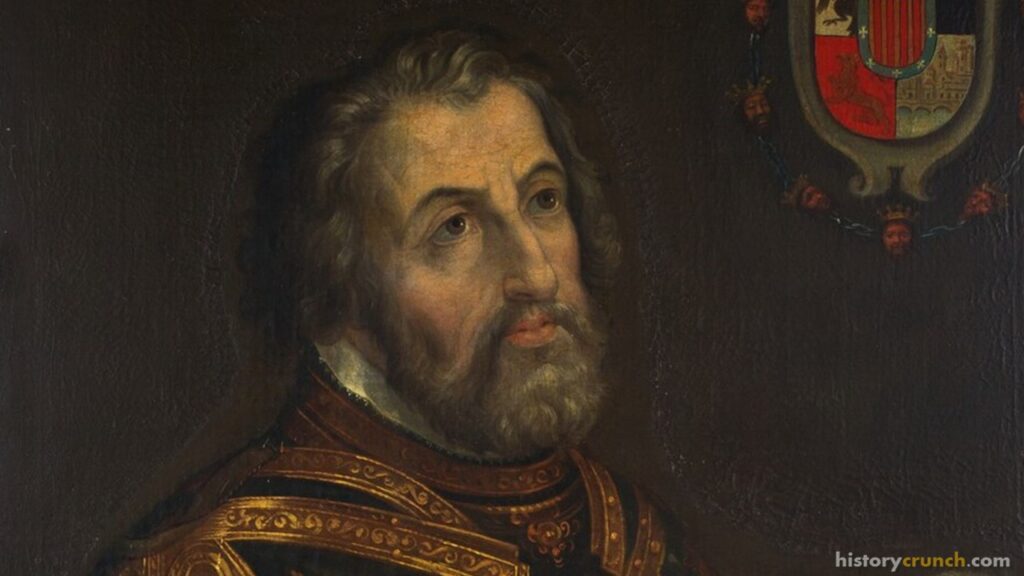
Cortés and the Spanish arrived at the Aztec capital city of Tenochtitlan in November of 1519. While they were accompanied by their new allies, the Tlaxcala, only Cortés and the Spanish were invited into the city. Still believing that Cortés might be Quetzalcoatl, Moctezuma II gave the Spanish many gifts and allowed them to stay as guests in the Aztec capital. Many historians today believe the story that the Aztecs thought Cortés was a god was written after the conquest. During the next week or so the Spanish toured the city and saw the many Aztec temples, markets and palaces. However, soon after, Cortés learned of the death of several of his men from an Aztec attack on the Gulf Coast. The Aztec had attacked one of their rivals, and since the Spanish had allied with many of the Aztecs enemies, they were caught up in the battle. At this point Cortés became fearful that Moctezuma II may order his death and in response he took the Aztec leader captive in the palace that Moctezuma II had prepared for the Spanish in Tenochtitlan.
 FactsthatCrunch
Only about a week after arriving in Tenochtitlan as guests, Cortes and his men took Moctezuma II prisoner inside the palace where the Spanish were staying.
For the next several months, the Spanish tried to rule the Aztec capital through the captive emperor. Many Aztec nobles grew angry, believing Moctezuma II had let the Spanish take over the city.
Massacre of the Aztec in the Great Temple – Summary
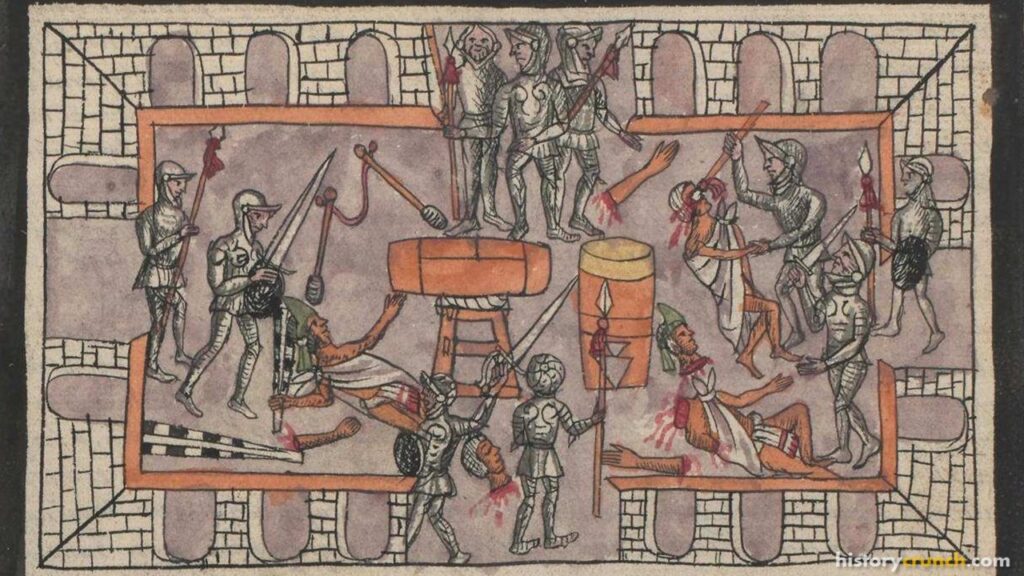
During the months after Moctezuma II was imprisoned in Tenochtitlan, Cortés was forced to leave to handle a different situation. Cortés had been made aware that Diego Velasquez, the Spanish governor of Cuba, had ordered his arrest for disobeying orders in regards to his expedition to Mexico. As such, Cortés left that spring to stop Pánfilo de Narváez and other Spanish men that were sent to arrest him. While he was gone, Pedro de Alvarado was left in charge of the Spanish’s mission in Tenochtitlan. Alvarado was a Spanish conquistador and is famous for participating in expeditions throughout the Caribbean and Central America, including places such as: Cuba, Mexico, Guatemala, Honduras and El Salvador. Several historians have noted the brutality he displayed in these conquests, particularly against the indigenous people of the different regions. Anyways, soon after Cortés left, Moctezuma II requested that his people be allowed to celebrate the festival of ToxcatlA yearly Aztec religious festival held every May to honor the god Tezcatlipoca.. The festival occurred every May and was carried out to honor the Aztec god of TezcatlipocaAn important Aztec god connected to the night sky, war, jaguars, hurricanes, and the earth.. This god was important in Aztec culture and religion and was related to many different concepts, including: the night sky, hurricanes, the earth, obsidian, jaguars, and war. Alvarado agreed, but soon after the Aztec began the celebration he ordered and carried out an attack against the Aztec men, women and children that were participating. This event is referred to as the ‘Massacre of Aztec in the Great Temple of Tenochtitlan’.
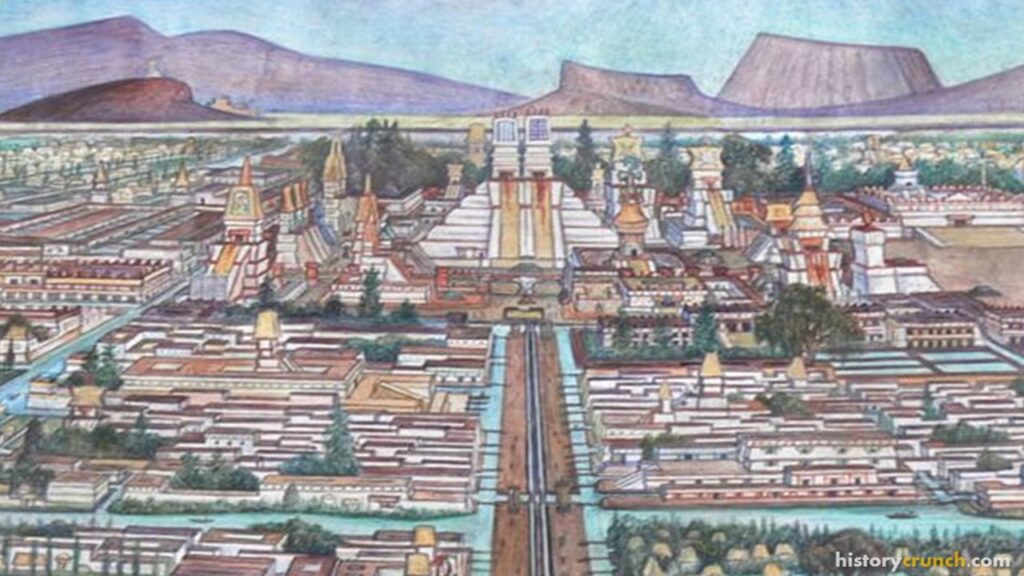
Essentially, the Spanish conquistadors attacked the Aztec and killed most of the people, who were unarmed and did not actively fight back. There are differing accounts of why Alvarado carried out the attack, such as: he attacked the Aztec after seeing the gold religious items they brought to the festival or he attacked in an attempt to stop a human sacrifice that was part of the ceremony. Regardless, in both accounts, Alvarado massacred unarmed Aztecs. The massacre led to an increase in hostilitiesActs of violence or open conflict between two groups at war with each other. between the Spanish and the Aztec and caused the Spanish to hide in the palace that Moctezuma II provided them with following retaliation by the Aztec warriors. Cortés returned from his victory over Pánfilo de Narváez to find Tenochtitlan in full upheaval and revolt. The Spanish were essentially held captive by the Aztec nobility and warriors in Tenochtitlan following the massacre.
Soon after, Moctezuma II was killed and the Spanish carried out their daring escape from the Aztec capital which the Spanish refer to as Noche TristeThe name the Spanish gave to their desperate nighttime escape from Tenochtitlan after the massacre and uprising..
 FactsthatCrunch
Why did Hernan Cortes leave Tenochtitlan in the spring of 1520, putting Pedro de Alvarado in charge?
Explore Aztec Empire · 1325 – 1521 CE
Keep exploring Aztec Empire with these History Crunch resources.
Key Vocabulary
Conquistadors
Captive
Templo Mayor
Toxcatl
Tezcatlipoca
Hostilities
Noche Triste
Frequently Asked Questions
What was the Massacre of the Aztec in the Great Temple?
It was an attack by Spanish conquistadors on unarmed Aztec men, women, and children in the Templo Mayor. The killing happened during the religious festival of Toxcatl in the Aztec capital of Tenochtitlan. Most of the victims did not fight back, since they had gathered to celebrate, not to battle.
Who ordered the massacre?
Pedro de Alvarado ordered and carried out the massacre while Hernan Cortés was away. Cortés had left him in charge of the Spanish mission in Tenochtitlan. Alvarado was a conquistador known for harsh treatment of native people across the Caribbean and Central America.
Why did the Spanish attack during the festival of Toxcatl?
The exact reason is not certain, and accounts differ. Some say Alvarado attacked after seeing the gold religious items the Aztec brought to the ceremony. Others say he wanted to stop a planned human sacrifice. In both versions he killed unarmed Aztec people.
What happened after the massacre?
The massacre sparked a huge Aztec uprising against the Spanish. The conquistadors were forced to hide in the palace as Aztec warriors fought back. Cortés returned to find the city in full revolt, and soon after the Spanish fled in the escape they called Noche Triste.
When did the massacre take place?
It happened in May of 1520, during the yearly festival of Toxcatl. The Spanish had first arrived in Tenochtitlan in November of 1519. The festival honored Tezcatlipoca, an Aztec god linked to the night sky, war, and jaguars.
How did the massacre affect the Aztec Empire?
The massacre pushed the Aztec and Spanish into open war. This conflict led to the Final Battle of Tenochtitlan and the fall of the Aztec Empire. The killing turned many Aztec people firmly against the Spanish and their allies.
Cite This Article
To cite this article as a source, use one of the formats below.
MLA: Beck, Elias. “Massacre of the Aztec in the Great Temple: A Detailed Summary.” HistoryCrunch, 26 October 2026, https://historycrunch.com/massacre-of-the-aztec-in-the-great-temple/.
APA: Beck, E. (2026). Massacre of the Aztec in the Great Temple: A Detailed Summary. HistoryCrunch. https://historycrunch.com/massacre-of-the-aztec-in-the-great-temple/
Chicago: Beck, Elias. “Massacre of the Aztec in the Great Temple: A Detailed Summary.” HistoryCrunch. October 26, 2026. https://historycrunch.com/massacre-of-the-aztec-in-the-great-temple/
Sources
- The Met (Heilbrunn Timeline): Aztec art
- Fordham Internet History Sourcebooks
- Richard Townsend, The Aztecs.