The Maxim gun was an important weapon that played a significant role in the Age of Imperialism. More specifically, the Maxim gun is often associated with the ‘Scramble for Africa’, which took place from 1870 until 1914. In general, the Maxim gun was the first machine gun that worked by recoil operationA firing method that uses the backward kick of the gun itself to automatically load and fire the next round.. This allowed it to fire rounds at an incredibly fast rate, which gave the European nations a distinct advantage against the African people that they encountered. As time passed, the Maxim gun was put into use by many nations and saw use in all sorts of different conflicts, including World War I.
 FactsthatCrunch
The Battle of Omdurman in 1898 showed how completely the Maxim gun had shifted the balance of power between European armies and African forces during the Scramble for Africa.
At Omdurman, British forces equipped with Maxim guns defeated a Sudanese army far larger in size in a matter of hours, demonstrating how firepower could overcome numerical disadvantage.
The battle made clear to both European governments and African societies that traditional weapons and tactics could not match recoil-operated machine guns capable of firing up to 600 rounds per minute.
Omdurman influenced how European powers planned their later campaigns across the continent, encouraging them to rely on technological superiority rather than large troop deployments.
The outcome reflected what British poet Hilaire Belloc had written in 1898: European nations held a nearly unchallengeable military edge in Africa specifically because of weapons like the Maxim gun.
Maxim Gun Overview
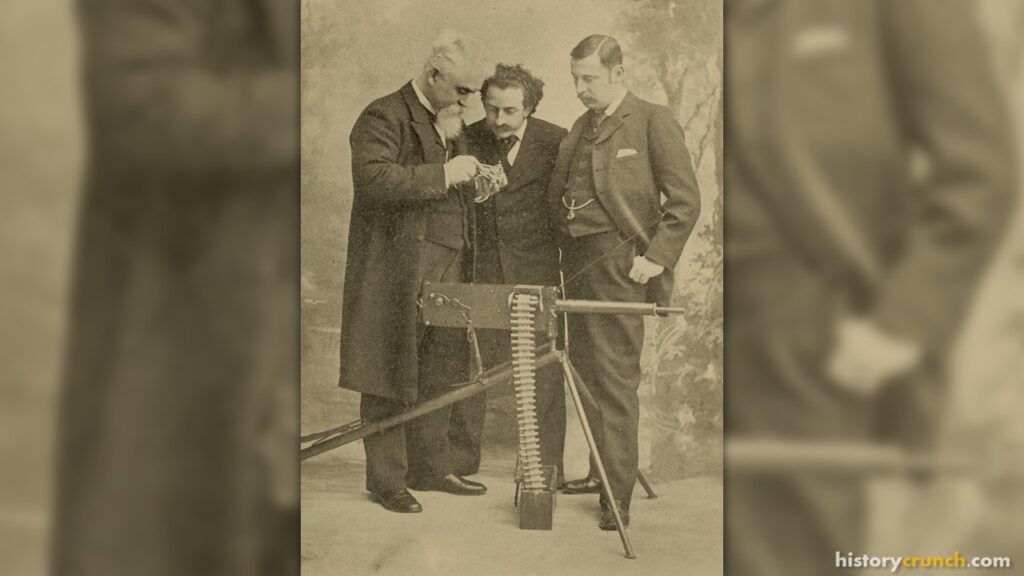
The Maxim gun was a machine gun that was invented by Hiram Maxim in 1884. Hiram Maxim was an American-born British inventor, and is best remembered today for his invention of the Maxim gun. He also carried out inventions in the fields of flight and electricity. Regardless, the significance of the Maxim gun was that it used the force from the recoil of the gun to allow it to automatically fire. For this reason, it is referred to as a recoil-operated machine gun. In fact, it was the first recoil-operated machine gun in history that was produced on a wide scale. The mechanism of the Maxim gun allowed it to operate much more efficiently and reliably than earlier machine guns. For instance, it did not need as many men to operate and was much easier to use in the field of battle. In all, it is believed that the Maxim gun could fire as many as 600 rounds per minute, which made it a devastating weapon.
With that said, the Maxim gun had several shortcomings. For instance, the Maxim gun was water-cooledA cooling method that uses a supply of clean water to prevent a rapidly firing gun from overheating.. Rapid-fire machine guns of the time needed a form of cooling, due to the heat generated by the firing of so many rounds in such a short period of time. However, almost all machine guns at the time used air cooling methods. The water-cooling method of the Maxim gun allowed it to fire longer and at a faster rate, but also meant that the gun required a supply of clean water. This wasn’t always possible in the heat of battle. As well, while a single person could easily fire the Maxim gun, it required a team of four to six soldiers to reasonably operate. These soldiers were needed to load, reload, cool, and move the weapon when needed. Regardless of its shortcomings, the Maxim gun was a formidableSo powerful or impressive that it is very difficult to oppose or defeat. weapon and helped European armies dominate battlefields throughout the late 1800s and early 1900s. In fact, it is often considered to be one of the main factors of European dominance in the Scramble for AfricaThe rapid rush by major European powers to claim and control as much African land as possible, roughly 1870–1914. and the Age of Imperialism.
How many rounds per minute could the Maxim gun fire?
Maxim Gun and the Scramble for Africa
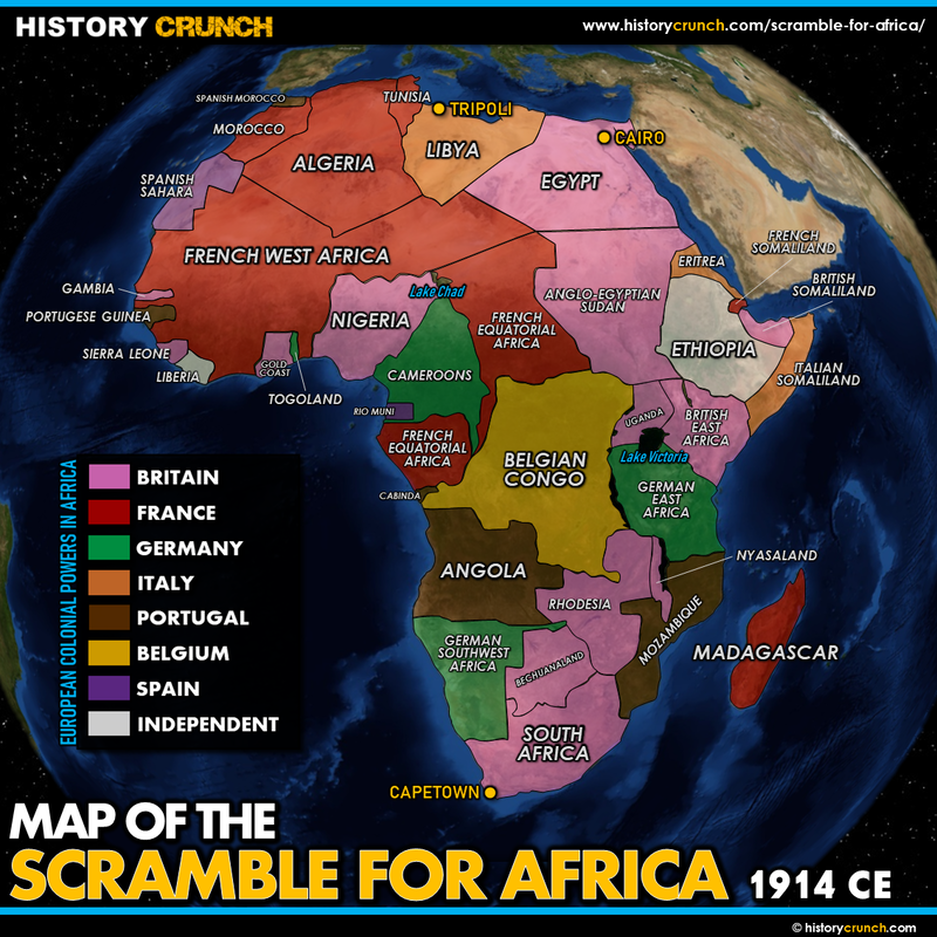
At the time of its creation (1884), the European powers were carrying out massive imperialisticRelating to a powerful country taking control of weaker nations or territories to build an empire. campaigns around the world. This was especially true in Africa from approximately 1870 until the outbreak of World War I in 1914. This period of time is referred to as the Scramble for Africa, and saw the main European powers (Britain, France, Germany, Portugal, Spain, Belgium, etc.) ‘race’ to capture as much of the African continent as possible. In doing so, the Europeans often came into conflict with African societies that they encountered. As such, for the Europeans, the use of advanced weaponry was necessary to conquer and defeat the African societies. The invention of the Maxim gun in 1884 proved to be very important to the imperialistic campaigns of the European nations and led to the devastation of the African people and societies.
In fact, British poet Hilaire Belloc commented on the importance of the Maxim gun and the military advantage it gave the British in Africa when he wrote: “Whatever happens, we have got/ The Maxim gun, and they have not”. (The Modern Traveller, 1898) Therefore, European inventions such as the Maxim gun from the 19th century helped the major European powers more easily travel through the African territory and overpower African resistance.

Whatever happens, we have got / The Maxim gun, and they have not.
Maxim Gun and World War I
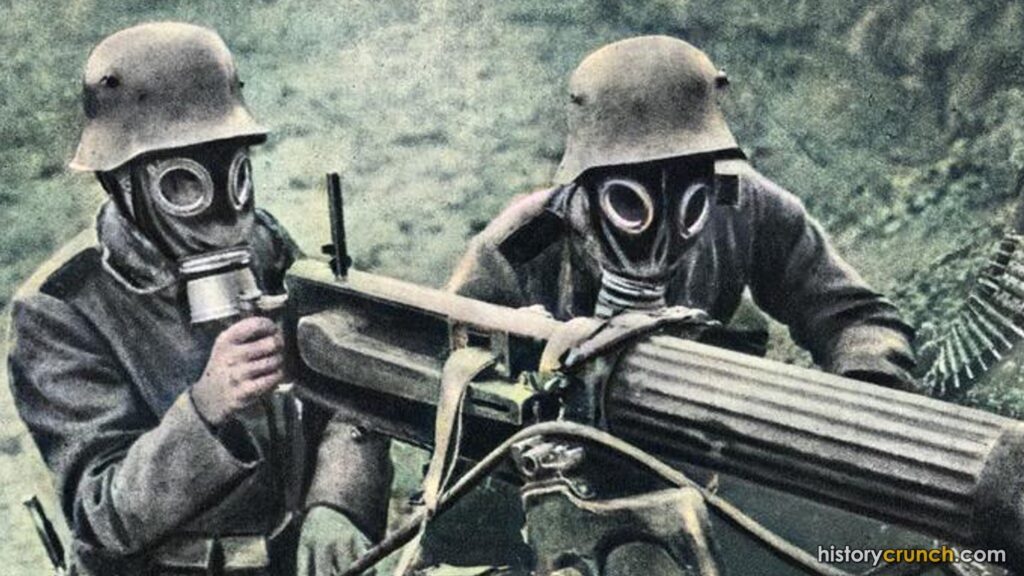
The Maxim gun was not only an important weapon in the Scramble for Africa, but also proved a valuable asset for the first few decades of the 20th century. For instance, the Maxim gun was widely used in the First World War. More specifically, each of the major European nations created their own version of the Maxim gun with different advancements and improvements. For example, the British developed the Vickers machine gun, which was essentially a more advanced Maxim gun. The Vickers machine gun was introduced in 1912 and became popular in the British Army across the battlefields of World War I. For instance, versions of the Vickers machine gun were even used on airplanes in World War I. The Vickers machine gun remained in operation until the 1960s. As stated above, other nations had their own versions of the Maxim gun such as: Germany with the Maschinengewehr 08 (MG 08) and Russia with the PM M1910. These machine guns all played a significant role in World War I and contributed to the massive death tolls and casualtyA person killed or wounded in a battle or war. numbers that the war is remembered for. As such, historians consider the machine gun to be one of the most significant weapons of World War I.
 FactsthatCrunch
Britain, Germany, and Russia each built their own version of the Maxim-style machine gun for World War I.
Explore Age of Imperialism · 1870 – 1914
Keep exploring Age of Imperialism with these History Crunch resources.
Key Vocabulary
Recoil operation
Imperialistic
Scramble for Africa
Water-cooled
Formidable
Casualty
Frequently Asked Questions
Who invented the Maxim gun and when?
The Maxim gun was invented by Hiram Maxim in 1884. Maxim was an American-born British inventor who also worked in the fields of flight and electricity. Today he is best remembered for this weapon, which was the first recoil-operated machine gun made on a wide scale.
How did the Maxim gun work?
The Maxim gun used the force from its own recoil to fire rounds automatically. This design let it shoot much faster and more reliably than earlier machine guns. It could fire as many as 600 rounds per minute, which made it a deadly weapon.
Why was the Maxim gun important in the Scramble for Africa?
The Maxim gun gave European armies a huge military edge over the African societies they fought. During the Scramble for Africa, from about 1870 until 1914, European powers raced to seize land across the continent. Its rapid fire helped them overpower African resistance and conquer vast territory.
What were the weaknesses of the Maxim gun?
The Maxim gun was water-cooled, so it needed a steady supply of clean water to keep firing. This was not always easy to find in the heat of battle. It also required a team of four to six soldiers to load, cool, and move it.
How was the Maxim gun used in World War I?
Major European nations each built their own improved versions of the Maxim gun for World War I. Britain developed the Vickers machine gun, Germany the Maschinengewehr 08, and Russia the PM M1910. These weapons added to the enormous death tolls the war is remembered for.
Cite This Article
To cite this article as a source, use one of the formats below.
MLA: Beck, Elias. “Maxim Gun and the Age of Imperialism: A Detailed Summary.” HistoryCrunch, 28 October 2026, https://historycrunch.com/maxim-gun-and-the-age-of-imperialism/.
APA: Beck, E. (2026). Maxim Gun and the Age of Imperialism: A Detailed Summary. HistoryCrunch. https://historycrunch.com/maxim-gun-and-the-age-of-imperialism/
Chicago: Beck, Elias. “Maxim Gun and the Age of Imperialism: A Detailed Summary.” HistoryCrunch. October 28, 2026. https://historycrunch.com/maxim-gun-and-the-age-of-imperialism/
Sources
- John Darwin, After Tamerlane / Unfinished Empire.
- Daniel R. Headrick, The Tools of Empire.
- State Department: Office of the Historian
- Fordham Modern History Sourcebook