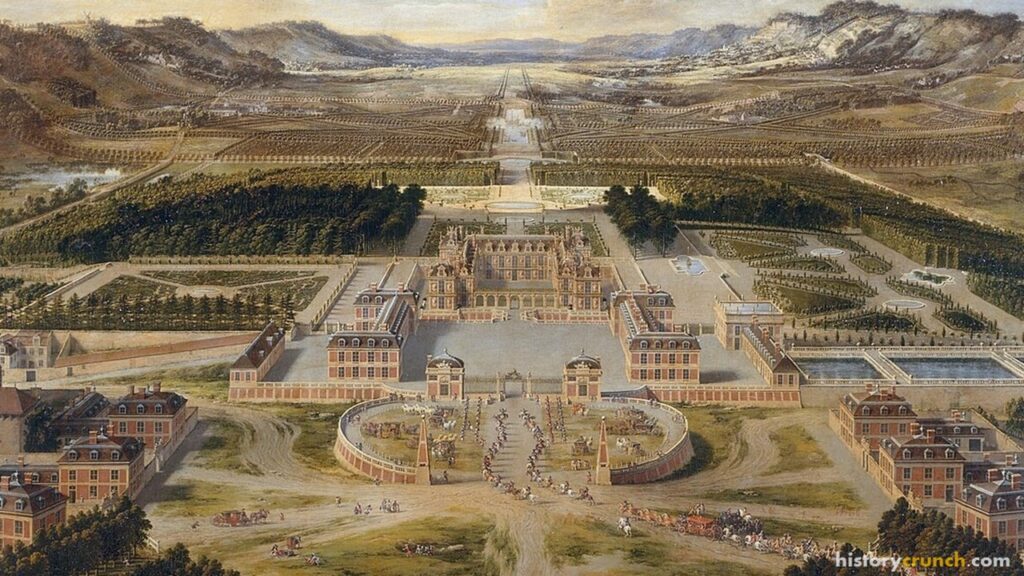
The Palace of Versailles, located near Paris, France, was the royal residence of numerous French monarchs. Built in the 17th century, the palace is famous for its lavishExtremely expensive and impressive, far beyond what most people could afford. architecture, beautiful gardens, and the stunning Hall of Mirrors. Versailles was a central aspect of political power in France until the events of the French Revolution, which saw the end of the French absolute monarchy. The Palace of Versailles remained important in the years after the revolution, and was notably used for the signing of the Treaty of Versailles in 1919. Today, the Palace of Versailles is recognized as a UNESCO World Heritage site, highlighting its significance in world history.
 FactsthatCrunch
A UNESCO World Heritage site is a place that the United Nations has officially recognized as having outstanding value to all of humanity, whether for its history, culture, or natural importance. Countries around the world nominate sites, and a UNESCO committee reviews each one against strict standards before granting the designation. Once a site is listed, the international community works to help protect and preserve it for future generations.
"The Palace of Versailles earned UNESCO World Heritage status in 1979 because of its role in French royal history and its influence on European architecture and garden design."
Palace of Versailles – Construction
The Palace of Versailles was originally built by Louis XIII in 1623, as a hunting lodge. The palace was constructed out of brick and stone near the town of Versailles which was southwest of Paris. The palace saw extensive renovationsMajor repairs and improvements made to an existing building to update or expand it. and additions over the next 155 years, including major expansions during the reign of Louis XIV. For example, from 1678 to 1715, the palace saw the addition of two large wings and construction was undertaken to expand the royal apartments. In general, the palace today is fairly unchanged from 1715. The total cost of building and renovating the palace is difficult to ascertainTo find out something with certainty, especially when the answer is difficult to determine., but recent studies have suggested that the construction of the Versailles Palace cost France over $2 billion USD in today’s value. In total, the palace has over 700 rooms, 1250 fireplaces, and is over 700,000 square feet [65,000 square meters] in size.
How many fireplaces does the Palace of Versailles contain?
Palace of Versailles – French Revolution
The French Revolution began in 1789, as the people of France pushed to overthrow the absolute monarchy of Louis XVI. There were several different causes of the revolution, but one of the most important was the economic crisis facing France at the time and the excessesBehavior that goes far beyond what is reasonable or necessary, especially in spending or luxury. of the monarchy of Louis XVI and Marie Antoinette.
During the French Revolution, the palace was important for several reasons. First, for the working class members of the Third Estate, the Palace of Versailles represented the excesses of the monarchy and the inequality between the Third Estate and the royalty. This was a central theme of the French Revolution, which saw France move from a society based on class privilege to one based on liberty for the individual and equality among all in society.
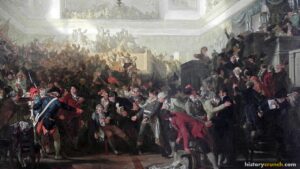
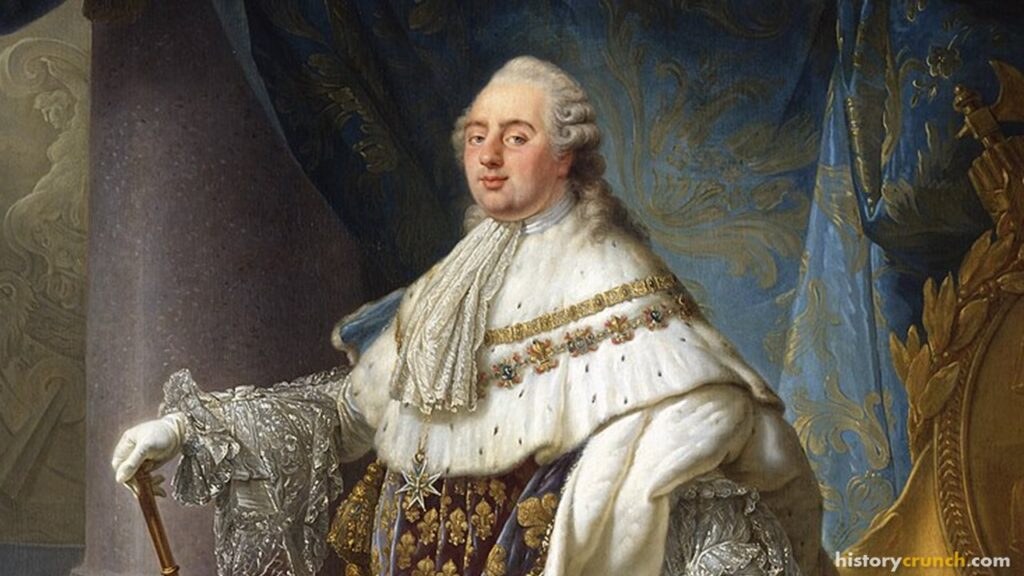
Second, the Palace of Versailles was an important site during the French Revolution. For example, as the revolution began in 1789, Louis XVI and his family were residing at Versailles. Angered by the rising cost of bread and the king’s apparent lack of willingness to deal with the situation, thousands of Parisian women marched to Versailles in protest on October 5th, 1789. Upon arriving, the women killed several of the king’s guards, putting their severed heads on pikes, and forced the royal family to return to Paris with them. After being forced back to Paris by the mob of women, Louis XVI and his family were effectively held prisoners by the revolutionaries and citizens of France.
 FactsthatCrunch
History will record, that, on the morning of the sixth of October, 1789, the king and queen of France, after a day of confusion, alarm, dismay, and slaughter, lay down, under the pledged security of public faith, to indulge nature in a few hours of respite, and troubled, melancholy repose. From this sleep the queen was first startled by the voice of the sentinel at her door, who cried out to her to save herself by flight,—that this was the last proof of fidelity he could give,—that they were upon him, and he was dead. Instantly he was cut down.
The passage describes the royal family being woken by violence on October 6th, 1789. What did the crowd achieve by forcing Louis XVI out of Versailles?
Palace of Versailles – World War I
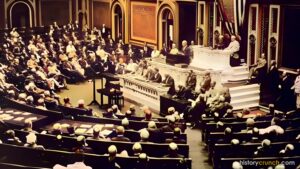
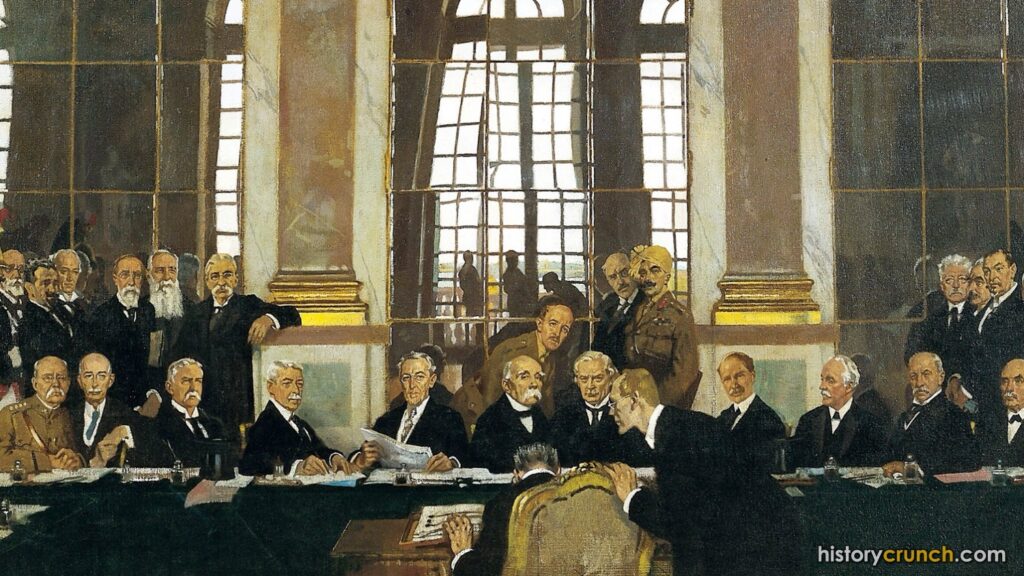
Following the French Revolution, the palace would still be the site of several significant historical events. The most important of all was the signing of the Treaty of Versailles, which formally ended World War I. The Treaty of Versailles was signed on June 28th, 1919 in the Hall of Mirrors at the Palace of Versailles. The palace was still one of the largest buildings in Europe at that time and was used because it provided the space needed to house all of the representatives of the participating nations.
 FactsthatCrunch
World War I was called 'the war to end all wars' because people hoped the peace settlement would prevent future conflicts. What did the Treaty of Versailles formally accomplish?
Palace of Versailles – Significance
The Palace of Versailles is significant for a variety of reasons. First, the palace was a symbol of the absolute power and excesses of the French monarchy, especially under Louis XIV, who carried out numerous renovations and expansions. Also, the extravaganceThe habit of spending far more money than is needed, usually on luxury and display. of the Palace of Versailles highlighted the growing disconnectA gap or growing difference between two groups that no longer understand or relate to each other. between the monarchy and the common people of France, which ultimately helped contribute to the outbreak of the French Revolution.
FactsthatCrunchTap each impact to read what it led to.
French Revolution timeline · 1789 – 1799
Key Vocabulary
Lavish
Renovations
Ascertain
Absolute monarchy
Excesses
Extravagance
Disconnect
Frequently Asked Questions
Where is the Palace of Versailles located?
The Palace of Versailles stands near the town of Versailles, southwest of Paris, France. It was built as the royal home of several French kings during the 17th and 18th centuries. Today it is a UNESCO World Heritage site that draws visitors from around the world.
Who built the Palace of Versailles?
Louis XIII first built Versailles in 1623 as a simple hunting lodge made of brick and stone. His grandson, Louis XIV, later turned it into a grand palace through major expansions. The largest additions came between 1678 and 1715, when two large wings and new royal apartments were built.
How big is the Palace of Versailles?
The palace covers over 700,000 square feet [65,000 square meters] and holds more than 700 rooms. It also contains about 1,250 fireplaces to heat its many halls and apartments. Its huge size made it one of the largest buildings in Europe for centuries.
Why was Versailles important during the French Revolution?
Versailles stood as a symbol of royal wealth and the gap between the monarchy and the common people. On October 5th, 1789, thousands of Parisian women marched to the palace to protest the high price of bread. They forced Louis XVI and his family to return to Paris, where the revolutionaries held them as prisoners.
What happened at Versailles after World War I?
The Treaty of Versailles, which formally ended World War I, was signed there on June 28th, 1919. The signing took place in the famous Hall of Mirrors. The palace was chosen because it had enough space to hold representatives from all the participating nations.
Cite This Article
To cite this article as a source, use one of the formats below.
MLA: Beck, Elias. “Palace of Versailles: A Detailed Summary.” HistoryCrunch, 22 September 2026, https://historycrunch.com/palace-of-versailles/.
APA: Beck, E. (2026). Palace of Versailles: A Detailed Summary. HistoryCrunch. https://historycrunch.com/palace-of-versailles/
Chicago: Beck, Elias. “Palace of Versailles: A Detailed Summary.” HistoryCrunch. September 22, 2026. https://historycrunch.com/palace-of-versailles/
Sources
- Liberty, Equality, Fraternity (revolution.chnm.org), George Mason
- William Doyle, The Oxford History of the French Revolution.
- Peter McPhee, Liberty or Death: The French Revolution.