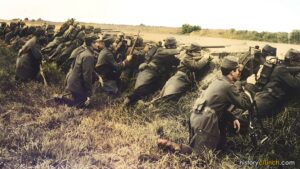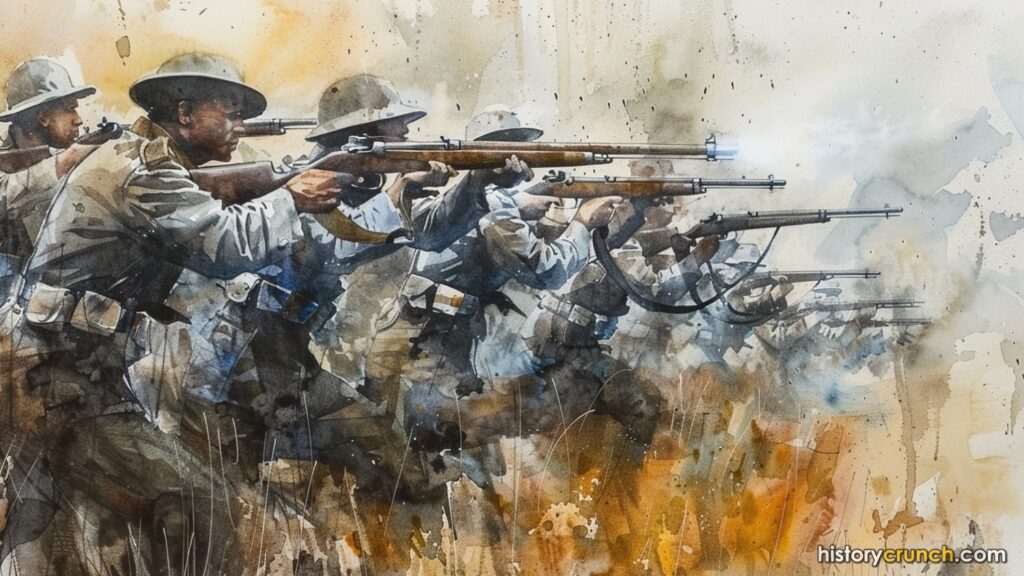
Rifles in World War I were arguably the most important weapon of the war. In particular, all of the major nations of World War I sent their soldiers to the frontlines of the war equipped with different styles of rifles. World War I was a deadly conflict as shown by the millions of military and civil casualtiesPeople killed or wounded during a conflict, including both soldiers and civilians. it caused. The large number of casualties was the result, in part, of the development and use of weaponry that took place during the war. In all, the rifle was one of the most significant weapons of World War I alongside other important weapons, such as: airplanes, airships, machine guns, poison gas, submarines and tanks.
 FactsthatCrunch
A trained British soldier with a bolt-action Lee-Enfield rifle could fire up to 15 aimed rounds per minute, a drill known as the “Mad Minute.”
Most people picture World War I rifles as slow, clunky weapons. In reality, British troops at the Battle of Mons in August 1914 fired so quickly that German soldiers reportedly mistook their rifle fire for machine guns. Mud and grit in the trenches could jam the bolt, so officers regularly inspected rifles to keep them clean and working.
Significance of Rifles in World War I
As stated above, the rifle was likely the most important weapon of the First World War. This is because, the rifle was the weapon used by all soldiers on a daily basis. Each soldier in World War I was issued a rifle, which they used in trench raids and for defensive operations. While World War I is often known for the new weapons technology that emerged from the time period, the rifle was the most commonly used weapon in the war. For instance, many of the new weapons (tanks, poison gas, etc.) were unpredictable in their use. Furthermore, other weapons such as grenades and mortars were equally unpredictable. Whereas, rifles were relatively reliable and particularly effective in trench combat. For instance, bolt-actionA rifle mechanism where the shooter manually slides a handle to load each new bullet before firing. rifles were excellent for trench-to-trench firing, including sniper firing. As well, the rifles of World War I were usually affixedAttached or fastened securely to something else. with bayonetsLong knives fixed to the end of a rifle for stabbing enemies in close fighting. (long knives) on the ends. The bayonets were useful in close hand-to-hand combat, since the soldiers could stab an enemy by lunging their rifles forward. As such, this made the rifle a versatileUseful in many different situations or ways. weapon in World War I. Further to the ideas above, bolt-action rifles also improved in firing rate and reliability in the years leading up to World War I. This meant that the rifles issued to soldiers in the First World War had the fastest rate of fire of any rifle of the time (up to 15 rounds per minute).
Rifles in World War I – by Country
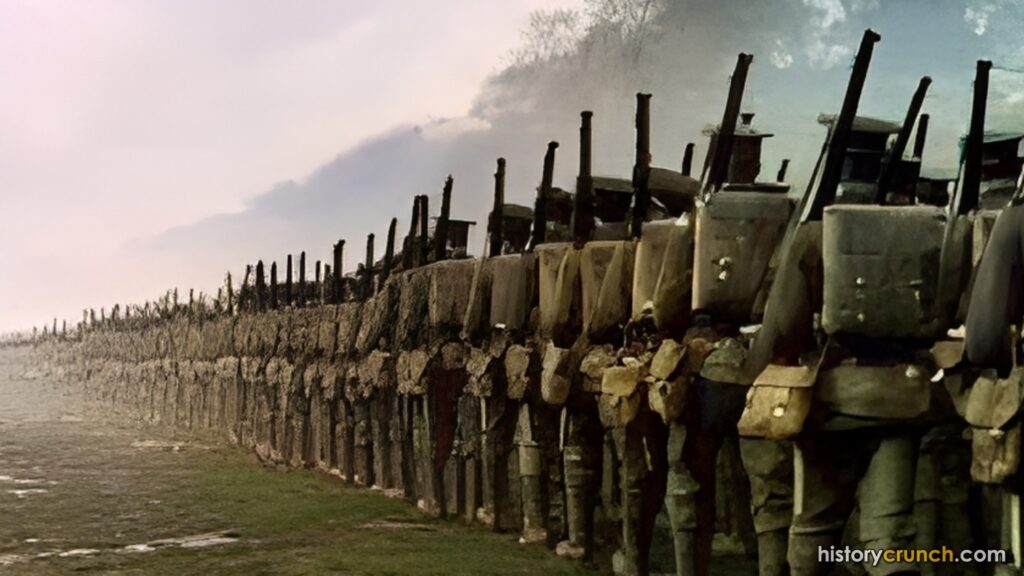
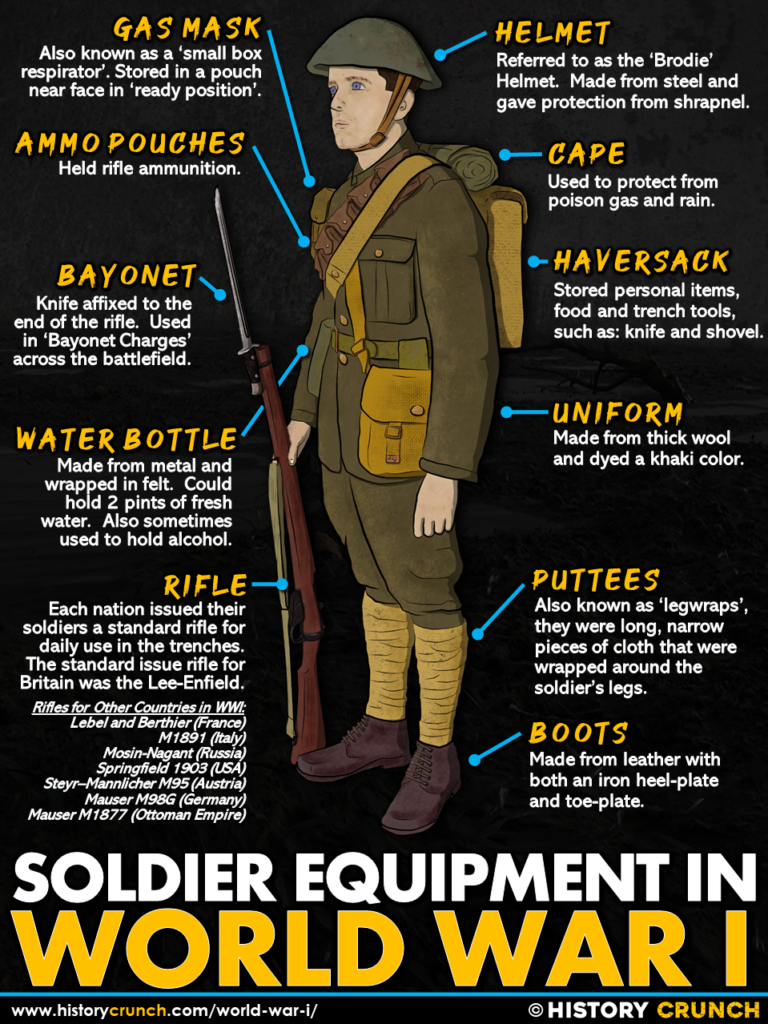
As stated above, each nation issued their soldiers a rifle in World War I. The standard issued rifles for both the Allied Powers and the Central Powers were:
- Lee-Enfield (Britain, including: Australia and Canada)
- Lebel and Berthier (France)
- M1891 (Italy)
- Mosin-Nagant (Russia)
- Springfield 1903 (United States)
- Steyr-Mannlicher M95 (Austria-Hungary & Bulgaria)
- Mauser M98G (Germany)
- Mauser M1903 (Ottoman Empire)
FactsthatCrunchEvery major power in World War I issued its soldiers a standard bolt-action rifle, but each country chose a different design with different features.
Issues for Rifles in World War I
The only major issue facing rifles in World War I was the dirty conditions of the trenches. For instance, mud and cleanliness were an ever-present issue for soldiers on the frontlines. As such, soldiers sometimes struggled to keep their weapons cleaned and properly maintained. Dirt and grit were particularly bad for the bolt-action rifles of World War I because it caused them to jamWhen a gun stops working because dirt or a mechanical problem blocks the firing mechanism.. To combat this, soldiers on the frontlines were regularly inspected by officers and commanders to ensure they were staying as clean as possible and keeping their rifles in working order.
Why did dirt and grit cause bolt-action rifles to jam in World War I trenches?
Key Vocabulary
Casualties
Bolt-action
Trench raids
Affixed
Bayonets
Versatile
Jam
Frequently Asked Questions
Why were rifles so important in World War I?
Rifles were the weapon that every soldier carried and used each day. They were reliable and effective in trench combat, unlike newer weapons such as tanks and poison gas. Soldiers used them in trench raids and for defense, which made the rifle the most common weapon of the war.
What type of rifle did soldiers use in World War I?
Most soldiers used bolt-action rifles, which loaded each round by hand using a sliding bolt. These rifles were prized for their accuracy and reliability in trench-to-trench firing. They could fire up to 15 rounds per minute, the fastest rate of any rifle at the time.
What rifles did each country use in World War I?
Each major nation issued its own standard rifle to soldiers. Britain used the Lee-Enfield, France used the Lebel and Berthier, and the United States used the Springfield 1903. Germany used the Mauser M98, Russia used the Mosin-Nagant, and Austria-Hungary used the Steyr-Mannlicher M95.
What was a bayonet used for in World War I?
A bayonet was a long knife attached to the end of a rifle for close combat. Soldiers could stab an enemy by lunging their rifles forward in hand-to-hand fighting. This made the rifle a versatile weapon that worked at both long and short range.
What problems did rifles have in the trenches?
The main problem was the dirty conditions of the trenches. Mud, dirt, and grit could get into bolt-action rifles and cause them to jam. Officers regularly inspected soldiers to make sure their weapons stayed clean and in working order.
Cite This Article
To cite this article as a source, use one of the formats below.
MLA: Beck, Elias. “Rifles in World War I: A Detailed Summary.” HistoryCrunch, 29 September 2026, https://historycrunch.com/rifles-in-world-war-i/.
APA: Beck, E. (2026). Rifles in World War I: A Detailed Summary. HistoryCrunch. https://historycrunch.com/rifles-in-world-war-i/
Chicago: Beck, Elias. “Rifles in World War I: A Detailed Summary.” HistoryCrunch. September 29, 2026. https://historycrunch.com/rifles-in-world-war-i/
Sources
- Margaret MacMillan, The War That Ended Peace.
- John Keegan, The First World War.
- Fordham Modern History Sourcebook