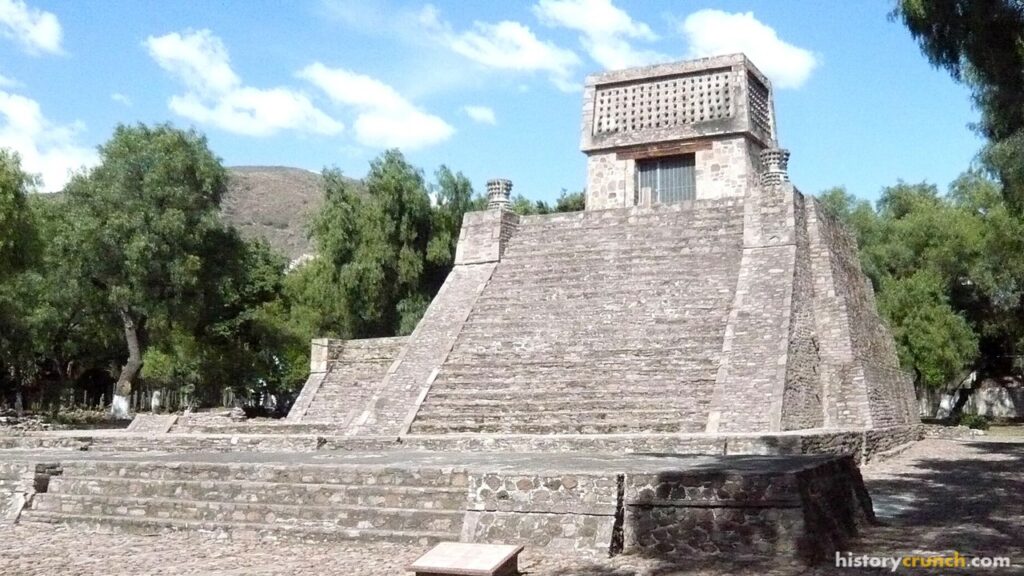
Aztec architecture was a central aspect of Aztec culture. In fact, Aztec architecture impacted the daily lives of the Aztec people, since it influenced religious temples, pyramids and Aztec homes. The Aztec Empire was a civilization in central Mexico that thrived in the time before the arrival of European explorers during the Age of Exploration. Throughout its history as a civilization the Aztec Empire expanded across much of central Mexico and other surrounding areas, to become the most dominant and powerful people in the region. Tenochtitlan, the main Aztec city (or altepetlThe Aztec word for a city-state, used to describe major urban centers like Tenochtitlan.), was the center of this vast empire.
Aztec Architecture – Influence of the Toltec
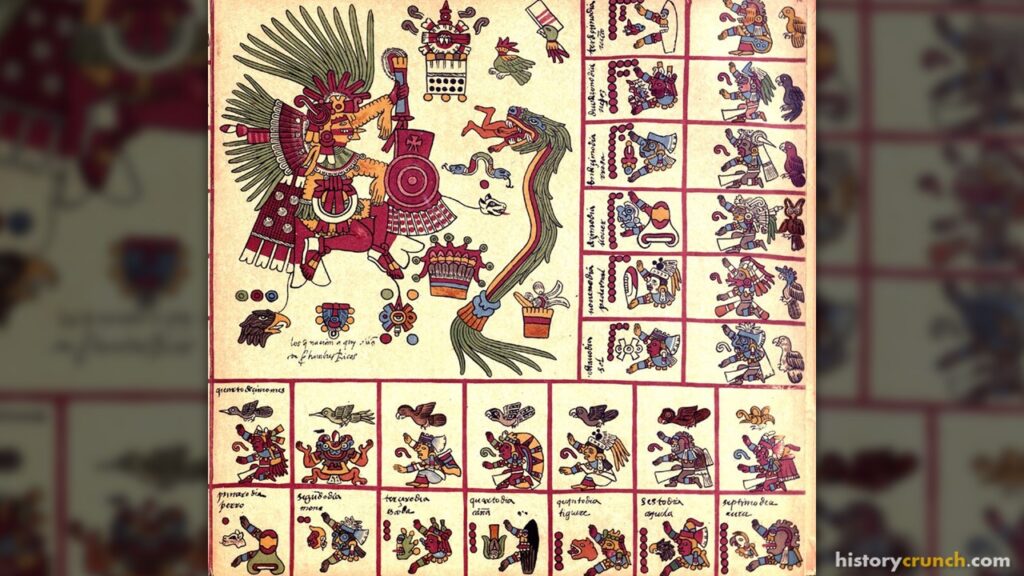
The Aztec were master builders and constructed many different types of structures, such as pyramids, ball courts, plazas, temples, and homes. However, for the Aztec, they considered the Toltec to be a major influence on their own architecture. The Toltec were a MesoamericanRelating to the region and cultures of central Mexico and Central America before European contact. civilization that was located in central Mexico from about 900 CE to 1168 CE. They are an important civilization in the history of Mesoamerican culture because many different later societies in the same area considered the Toltec to be an example of the height of craftsmanship and civilization. For example, the Aztec considered themselves to be the successors to the earlier Toltec. In fact, the Aztec admired the Toltec for many different aspects, including: art, architecture, craftsmanship and culture. Some historians have questioned whether or not the Aztec people were the descendants of the earlier Toltec society, but this suggestion has also been made about other earlier Mesoamerican civilizations, including the Teotihuacan. Regardless, the Toltec language was Nahuatl, which was the same as the Aztec. As well, the Nahuatl word for Toltec, in the Aztec society, came to mean ‘artisan’ in reference to their view that the Toltec were the height of culture, art and design in Mesoamerica.
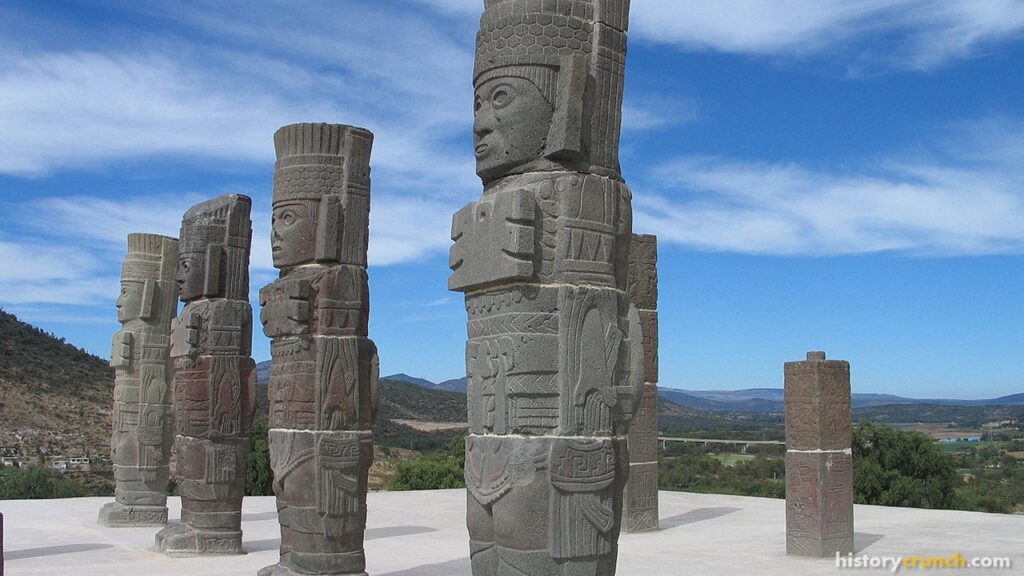
 FactsthatCrunchToltec Influence on Aztec Culture
Aztec Architecture – Aztec Temples
The Aztec Empire is famous for many of its features including the amazing architectural styles that the Aztec people used in the construction of their buildings and cities. In fact, Aztec architecture followed similar principles to other earlier Mesoamerican civilizations, including, the use of a grid system in city building and the construction of large temples in the shape of a pyramid. For instance, the pyramid was a central component of Aztec construction and featured prominently in their own city-state (altepetl) in Tenochtitlan. Templo Mayor is the name of the main temple in the Aztec capital city of Tenochtitlan.
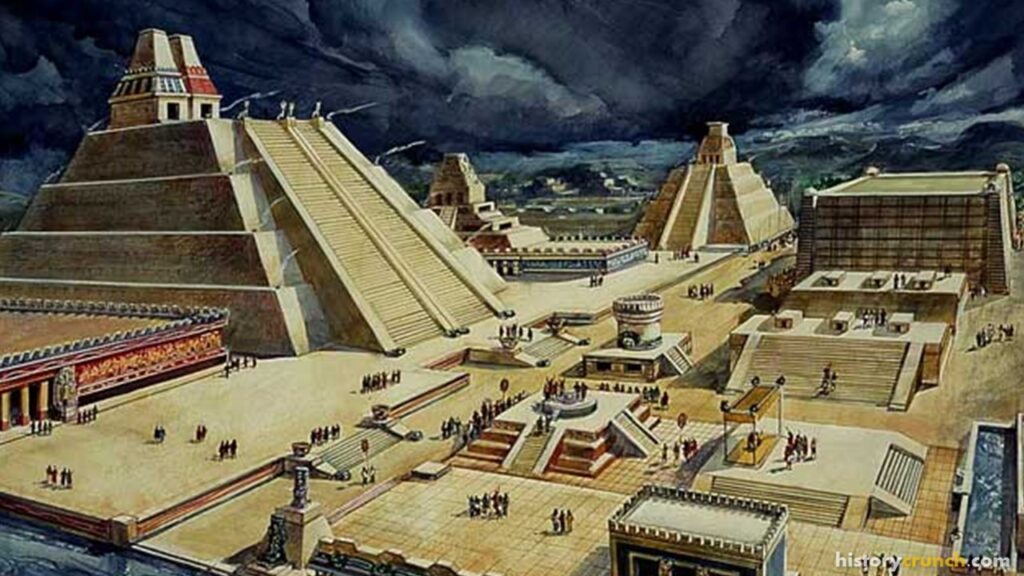
Structurally, the Templo Mayor was a stepped-pyramidA pyramid built in flat, stair-like levels or terraces rather than smooth sloping sides. with two shrines constructed on top of it and it was located in the center of Tenochtitlan. Unfortunately, very little of the original pyramid remains and most descriptions of the temple come from historical accounts, including those of the Spanish conquistadors who witnessed it during their conquest of the Aztec Empire in 1521. This is because, much of the Templo Mayor and Tenochtitlan were destroyed by the Spanish when they conquered the city and defeated the Aztec Empire. Furthermore, following the destruction of the Tenochtitlan, the Spanish (led by Hernán Cortés) built their own city on the ruins of the former Aztec capital, which is today the modern-day Mexico City.
The Templo Mayor that the Spanish conquistadors witnessed in 1521 was supposedly the seventh and final version of the great temple. Historians believe that the great temple was first built just after the founding of Tenochtitlan in 1325 and then went through many different additions throughout the history of the Aztec. Originally, the temple was quite small and constructed out of earth and wood. Then, successive Aztec leaders, known as huey tlatoani, built onto the temple.
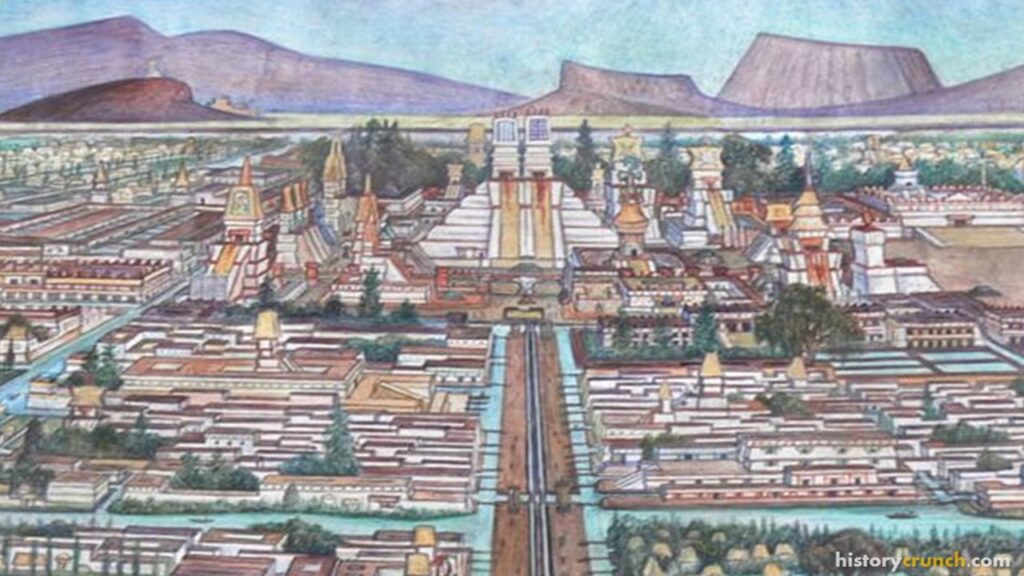
Modern excavations of the ruins of Templo Mayor show that the additions to the temple were literally built on top of the old structure, thus creating many different layers to the temple that show its history with each layer.
The final version of the Templo Mayor (and the one that the Spanish witnessed in 1521) was likely constructed sometime at the end of the 15th century. It was a pyramid with four different levels or terraces and two sets of staircases that reached to the top platform. The temple reached as high as 197 feet (60 meters) and was topped with a large platform. This top platform contained two shrines to two different Aztec gods that played a significant role in the religion of the Aztec. Spanish records report that the pyramid was painted in bright colors and contained artistic reliefs of serpents and Aztec warriors.
The Templo Mayor highlights several key features of Aztec architecture. First, they did not replace large structures such as temples, rather they simply built over top of them and made them bigger and more elaborate. This has been witnessed in several Aztec archaeological sites, but is likely best seen in the ruins found of the Templo Mayor. Second, the Aztec were master craftsmen and were easily able to work with stone to build large and elaborate temples. Third, Aztec culture featured heavily in their architecture, including their religious beliefs, gods, and astronomy. For instance, several images reappear in Aztec temples, including: eagle, serpent, conch shell and sea creatures. These all played important roles in Aztec cultural beliefs and symbolized different aspects of Aztec life.
 FactsthatCrunch
The Aztec did not tear down old temples. They built each new temple right on top of the old one, so the Templo Mayor grew in layers over almost two centuries.
The first Templo Mayor, built soon after 1325, was small and made of earth and wood. The version the Spanish saw in 1521 was the seventh. Archaeologists digging in Mexico City can still see the older layers inside.
Aztec Architecture – Aztec Homes
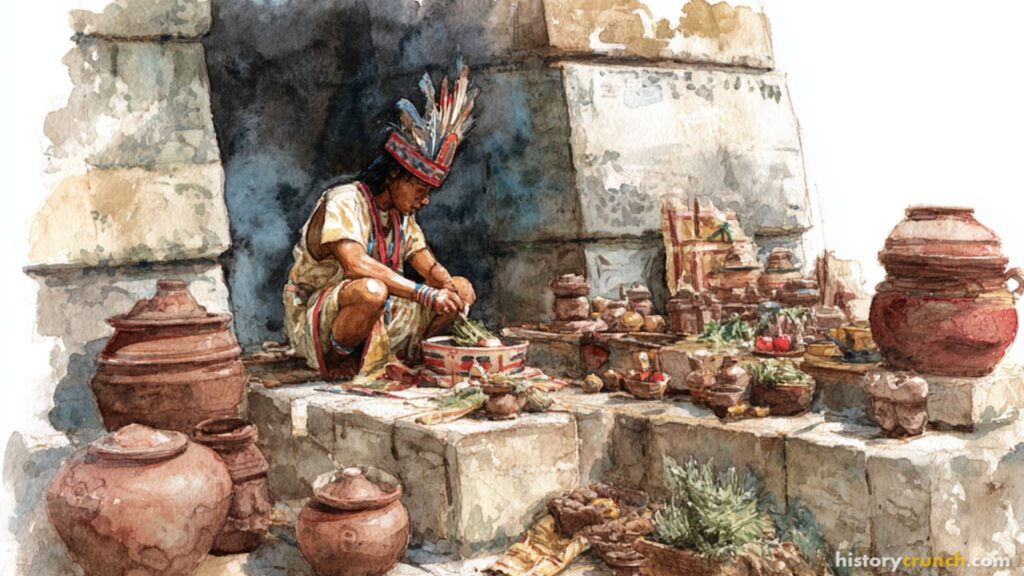
In contrast to the large stone temples, Aztec homes were primarily built from wood logs that were interlinked. They may have also used mud bricks (adobeMud bricks dried in the sun, used as a building material in some Aztec homes.). The floor of the homes was usually just dirt or may have been made of stone. The roof was usually made from small sticks woven together or a type of thatchA roofing material made from woven straw, leaves, or grass layered together. (straw, leaves, grass, etc). Generally, the homes for the middle class (macehualtinThe Aztec term for the middle class of ordinary citizens in Aztec society.) were one single room and the family would sleep in this room at night and have a shrine to honor the gods during the day. With that said, homes for the nobles (pipiltinThe Aztec noble class, whose homes were larger and more elaborately decorated than commoners.) were much more elaborate to distinguish their wealth and prestige in society. For instance, the homes of nobles were generally more spacious and contained more ornate artwork related to Aztec religion and customs.
 FactsthatCrunch
How did an Aztec home show whether a family was common or noble?
Key Vocabulary
Altepetl
Mesoamerican
Stepped-pyramid
Huey tlatoani
Macehualtin
Pipiltin
Adobe
Thatch
Frequently Asked Questions
What was the Templo Mayor?
The Templo Mayor was the main temple in the Aztec capital city of Tenochtitlan. It was a stepped pyramid with two shrines on top dedicated to two important Aztec gods. The final version stood about 197 feet (60 meters) tall and had four terraces reached by two staircases.
Why did the Aztec build over their old temples?
The Aztec did not tear down large temples; instead they built new, bigger versions right on top of the old ones. This created many layers that show the history of a building over time. The Templo Mayor is the best example, since excavations reveal seven versions stacked in layers.
How did the Toltec influence Aztec architecture?
The Aztec admired the Toltec and viewed them as the height of craftsmanship and culture in Mesoamerica. They saw themselves as the successors to the earlier Toltec civilization. The Aztec word for Toltec even came to mean “artisan,” which shows how highly they valued Toltec art and design.
What were Aztec homes made of?
Most Aztec homes were built from interlinked wood logs, and some used mud bricks called adobe. The floors were usually dirt or stone, and the roofs were made from woven sticks or thatch such as straw and leaves. Common homes had one room, while noble homes were larger and more decorated.
What happened to Aztec architecture after the Spanish arrived?
The Spanish destroyed much of the Templo Mayor and Tenochtitlan when they conquered the Aztec Empire in 1521. Led by Hernán Cortés, they built their own city directly on the ruins of the old capital. That city is now modern-day Mexico City, which is why little of the original pyramid remains.
What symbols appeared in Aztec temples?
Aztec temples often featured images of eagles, serpents, conch shells, and sea creatures. These symbols reflected Aztec religious beliefs, gods, and astronomy. Spanish records also report that the Templo Mayor was painted in bright colors and had carved reliefs of serpents and warriors.
Cite This Article
To cite this article as a source, use one of the formats below.
MLA: Beck, Elias. “Aztec Architecture: A Detailed Summary.” HistoryCrunch, 24 October 2026, https://historycrunch.com/aztec-architecture/.
APA: Beck, E. (2026). Aztec Architecture: A Detailed Summary. HistoryCrunch. https://historycrunch.com/aztec-architecture/
Chicago: Beck, Elias. “Aztec Architecture: A Detailed Summary.” HistoryCrunch. October 24, 2026. https://historycrunch.com/aztec-architecture/
Sources
- Richard Townsend, The Aztecs.
- Fordham Internet History Sourcebooks