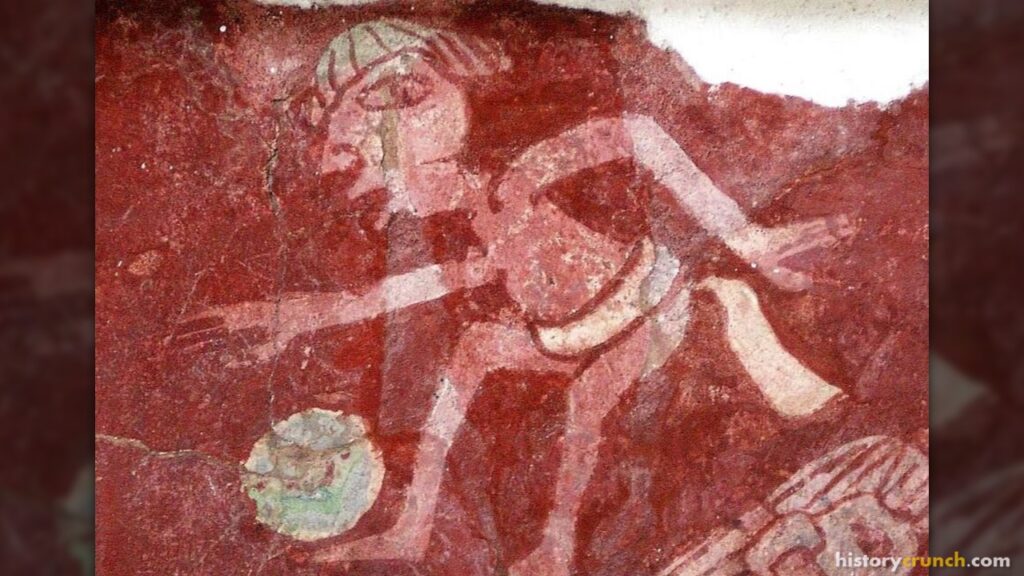
The Aztec ballgame was a ritualistic sport played with a heavy rubber ball on a large court. Players used their hips, elbows, and knees to keep the ball in play, often aiming to pass it through a stone ring mounted high on the court walls. The game had deep religious significance to the Aztec people and sometimes was related to the practice of human sacrifice.
 FactsthatCrunch
What Lay Beneath the Aztec Ballgame: Why Did a Rubber Ball Game Matter So Much?
Who Are the Aztec?
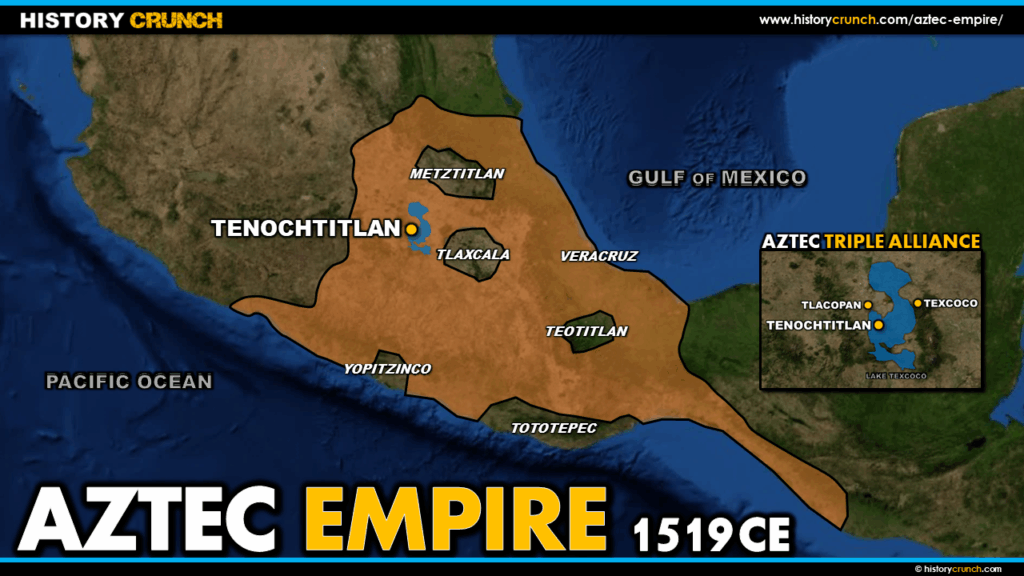
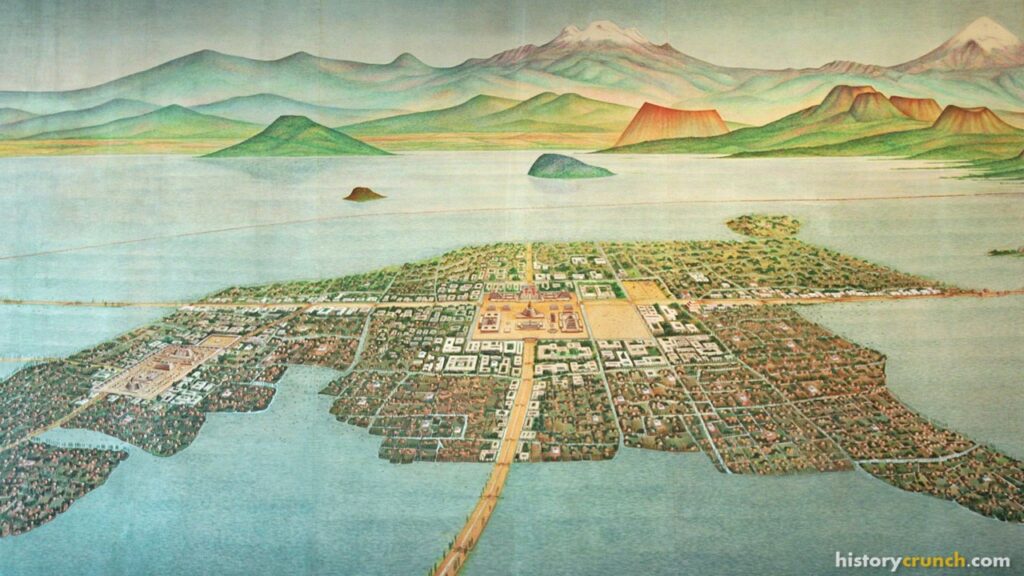
The Aztec Empire was a civilization in central Mexico that thrived in the time before the arrival of European explorers during the Age of Exploration. Throughout its history as a civilization the Aztec Empire expanded across much of central Mexico and other surrounding areas, to become the most dominant and powerful people in the region. Tenochtitlan, the main Aztec city (or altepetlThe Aztec word for a city, used to describe Tenochtitlan as the main Aztec settlement.), was the center of this vast empire.
What Was the Aztec Ballgame?
Despite being concerned with regular military expansion throughout central Mexico, the Aztec people were also known to participate in different games and be entertained. One of the most important games in Aztec history was the ballgame referred to as ōllamalitzli. The term ‘ōllamalitzli’ translates to ‘rubber to play ball’. In fact, the ballgame was common throughout much of Mesoamerica and was played by many different groups of people, including: Maya, Teotihuacan, and the Aztec. It is believed that the game originated sometime around 1400 BCE in modern-day Mexico, meaning it had a long history in the region.
FactsthatCrunchThe ballgame the Aztec called ollamaliztli began around 1400 BCE, almost 3,000 years before the Aztec Empire, and was played by the Maya and the people of Teotihuacan too.
The name ollamaliztli refers to playing with a rubber ball. Rubber came from trees that grew in Mesoamerica, and Europeans had never seen a bouncing ball before they reached the Americas.
How Was the Aztec Ballgame Played?
Historians do not know the exact rules of the game, but there are some basic assumptions of how it was played. For example, two teams would face off against each other in a ‘ball court’ which was essentially a large rectangular space. Furthermore, in Tenochtitlan (the Aztec capital), the largest ball court was called ‘teotlachco’ meaning ‘holy ball court’. The ball court was, of course, the location of the game but it also served purposes for other religious festivals and ceremonies.
The game was played with a rubber ball that was approximately 10 pounds (4.5 kilograms) in weight. It is believed that the point of the game was for the players to hit the ball back and forth to each other by using their hips, forearms or thighs. The purpose was to keep the ball in play and keep the game going. Some versions of the game included a hoop on the side of the court which the players were required to pass the ball through.
Why Was the Aztec Ballgame Important?
The ballgame had important religious and cultural significance for the Aztec people. For instance, it was a major event in Aztec society that brought many people together in a common space. As well, historians believe that the Aztec people may have viewed the ballgame as a metaphorUsing one thing to represent or stand for something else in meaning. for the conflict between the sun and the moon. As such, it is believed that the Aztec associated the game closely with the god Huitzilopochtli. For the Aztec he was the representation of the sun. He was also considered to be the national god of the ‘Mexica’ which is the term the Aztec used to refer to themselves. As well, he was the patron god of the Aztec capital Tenochtitlan. In fact, there was a temple built in his and Tlaloc’s honor in the center of the city called Templo Mayor, which some refer to as the Great Temple of Tenochtitlan. In Aztec tradition HuitzilopochtliThe Aztec god who represented the sun and served as the patron god of Tenochtitlan. was viewed as the sun, his sister the moon, and his brothers the stars. The constant movement of the sun, moon and stars was viewed by the Aztecs as an ongoing battle between Huitzilopochtli and his siblings. Thus, the Aztec believed that they needed to provide tributeAn offering given to a god or ruler to gain favor or ensure protection. to Huitzilopochtli in order to ensure the sun’s survival and ability to ‘fight’ each day.
Beyond its religious connections, the game was a form of entertainment for the Aztec people. This was especially true of the pipiltinThe Aztec nobility, who were taught to play the ballgame as children in special schools. (nobility), who were taught to play the game as children in the Calmecac schools.
 FactsthatCrunch
Sahagun recorded, through interviews with Mexica elders in the Florentine Codex, that the Aztec saw Huitzilopochtli, the sun, locked in a constant battle against his sister Coyolxauhqui, the moon, and his brothers, the stars. The Aztec understood this fight as the reason the sun must rise and set each day, with the sun always having to defeat the forces of night to survive. Sahagun's record connects this belief directly to the need for tribute to Huitzilopochtli, a need the Aztec linked to the ballgame itself.
Explore Aztec Empire · 1325 – 1521 CE
Keep exploring Aztec Empire with these History Crunch resources.
Key Vocabulary
Altepetl
Metaphor
Huitzilopochtli
Tribute
Pipiltin
Calmecac
Frequently Asked Questions
What was the Aztec ballgame called?
The Aztec called the ballgame ōllamalitzli, which means “rubber to play ball.” It was played across much of Mesoamerica, not just by the Aztec. Groups like the Maya and the people of Teotihuacan played versions of it too. The game is believed to have started around 1400 BCE in what is now Mexico.
How did players hit the ball?
Players struck the ball using their hips, forearms, and thighs instead of their hands or feet. The goal was to keep the heavy rubber ball in play and the game going. Some versions also made players pass the ball through a stone ring on the court wall. The exact rules are not fully known today.
How heavy was the ball used in the game?
The rubber ball weighed about 10 pounds (4.5 kilograms), which made it hard and dangerous to strike. Because of this weight, players needed padding and used body parts like the hips to absorb the blow. The solid rubber came from trees that grew in the region. A ball that heavy could cause serious injury during play.
Why was the ballgame important to the Aztec?
The ballgame carried deep religious and cultural meaning for the Aztec people. Many believe it stood for the conflict between the sun and the moon in Aztec belief. The game was tied to the god Huitzilopochtli, who represented the sun and was the patron god of the capital. It also brought large crowds together in a shared public space.
Where was the ballgame played in Tenochtitlan?
The largest ball court in the Aztec capital was called teotlachco, meaning “holy ball court.” These courts were large rectangular spaces built for the game. They also hosted other religious festivals and ceremonies for the community. Noble children, called the pipiltin, learned to play the game in the Calmecac schools.
Cite This Article
To cite this article as a source, use one of the formats below.
MLA: Beck, Elias. “Aztec Ballgame: A Detailed Summary.” HistoryCrunch, 25 October 2026, https://historycrunch.com/aztec-ballgame/.
APA: Beck, E. (2026). Aztec Ballgame: A Detailed Summary. HistoryCrunch. https://historycrunch.com/aztec-ballgame/
Chicago: Beck, Elias. “Aztec Ballgame: A Detailed Summary.” HistoryCrunch. October 25, 2026. https://historycrunch.com/aztec-ballgame/
Sources
- Richard Townsend, The Aztecs.
- Fordham Internet History Sourcebooks