How Many Crusades Were There?: A Detailed Summary

How Many Crusades Were There
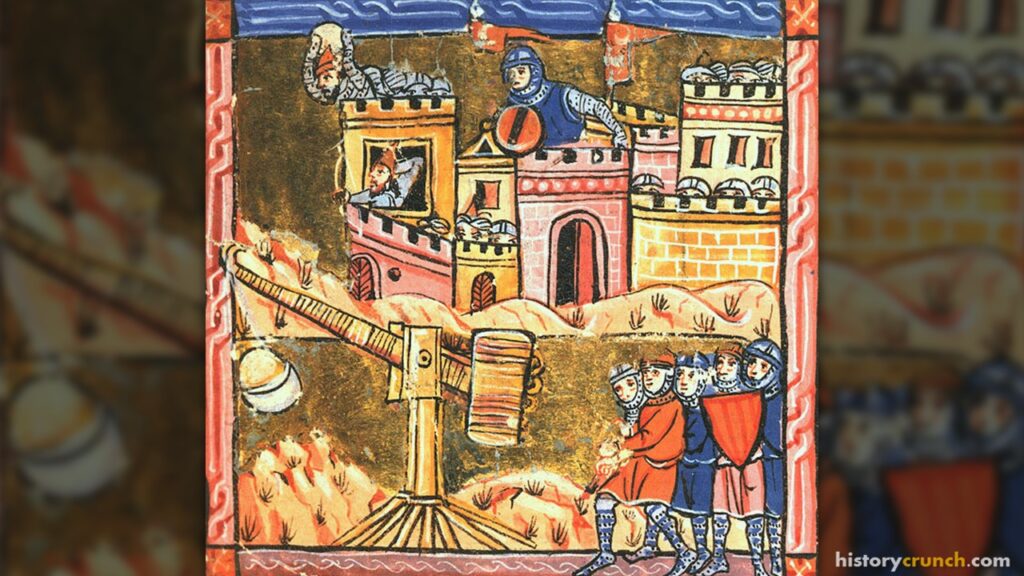
'Siege of Acre' from French Manuscript. Depicts events from the Third Crusade.

Table of Contents

How many Crusades were there? Historians disagree on the exact number of Crusades but they began with the outbreak of the First Crusade in 1096 CE.  What followed was a series of further Crusades which altered history for people throughout both Europe and the Middle East. This article details the main nine Crusades.

There were a total of nine major Crusades between 1096 and 1272 CE. Each of these nine CrusadesA series of religious wars fought by European Christians during the Middle Ages to capture the Holy Land from Muslim control. was launched by European Christians hoping to reclaim the Holy Land or defend Christian territories in the Middle East. In addition to the main nine, there were several smaller crusading efforts and related campaigns throughout Europe and the Mediterranean.

CrusadesNotebook Definition
Facts that CrunchFactsthatCrunch
Holy Land
(noun)
The Holy Land is a region in the Middle East that both Christians and Muslims considered sacred. During the Crusades, European Christian knights traveled there to take control of it from Muslim rulers who had governed the region for centuries.
in a sentence: Each of the nine major Crusades was launched with the goal of capturing or defending the Holy Land.
Source: Bibliotheque nationale de France, Paris© factsthatcrunch.comMore Crusades Facts →

What Were the Crusades?

The CrusadesA word meaning ‘cross,’ used to describe the religious military campaigns launched by European Christians in the Middle Ages. are one of the most significant events in the history of Europe and the Middle East.  They were a series of religious wars carried out by Christian crusadersEuropean Christian fighters, mostly knights and noblemen, who traveled to the Middle East during the Crusades. from Europe during the timeframe of the Middle Ages.  Beginning in 1096 CE, the Crusades saw European knights and noblemen travel to the Middle East in an attempt to capture the Holy LandThe region in the Middle East that both Christians and Muslims considered sacred and that the Crusades were fought to control. away from Muslim people that had controlled the region for the previous centuries.  The term crusade means ‘cross’.  Therefore, the Europeans that became crusaders viewed themselves as ‘taking up the cross’.  In fact, many of the crusaders wore crosses on their clothing and armor as they made their pilgrimageA journey made to a place of religious importance, treated as an act of faith. to the Holy Land.
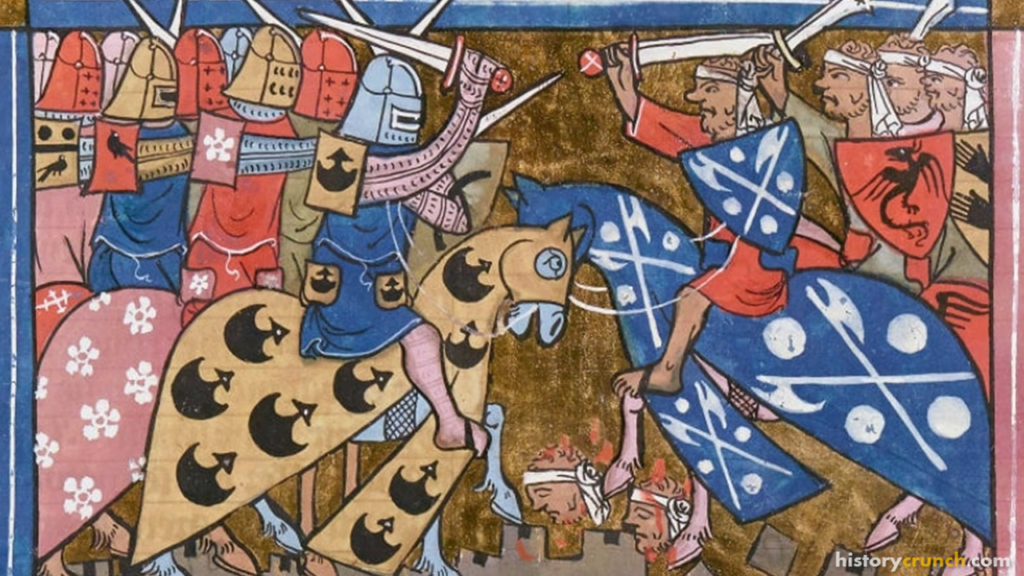
Medieval manuscript illustration from Estoire d'Eracles showing armored knights clashing with swords on horseback
Battle of Dorylaeum (1147), a battle from the Second Crusade. (Estoire d’Eracles)

How Many Crusades Were There?

Historians disagree on the exact number of Crusades but they began with the outbreak of the First Crusade in 1096 CE.  What followed was a series of further Crusades which altered history for people throughout both Europe and the Middle East.  Some historians combine several of the Crusades while others do not, and most historians agree that the first four Crusades were the main ones historically.  With that said, it is generally agreed that there were nine main Crusades which occurred over a period of two centuries.  More specifically, the First Crusade began in 1096 CE and the events of the Ninth Crusade, which was the last major event of the Crusades, occurred in 1272 CE.  As such, historians consider the Crusades to be a significant historical event because it played such an important role in both European and Middle Eastern history for over two centuries.
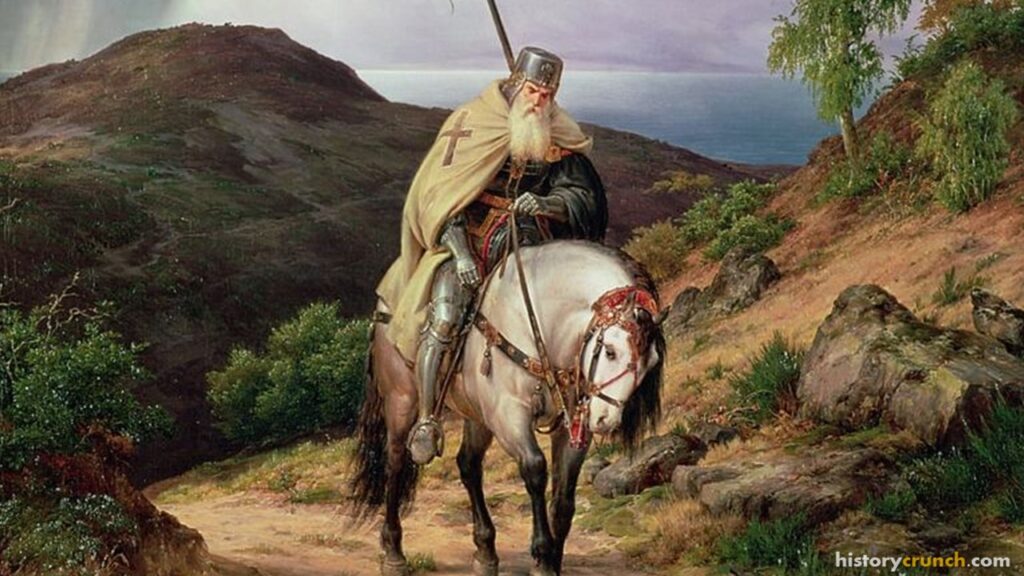
The Return of the Crusader painted by Karl Friedrich Lessing showing an armored knight on horseback
‘The Return of the Crusader’ by Karl Friedrich Lessing (1835)
CrusadesQ&A
Facts that CrunchFactsthatCrunch
Q

Why do historians disagree on the exact number of Crusades?

A

Historians disagree because some combine several campaigns into one while others count them separately. Most agree that the first four Crusades had the greatest effect on history, and the common total of nine is a general agreement rather than a strict rule. Smaller crusading efforts across Europe and the Mediterranean also make the count harder to pin down.

Source: The Morgan Library and Museum© factsthatcrunch.comMore Crusades Facts →

Nine Main Crusades

Below is a list of each of the nine major Crusades.  Click on the links for each to read more detailed information about each individual Crusade.

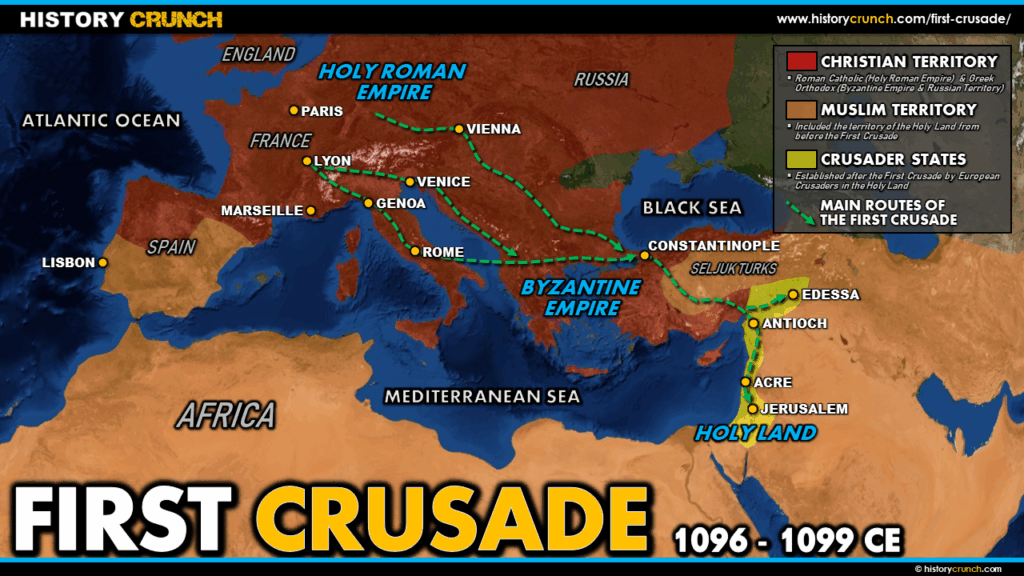
Map of the First Crusade 1096 to 1099 CE showing crusader routes and territories
First Crusade Map created by History Crunch
CrusadesTimelineInteractive
Facts that CrunchFactsthatCrunch

What were the nine main Crusades, and when did each one take place?

1096–1099 CE1147–1149 CE1189–1192 CE1202–1204 CE1217–1221 CE1228–1229 CE1248–1254 CE1270 CE1271–1272 CE
1096–1099 CE — First European nobles and knights marched to the Middle East, captured Jerusalem in July of 1099 CE, and established crusader states including the County of Edessa and the Kingdom of Jerusalem.
1147–1149 CE — Second Launched in response to the fall of Edessa, the Second Crusade ended without recovering the county and is widely considered a military failure for the crusaders.
1189–1192 CE — Third Prompted by Saladin's recapture of Jerusalem in 1187 CE, the Third Crusade brought King Richard I of England, Philip II of France, and Frederick I of the Holy Roman Empire into the field.
1202–1204 CE — Fourth Instead of reaching Jerusalem, crusaders attacked and sacked Constantinople, the capital of the Byzantine Empire, badly damaging the Christian ally the original crusades were meant to defend.
1217–1221 CE — Fifth Crusaders targeted Egypt as the route to Jerusalem, capturing the port city of Damietta in 1219 CE before an Egyptian counterattack forced them to withdraw and surrender their gains.
1228–1229 CE — Sixth Holy Roman Emperor Frederick II negotiated a treaty that returned Jerusalem to Christian control for approximately a decade without major battle, a rare diplomatic outcome in the crusading period.
1248–1254 CE — Seventh Led by King Louis IX of France, this crusade again targeted Egypt. Louis was captured at the Battle of Fariskur in 1250 CE and released only after a large ransom was paid.
1270 CE — Eighth Louis IX of France led this crusade toward Tunis in North Africa. He died of illness near Tunis on August 25th, 1270 CE, and the campaign collapsed soon after his death.
1271–1272 CE — Ninth Led by the future King Edward I of England, this was the last of the nine main crusades. It ended in 1272 CE without recovering Jerusalem, marking the close of the main crusading era.
1096–1099 CE — FirstEuropean nobles and knights marched to the Middle East, captured Jerusalem in July of 1099 CE, and established crusader states including the County of Edessa and the Kingdom of Jerusalem.
1147–1149 CE — SecondLaunched in response to the fall of Edessa, the Second Crusade ended without recovering the county and is widely considered a military failure for the crusaders.
1189–1192 CE — ThirdPrompted by Saladin's recapture of Jerusalem in 1187 CE, the Third Crusade brought King Richard I of England, Philip II of France, and Frederick I of the Holy Roman Empire into the field.
1202–1204 CE — FourthInstead of reaching Jerusalem, crusaders attacked and sacked Constantinople, the capital of the Byzantine Empire, badly damaging the Christian ally the original crusades were meant to defend.
1217–1221 CE — FifthCrusaders targeted Egypt as the route to Jerusalem, capturing the port city of Damietta in 1219 CE before an Egyptian counterattack forced them to withdraw and surrender their gains.
1228–1229 CE — SixthHoly Roman Emperor Frederick II negotiated a treaty that returned Jerusalem to Christian control for approximately a decade without major battle, a rare diplomatic outcome in the crusading period.
1248–1254 CE — SeventhLed by King Louis IX of France, this crusade again targeted Egypt. Louis was captured at the Battle of Fariskur in 1250 CE and released only after a large ransom was paid.
1270 CE — EighthLouis IX of France led this crusade toward Tunis in North Africa. He died of illness near Tunis on August 25th, 1270 CE, and the campaign collapsed soon after his death.
1271–1272 CE — NinthLed by the future King Edward I of England, this was the last of the nine main crusades. It ended in 1272 CE without recovering Jerusalem, marking the close of the main crusading era.

Tap a point to read its detail.

Source: Bodleian Library, Oxford© factsthatcrunch.comMore Crusades Facts →

Key Vocabulary

Crusades
A series of religious wars fought by European Christians during the Middle Ages to capture the Holy Land from Muslim control.
Crusaders
European Christian fighters, mostly knights and noblemen, who traveled to the Middle East during the Crusades.
Holy Land
The region in the Middle East that both Christians and Muslims considered sacred and that the Crusades were fought to control.
Pilgrimage
A journey made to a place of religious importance, treated as an act of faith.
Crusade
A word meaning ‘cross,’ used to describe the religious military campaigns launched by European Christians in the Middle Ages.

Frequently Asked Questions

How many Crusades were there in total?

There were nine major Crusades, and they took place between 1096 and 1272 CE. Each one was launched by European Christians who wanted to reclaim the Holy Land. Besides these nine, there were also several smaller crusading efforts across Europe and the Mediterranean.

When did the Crusades begin and end?

The Crusades began with the First Crusade in 1096 CE and continued for about two centuries. The Ninth Crusade is usually counted as the last major campaign of the period. Together these wars shaped life in both Europe and the Middle East for a very long time.

Why do historians disagree on the number of Crusades?

Historians disagree because some combine several campaigns while others count them separately. Most agree that the first four Crusades were the main ones in terms of their effect on history. The common total of nine is a general agreement rather than a strict rule.

What does the word “crusade” mean?

The word crusade comes from a term meaning “cross.” For this reason, the Europeans who joined were said to be “taking up the cross.” Many crusaders even wore crosses on their clothing and armor during the journey to the Holy Land.

Who took part in the Crusades?

The Crusades were carried out mainly by Christian knights and noblemen from Europe. They traveled to the Middle East to capture the Holy Land from Muslim rulers who had controlled the region for centuries. These warriors saw their trip as both a military mission and a religious pilgrimage.

Cite This Article

To cite this article as a source, use one of the formats below.

MLA: Beck, Elias. “How Many Crusades Were There?: A Detailed Summary.” HistoryCrunch, 18 October 2026, https://historycrunch.com/how-many-crusades-were-there/.

APA: Beck, E. (2026). How Many Crusades Were There?: A Detailed Summary. HistoryCrunch. https://historycrunch.com/how-many-crusades-were-there/

Chicago: Beck, Elias. “How Many Crusades Were There?: A Detailed Summary.” HistoryCrunch. October 18, 2026. https://historycrunch.com/how-many-crusades-were-there/

Sources

  • The Met (Heilbrunn Timeline)
  • Fordham Medieval Sourcebook
  • Carole Hillenbrand, The Crusades: Islamic Perspectives.

Facebook
X
Reddit
Pinterest
LinkedIn

We strive to produce educational content that is accurate, engaging and appropriate for all learners. If you notice any issues with our content, please contact us and let us know!

AUTHOR INFORMATION
Picture of Elias Beck

Elias Beck

I'm a passionate history and geography teacher with over 15 years of experience working with students in the middle and high school years. I have an Education Degree with a focus in World History. I have been writing articles for History Crunch since 2015 and love the challenge of creating historical content for young learners!
Causes of the Age of Exploration
Age of Exploration

Causes of the Age of Exploration: A Detailed Summary

The causes of the Age of Exploration included economic, political, religious, intellectual and technological factors. This article details the history and significance of the main causes of the Age of Exploration.

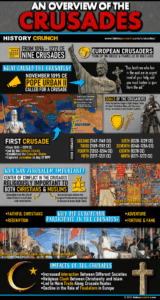
Crusades Infographic
Infographics

Crusades: Infographic

This Crusades infographic was created by History Crunch to help students and teachers quickly understand the key causes, major events and lasting significance of the Crusades, one of the most important events in the history of Europe and the Middle East. It covers all nine major Crusades and their impact on medieval society. Designed for students in grades 5 to 12.

Life of a Crusader
Crusades

Life of a Crusader: A Detailed Summary

The life of a crusader was marked by hardship, danger and religious devotion. Some men hoped for glory, some sought forgiveness and others simply followed their leaders. This article details the life of a crusader in the Crusades, including in the Crusader States.

England in the Middle Ages
Middle Ages

England in the Middle Ages: A Detailed Summary

England in the Middle Ages was shaped by major events including the Norman Conquest, the Magna Carta, the Hundred Years War and the Wars of the Roses. This article details the history and significance of England in the Middle Ages.

France in the Middle Ages
Middle Ages

France in the Middle Ages: A Detailed Summary

France in the Middle Ages was one of the most important kingdoms in medieval Europe, playing a central role in the Crusades, the Hundred Years War and the development of Gothic architecture. This article details the history and significance of France in the Middle Ages.