Roles of Men and Women in the Aztec Empire: A Detailed Summary

Roles of Men and Women in the Aztec Empire
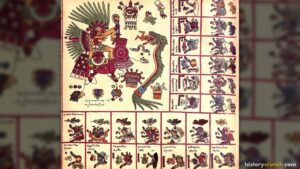
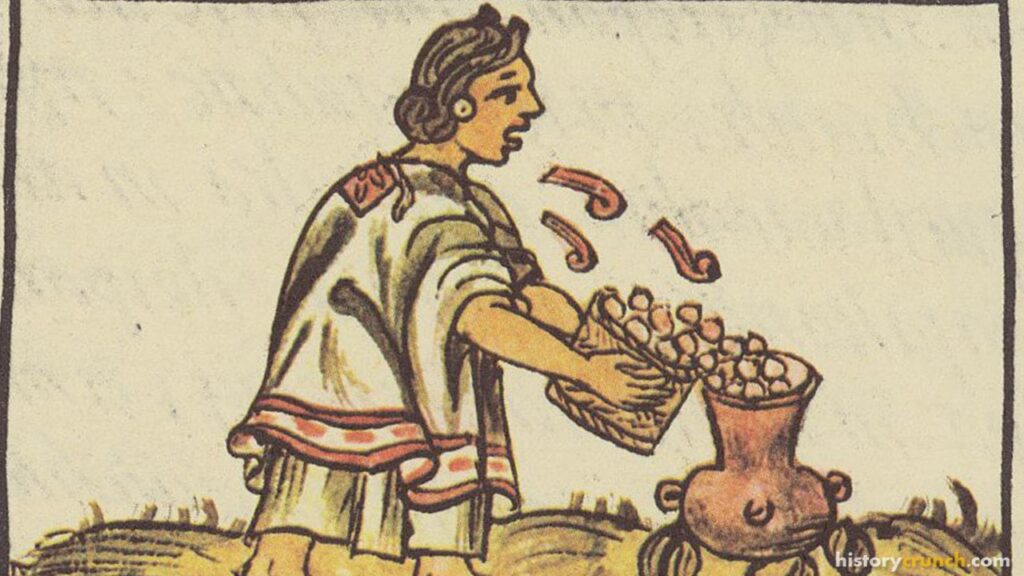
Aztec Women from Florentine Codex.

Table of Contents

The roles of men and women in the Aztec Empire varied based on tradition and the social structures of Aztec society. This article details the differences between men and women in Aztec daily life.

The roles of men and women in the Aztec Empire were important to the overall culture and daily life of the Aztec people. For instance, Aztec men were primarily warriors, farmers, and craftsmen, responsible for defending the empire and providing for their families. On the other hand, Aztec women generally managed the household, cooked, wove textiles, acted as midwivesPeople who assist women during childbirth, a role that some Aztec women held in their communities., or merchants. While men dominated political and military life, women played crucial roles in religion, trade, and maintaining social structure.

Aztec EmpireTwo ViewsInteractive
Facts that CrunchFactsthatCrunch

How did daily roles in work, religion, and trade look different for Aztec men and women?

We spend our days farming maize, beans, and squash to feed our families, or working as craftsmen selling goods at market. Some of us travel great distances as pochteca, long-distance traders, carrying products across the empire to distant markets. Every man also trains for military service from a young age, and noble men prepare to serve as priests or government officials.
We manage the household, prepare meals, weave textiles, and raise the children. Some of us work as artisans or merchants, selling handmade goods in the busy markets of Tenochtitlan. Women also hold important roles in religion and community life, including serving as midwives who assist during childbirth.
Source: © factsthatcrunch.comMore Aztec Empire Facts →

Who Were the Aztec?

The Aztec Empire was a civilization in central Mexico that thrived in the time before the arrival of European explorers during the Age of Exploration.  Throughout its history as a civilization, the Aztec Empire expanded across much of central Mexico and other surrounding areas, to become the most dominant and powerful people in the region.  Tenochtitlan, the main Aztec city (or altepetlThe Aztec word for a city that served as the main political and social center of a region.), was the center of this vast empire.
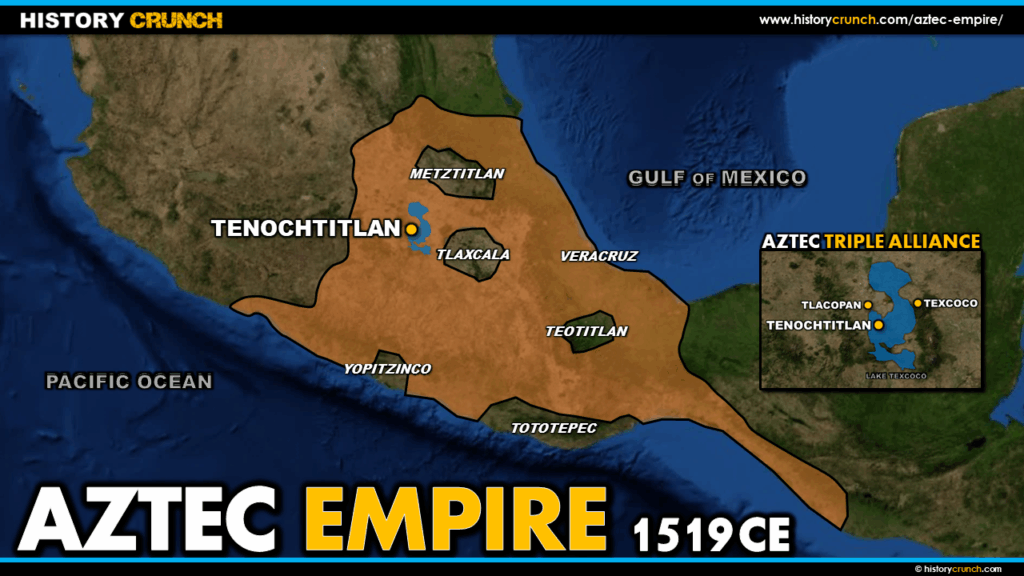
Map showing the Aztec Empire territory in 1519 CE with key cities labeled
Map of the Aztec Empire and Aztec Triple Alliance by History Crunch
Aztec EmpireMind Map BoardInteractive
Facts that CrunchFactsthatCrunch
Household Management
Women were responsible for cooking meals, repairing clothing, and caring for young children at home.
Textile Weaving
Women wove textiles as a core part of their daily work, producing cloth that was essential to Aztec households and trade.
Market Selling
Some women worked as artisans, making goods by hand and selling their creations in Aztec markets.
Midwifery
Some Aztec women served their communities as midwives, assisting other women during childbirth.
Merchant Work
Women could also work as merchants, buying and trading goods in the markets that were central to the Aztec economy.
Religious Roles
Women took part in religious life and helped maintain the social order of the empire alongside their household and economic duties.
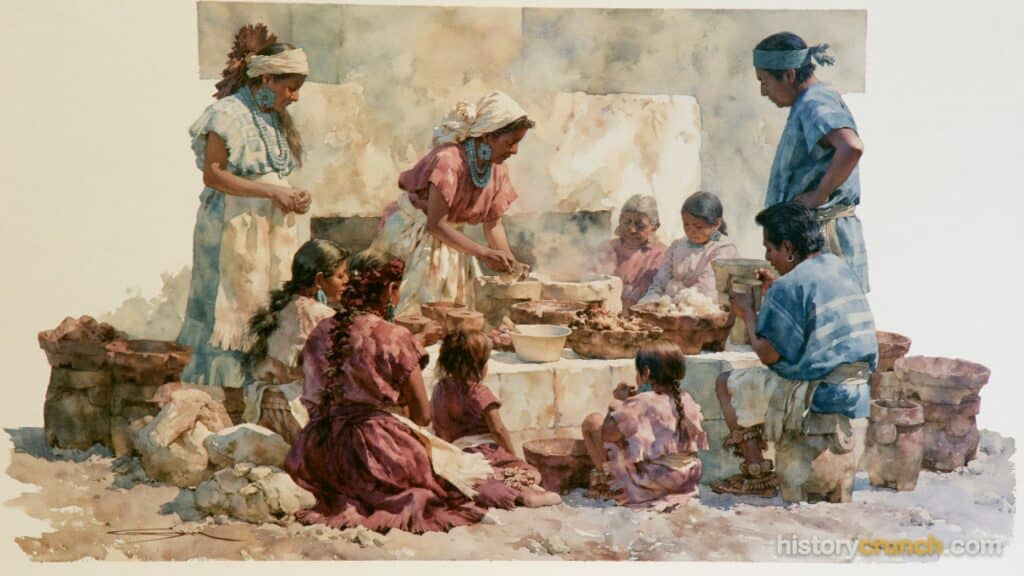
Artistic representation of Aztec families, showing how households shared work, raised children, and passed down traditions in daily life.What Jobs Did Aztec Women Do?
Tap a node to explore it.
Source: National Museum of Anthropology, Mexico City© factsthatcrunch.comMore Aztec Empire Facts →

Roles of Men and Women

There were several different forms of work in the Aztec Empire.  As such, Aztec men and women had very different roles.  In general, men were expected to do more laborious work while women were expected to work in the household and care for the family.  For example, women were tasked with caring for young children, preparing meals and repairing clothing.  Some women worked as artisansSkilled makers who created goods by hand and sold their creations in Aztec markets. or craftspeople and sold their creations in the many different markets that were so important to the Aztec economy.​ 

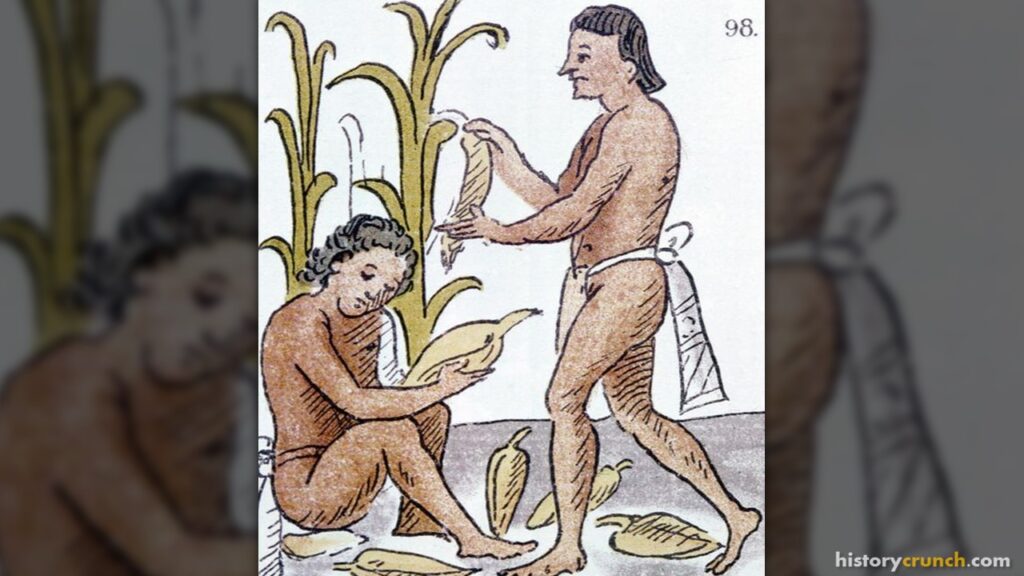
Florentine Codex illustration of two Aztec men harvesting maize near a tall corn plant
Aztec farmers harvesting maize (corn).

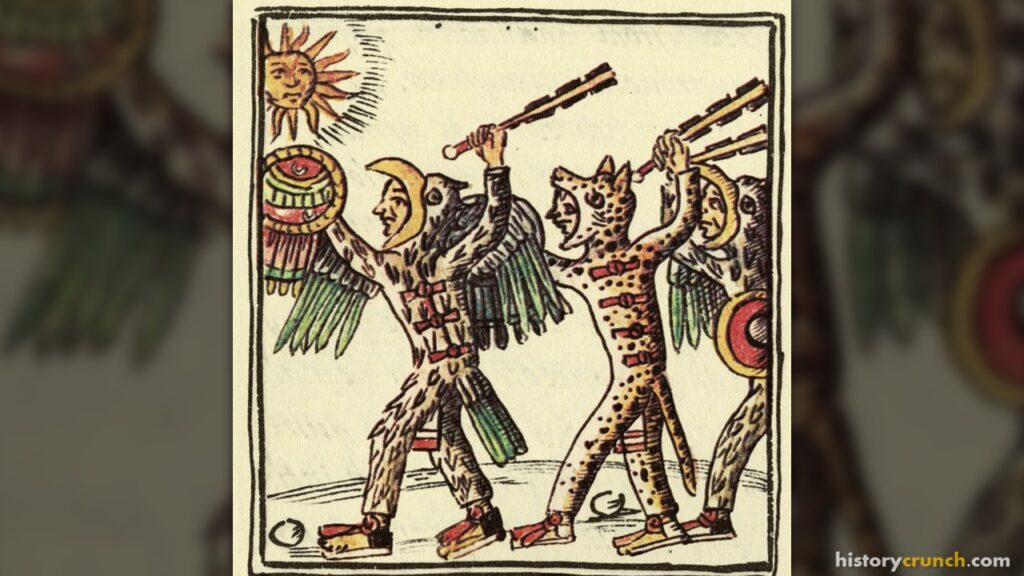
For their part, men worked in several different occupations, including: farmer, artisan, craftsman, merchant, warrior, priest or government official.  For instance, commoners or middle class citizens in the Aztec Empire (who were referred to as macehualtinCommoner or middle-class citizens in the Aztec Empire who mostly farmed, made crafts, or traded.) mostly worked as farmers growing crops such as maize (corn), beans and squash.  Some, who were skilled artists and creators, worked as artisans and sold their goods at market.  The Aztec referred to skilled artisans as toltecaThe Aztec term for skilled artisans, named in honor of the earlier Toltec civilization the Aztec admired. after the earlier Toltec civilization that the Aztec admired.  The commoners were also required to work, at different times, to build and maintain the temples and public buildings in the Aztec city of Tenochtitlan.  Some macehualtin worked as merchants in the markets by selling and trading different types of goods.  Furthermore, some men worked as long distance traders, which were referred to as pochtecaLong-distance traders who carried goods across vast distances of the Aztec Empire to sell in different markets..  These men carried goods from vast distances across the Aztec Empire to different markets.  As well, all Aztec men were expected to serve time in the Aztec military as a warrior.  For instance, the boys trained from a very young age to use different types of Aztec weapons and the rules and conduct of battle.  Men of the noble class (pipiltinThe noble class in the Aztec Empire, trained from a young age to serve as high priests or top government officials.) were trained from a very young age to serve as high priests or in top government positions.  These people oversaw the many Aztec ceremonies and festivals, and carried out the functions of the Aztec government.​

Aztec eagle and jaguar warriors wielding clubs beneath a sun symbol, from the Florentine Codex
Aztec Warriors from the Florentine Codex.
Aztec EmpireComparison Table
Facts that CrunchFactsthatCrunch

Three groups of Aztec traders and workers each filled a different role in the empire's economy.

MacehualtinPochtecaTolteca
Aztec term meaningCommonersLong-distance tradersSkilled artisans
Main workFarming, crafting, or local tradeCarrying goods across the empireMaking high-quality goods by hand
Where they workedLocal fields and marketsFar-off markets across the empireWorkshops and markets
Goods involvedMaize, beans, squash, craftsVaried goods from distant regionsFine handmade items
Extra dutyBuilt and maintained templesConnected distant parts of the empireNamed in honor of the admired Toltec civilization
Social rankMiddle-class commonersCommoner specialists with a distinct roleCommoner specialists valued for skill
Macehualtin
Aztec term meaning
Commoners
Main work
Farming, crafting, or local trade
Where they worked
Local fields and markets
Goods involved
Maize, beans, squash, crafts
Extra duty
Built and maintained temples
Social rank
Middle-class commoners
Pochteca
Aztec term meaning
Long-distance traders
Main work
Carrying goods across the empire
Where they worked
Far-off markets across the empire
Goods involved
Varied goods from distant regions
Extra duty
Connected distant parts of the empire
Social rank
Commoner specialists with a distinct role
Tolteca
Aztec term meaning
Skilled artisans
Main work
Making high-quality goods by hand
Where they worked
Workshops and markets
Goods involved
Fine handmade items
Extra duty
Named in honor of the admired Toltec civilization
Social rank
Commoner specialists valued for skill
Source: National Museum of Anthropology, Mexico City© factsthatcrunch.comMore Aztec Empire Facts →

Key Vocabulary

Altepetl
The Aztec word for a city that served as the main political and social center of a region.
Macehualtin
Commoner or middle-class citizens in the Aztec Empire who mostly farmed, made crafts, or traded.
Tolteca
The Aztec term for skilled artisans, named in honor of the earlier Toltec civilization the Aztec admired.
Pochteca
Long-distance traders who carried goods across vast distances of the Aztec Empire to sell in different markets.
Pipiltin
The noble class in the Aztec Empire, trained from a young age to serve as high priests or top government officials.
Midwives
People who assist women during childbirth, a role that some Aztec women held in their communities.
Artisans
Skilled makers who created goods by hand and sold their creations in Aztec markets.

Frequently Asked Questions

What were the main jobs of Aztec men?

Aztec men worked as farmers, artisans, craftsmen, merchants, warriors, priests, or government officials. Most commoners, called macehualtin, farmed crops like maize, beans, and squash. Skilled makers sold their goods at market, while all men also trained for military service.

What roles did Aztec women have in daily life?

Aztec women mainly managed the household, cooked meals, wove textiles, and cared for young children. Some worked as midwives, artisans, or merchants in the busy markets. Women also played important parts in religion and in keeping the social order strong.

Who were the pochteca in Aztec society?

The pochteca were long distance traders who moved goods across the Aztec Empire. They carried products over great distances to sell them in different markets. Their work helped connect far parts of the empire and kept trade flowing.

Did all Aztec men have to serve in the military?

Yes, all Aztec men were expected to serve as warriors at some point. Boys trained from a young age to use weapons and learn the rules of battle. Military service was a basic duty that shaped much of a man’s early life.

What was the difference between macehualtin and pipiltin?

The macehualtin were commoners who mostly farmed, made crafts, or traded goods. The pipiltin were the noble class, trained from a young age for high roles. Nobles often served as priests or top officials who ran ceremonies and government.

Cite This Article

To cite this article as a source, use one of the formats below.

MLA: Beck, Elias. “Roles of Men and Women in the Aztec Empire: A Detailed Summary.” HistoryCrunch, 25 October 2026, https://historycrunch.com/roles-of-men-and-women-in-the-aztec-empire/.

APA: Beck, E. (2026). Roles of Men and Women in the Aztec Empire: A Detailed Summary. HistoryCrunch. https://historycrunch.com/roles-of-men-and-women-in-the-aztec-empire/

Chicago: Beck, Elias. “Roles of Men and Women in the Aztec Empire: A Detailed Summary.” HistoryCrunch. October 25, 2026. https://historycrunch.com/roles-of-men-and-women-in-the-aztec-empire/

Sources

  • Michael E. Smith, The Aztecs.
  • Richard Townsend, The Aztecs.
Facebook
X
Reddit
Pinterest
LinkedIn

We strive to produce educational content that is accurate, engaging and appropriate for all learners. If you notice any issues with our content, please contact us and let us know!

AUTHOR INFORMATION
Picture of Elias Beck

Elias Beck

I'm a passionate history and geography teacher with over 15 years of experience working with students in the middle and high school years. I have an Education Degree with a focus in World History. I have been writing articles for History Crunch since 2015 and love the challenge of creating historical content for young learners!
How Did the Aztec Empire Expand
Aztec Empire

How Did the Aztec Empire Expand?: A Detailed Summary

The Aztec Empire expanded throughout the Valley of Mexico due to several factors. For instance, the power of Aztec warriors and the leadership of the Aztec emperors played key roles in the development and establishment of the Aztec Empire.

Aztec Ballgame
Aztec Empire

Aztec Ballgame: A Detailed Summary

The Aztec ballgame was an important aspect of Aztec culture. In fact, it was a form of entertainment, but also significant to Aztec religious beliefs.

Hernan Cortes
Aztec Empire

Hernan Cortes: A Detailed Biography

Hernán Cortés was a Spanish conquistador and explorer who travelled to the New World in the early 16th century. This article details the history and significance of Hernán Cortés, especially in relation to the history of the Aztec Empire.

Aztec Emperors
Aztec Empire

Aztec Emperors (Huey Tlatoani): A Detailed Summary

Aztec Emperors (huey tlatoani) ruled over the vast and powerful Aztec Empire that stretched across Mesoamerica. This article details the main history and significance of the Aztec emperors and includes a list of significant rulers.

Aztec Religion
Aztec Empire

Aztec Religion: A Detailed Summary

Aztec religion was a deeply important factor in the daily lives of the Aztec people. For instance, Aztec gods were celebrated and honored throughout Aztec culture.

Aztec Culture
Aztec Empire

Aztec Culture: A Detailed Summary

Aztec culture was expressed by the Aztec people through their art, clothing, food, language, religious traditions and warfare.​